What Happens to Your Vehicle Interior Without Proper Window Tinting in North Potomac MD
Most drivers in North Potomac think about window tinting in terms of privacy or aesthetics. What they rarely consider is what is quietly happening to their vehicle interior every single day without it. The sun along Quince Orchard Road does not just make your cabin uncomfortable. It is actively breaking down your dashboard, fading your seats, degrading your upholstery, and chipping away at your vehicle’s resale value one drive at a time. Capital Wrappers has worked with car owners throughout North Potomac MD who came in for window tinting only after noticing the damage that had already built up over months and years of unprotected sun exposure. This article explains exactly what that damage looks like, how it happens, and why preventing it matters far more than most drivers realize.
Why Your Car Interior Is More Vulnerable Than You Think in North Potomac MD
North Potomac sits in a climate that delivers real sun intensity across a long portion of the year. Summers along the Travilah Road corridor bring sustained heat and high UV index days that rival states much further south. Even during spring and fall, the sun angle through your windows can be surprisingly direct and damaging. Standard automotive glass blocks a portion of UV-B radiation, but it allows a significant amount of UV-A radiation and virtually all infrared radiation to pass through unimpeded.
That combination of UV-A penetration and infrared heat gain is the core reason why vehicle interiors deteriorate without proper window tinting in North Potomac MD. The damage is not dramatic or sudden. It builds gradually, day by day, drive by drive, until one afternoon you look at your dashboard and realize it has developed a network of cracks you cannot explain. Or you sit down and notice your leather seats have stiffened and faded in a way that feels years ahead of the vehicle’s actual age.
The Real Impact of UV Radiation on Your Vehicle Interior
Ultraviolet radiation is the single most destructive force acting on your car interior when your windows are untreated. UV rays are essentially high-energy light that breaks down chemical bonds in materials on a molecular level. Every material in your interior, from the polymer compounds in your dashboard trim to the dyes in your fabric seats, is vulnerable to this process.
How UV Rays Destroy Dashboard and Trim Surfaces Over Time
Your dashboard is made primarily from plastics and polymers that contain UV-stabilizing compounds designed to slow degradation. The problem is that those stabilizers are not indefinite. With repeated, unprotected UV exposure on daily routes near the Nancy H. Dacek North Potomac Community Recreation Center or along Great Seneca Highway, those stabilizers exhaust themselves over time. Once that happens, the plastic begins to oxidize, losing its flexibility and developing surface cracks that start small and gradually deepen.
Beyond cracking, oxidized dashboards develop a chalky, faded appearance that reflects light back into the driver’s eyes, creating a secondary glare source inside the cabin. This makes the driving environment visually noisier and more fatiguing, especially on sunny days when the problem compounds with external glare from the road surface.
What UV Exposure Does to Your Seats and Upholstery
Leather seats respond to UV exposure by drying out. The natural oils and conditioning agents that keep leather supple break down under sustained UV radiation, leaving the material brittle and prone to cracking along high-stress areas like seat bolsters and headrests. Once leather begins cracking from UV damage, the deterioration accelerates because moisture can now penetrate the surface.
Fabric upholstery faces a different but equally damaging process. UV rays break down the dye molecules in fabric, causing the colors to fade unevenly. Areas of the seat that receive the most direct sun exposure, typically the center of the cushion and the top of the backrest, fade faster than surrounding areas, creating a patchy, aged appearance that is difficult to reverse without full reupholstering. Auto window tinting in North Potomac MD creates a consistent protective barrier across all interior surfaces simultaneously.
Heat Buildup and What It Does to Your Car Without Window Tinting
UV radiation and heat are closely related problems but they operate differently on your interior. Where UV breaks down materials chemically, heat causes physical expansion and contraction cycles that stress materials mechanically. Every time your interior heats up and cools down, every component is expanding and contracting at slightly different rates depending on its material composition.
How Solar Heat Accelerates Interior Material Breakdown
Over time, those repeated thermal cycles cause delamination in composite materials, warping in plastic components, and adhesive failure in trim pieces and headliner sections. Drivers who park near Quince Orchard Knolls Park or Aberdeen Local Park under open skies during peak summer hours are subjecting their interiors to this cycle repeatedly throughout the season.
Electronic components are also vulnerable. Modern vehicle interiors contain screens, sensors, and control modules mounted in areas that receive significant solar exposure. Sustained heat exposure shortens the lifespan of these components and can cause calibration drift in systems that rely on precise temperature stability.
The Hidden Cost of Skipping Auto Window Tinting in North Potomac MD
When drivers calculate what auto window tinting in North Potomac MD costs, they rarely factor in what skipping it costs. Dashboard replacement or resurfacing, leather reconditioning or seat reupholstering, faded trim replacement, and interior detailing to address heat and UV related deterioration collectively represent an expense that dwarfs the cost of a quality tint installation. Prevention is simply more economical than repair, and the protection that window tinting provides starts working from the moment the film is applied.
Glare Damage and Visual Fatigue Behind the Wheel
Glare is a comfort issue but it is also a safety issue. Unfiltered sunlight entering through untinted windows creates variable lighting conditions inside the cabin that your eyes have to constantly adjust to accommodate. That adjustment process is involuntary, but it is not free. It consumes attention and energy throughout every drive.
How Unfiltered Sunlight Creates a Secondary Glare Problem Inside Your Cabin
As your dashboard and interior surfaces degrade from UV exposure, they develop lighter, more reflective appearances that bounce sunlight back toward the driver. This creates a compounding glare problem where the light entering through the windows is both direct and reflected, coming at the driver from multiple angles simultaneously. Families driving along Darnestown Road toward Travilah Elementary School during school pickup hours in late afternoon understand exactly how disorienting that combination can be.
UV Protection Window Tint in North Potomac MD and Why It Matters for Your Health
The conversation about window tinting and vehicle interiors often focuses exclusively on materials, but the most important thing inside your car is you. UV-A radiation passes through standard automotive glass and accumulates on exposed skin during every drive. Unlike UV-B, which causes immediate visible effects like sunburn, UV-A damage is cumulative and largely invisible until years of exposure manifest as accelerated skin aging or increased skin cancer risk.
Skin Exposure During Daily Drives Adds Up Faster Than You Realize
Research has documented higher rates of UV-related skin damage on the driver’s left side compared to the right, a pattern directly attributable to window-side sun exposure. For North Potomac commuters making daily drives on Route 28 or Shady Grove Road, that exposure adds up to a meaningful cumulative dose over months and years. UV protection window tint in North Potomac MD blocks up to 99% of both UV-A and UV-B radiation at the glass surface, making it one of the most practical health protection investments available for daily drivers. Capital Wrappers regularly discusses this health dimension with clients because it is a benefit that extends well beyond vehicle preservation.
How Window Tinting Preserves Your Vehicle Resale Value in North Potomac MD
Your vehicle’s resale value is directly tied to the condition of its interior. A well-maintained interior signals to buyers that the vehicle has been cared for consistently, while a faded, cracked, or deteriorated interior immediately raises questions about overall maintenance history and value.
What Buyers Notice First When Evaluating a Used Vehicle
Buyers evaluate interior condition before they evaluate mechanical history in most cases. A cracked dashboard, faded seats, or lifted trim pieces are immediately visible and create a negative first impression that is difficult to overcome with paperwork. These are exactly the kinds of deterioration that best car window tinting in North Potomac MD prevents from developing in the first place.
How Ceramic Window Tint Slows the Aging Process of Your Interior
Ceramic window tint in North Potomac MD is the highest-performing film category available for interior preservation. Ceramic films block up to 99% of UV radiation and reject up to 80% or more of infrared heat, addressing both of the primary degradation forces simultaneously. Unlike dyed films that fade over time or metalized films that can interfere with vehicle electronics, ceramic films maintain their performance properties through Maryland’s full range of seasonal conditions without degrading. The investment in ceramic tint pays for itself through the interior preservation it delivers over the life of the vehicle.
What to Look for in a Window Tinting Shop in North Potomac MD
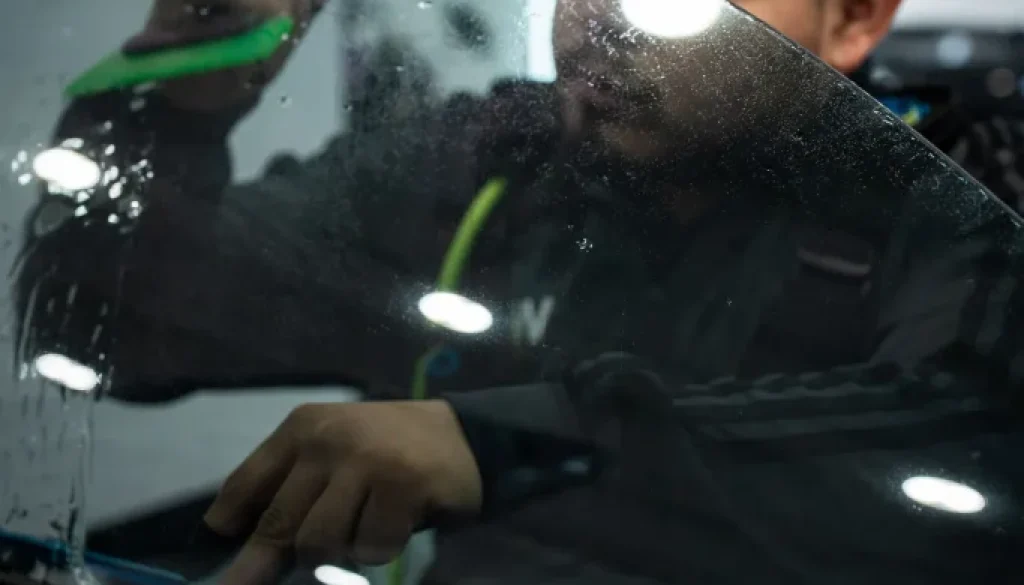
Choosing the right window tinting shop in North Potomac MD matters as much as choosing the right film. A quality installation begins with a thorough glass inspection, uses commercial-grade film products with documented performance ratings, and is backed by a warranty that covers bubbling, peeling, and color change over time. Technicians should take the time to understand how you use your vehicle and recommend a film specification that matches your specific needs rather than defaulting to a one-size-fits-all solution.
Capital Wrappers brings that consultative approach to every installation in the North Potomac area, making sure each client understands the protection they are getting and why the film specification chosen is the right match for their vehicle and daily driving conditions. Maryland’s tint laws also require that front side windows maintain at least 35% visible light transmission, and a knowledgeable shop ensures every installation stays within legal limits while still delivering maximum protection.
Conclusion
Your vehicle interior is under constant attack from the moment you drive into daylight without proper window tinting. UV radiation breaks down materials chemically, heat stresses them mechanically, and the combination accelerates aging in ways that compound over time until the damage becomes impossible to ignore. For drivers in North Potomac MD, the roads near Aberdeen Local Park, the afternoon routes along Darnestown Road, and the daily commutes through the Travilah corridor all deliver sustained solar exposure that makes window tinting a practical necessity rather than an optional upgrade. Ceramic window tint addresses all of these threats simultaneously, protecting your health, your interior surfaces, and your vehicle’s long-term value in a single installation. Capital Wrappers helps North Potomac drivers make that protection decision with confidence, backed by the right film, the right expertise, and an installation that holds up through every Maryland season.
If you want to protect your car’s resale value and keep its exterior looking brand new, explore our detailed guide on auto protection in Bethesda, MD to learn the best solutions for long-term vehicle preservation
FAQs
How quickly does UV damage start affecting a vehicle interior without window tinting in North Potomac MD?
UV degradation begins immediately with every sun exposure, but visible effects typically become noticeable within one to three years depending on how much time the vehicle spends in direct sunlight. Vehicles parked outdoors in North Potomac’s open lots during summer months accumulate damage faster than those kept in covered parking.
Does ceramic window tint in North Potomac MD work differently in summer versus winter?
Ceramic films perform consistently across all seasons. In summer they reject infrared heat and UV radiation. In winter they help retain interior heat by reducing thermal transfer through the glass, which improves heating efficiency. Maryland’s four-season climate makes ceramic film a year-round performance investment rather than a seasonal one.
Can window tinting reverse UV damage that has already happened to my interior?
Window tinting prevents further UV and heat damage from occurring after installation, but it does not reverse damage that has already taken place. Cracked dashboards and faded upholstery require separate restoration work. Installing quality window tinting after restoration protects the repaired surfaces from deteriorating again.
Will auto window tinting in North Potomac MD affect my visibility during night driving?
Professionally installed window tinting within Maryland’s legal visible light transmission limits does not meaningfully impair night driving visibility. Films installed at or above the 35% VLT threshold required for front side windows maintain clear visibility in low-light conditions while still delivering heat and UV protection during daylight hours.
How do I know which window tint film is right for my specific vehicle in North Potomac MD?
The right film depends on your vehicle type, how much time it spends in direct sunlight, your priorities between heat rejection, UV protection, and privacy, and Maryland’s legal tint requirements for your specific vehicle classification. A consultation with a knowledgeable window tinting shop in North Potomac MD will match you with a film specification that addresses your specific situation rather than a generic recommendation.