How Much Does Window Tint Cost in Rockville, MD? A 2026 Pricing Guide
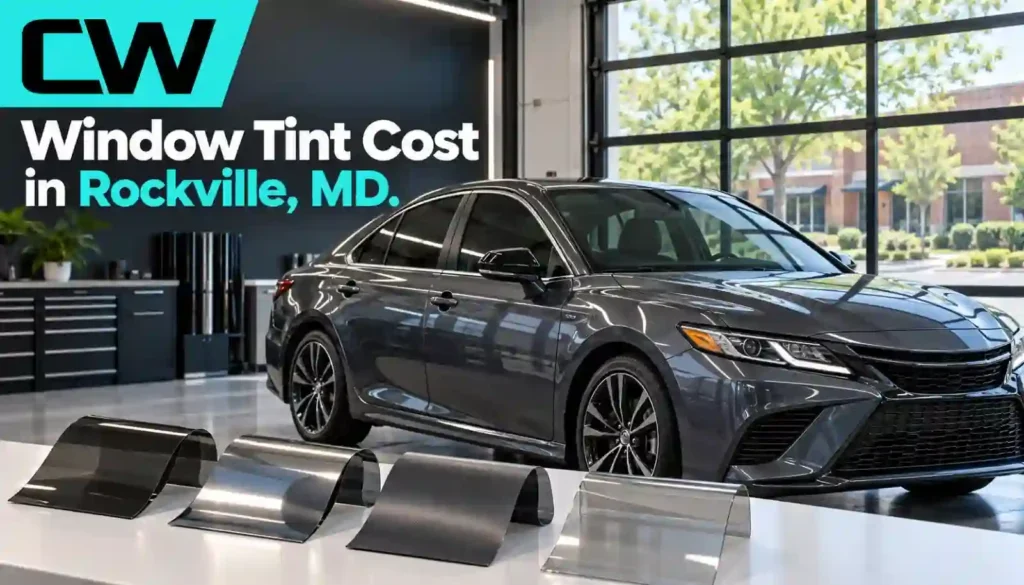
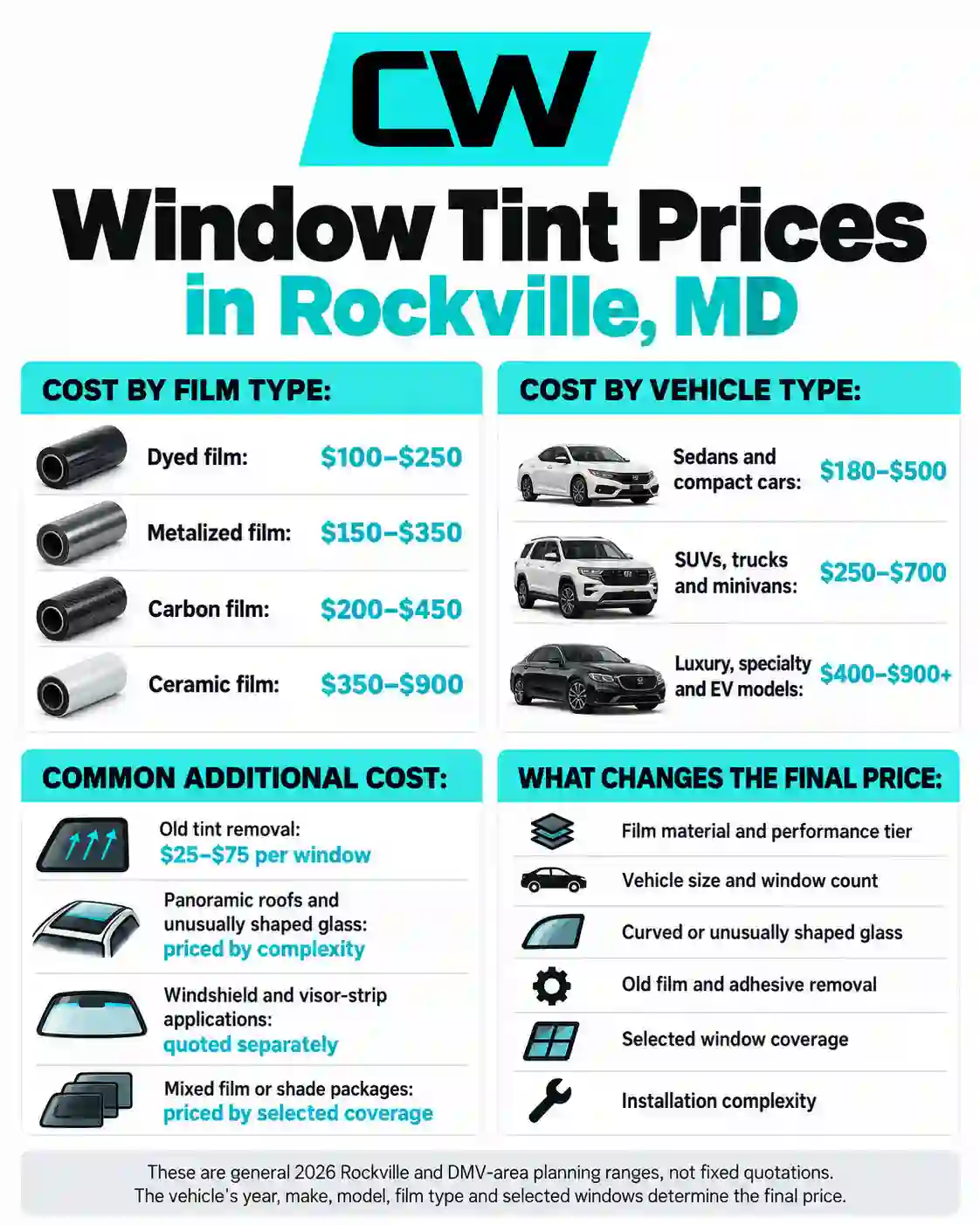
Window tint cost in Rockville, MD depends mainly on film type, vehicle size, and how many windows need coverage. A full vehicle typically runs from around $150 for basic dyed film to $900 for premium ceramic film.
Capital Wrappers has installed tint across Rockville and the wider DMV area since 2015. Its window tinting services in Rockville, MD cover everything from front-window packages to full ceramic builds. Drivers can match a film to their budget.
Why Do Window Tint Prices Vary So Much in Rockville?
Two vehicles can leave the same Rockville shop with very different bills. A sedan getting a two-window dyed tint might pay under $150. An SUV getting a full ceramic package can run past $800.
The gap comes down to three things. Film quality affects material cost per square foot. Glass size and window count affect how much film and labor a job needs. Curved or oddly shaped glass adds installation time.
Drivers around Twinbrook, Woodley Gardens, and Rockville Town Square shop the same way. They compare a few local installers before booking. Shops in Montgomery County generally price by vehicle and package, not a flat per-window rate. An accurate quote always starts with the vehicle’s make, model, and window count.
Window Tint Film Types and What They Cost
Film type is the single biggest price driver. Each type uses different materials, which changes both material cost and what the film can realistically do. Rockville shops commonly install film from established manufacturers such as SunTek and Global Window Films. Pricing tiers within each brand follow the same general pattern below.
Dyed Window Tint
Dyed film uses a layer of dye to darken glass and block light. It’s the most affordable option, typically $100 to $250 for a full vehicle in the Rockville market. Dyed film can fade with years of heavy sun exposure, which is worth factoring into a long-term budget.
Metalized Window Tint
Metalized film embeds tiny metallic particles in the film layer. It costs more than dyed film, generally $150 to $350 for a full vehicle, and resists fading well. Some metalized films can interfere with radio, GPS, or toll transponder signals. Drivers who rely on those systems should ask an installer about signal-friendly alternatives first.
Carbon Window Tint
Carbon film uses carbon particles instead of dye or metal. It runs about $200 to $450 for a full vehicle. Its matte, non-reflective finish appeals to drivers who dislike the shine of metalized film. It also avoids the signal concerns tied to metal-based options.
Ceramic Window Tint
Ceramic film uses nano-ceramic particles rather than dye or metal. It’s the most expensive tier, typically $350 to $900 for a full vehicle in the local market. It’s also the film most Rockville shops recommend for drivers who want long-term color stability and clarity. The next section explains why ceramic carries that premium.
What Affects Your Final Window Tint Price
Film type sets the baseline price. These four factors move it up or down from there.
Vehicle Size and Number of Windows
A two-door coupe has less glass than a three-row SUV. More glass means more film and more labor time. As a result, larger vehicles cost more across every film tier.
Tint Darkness and VLT Percentage
Darker film isn’t automatically more expensive on its own. Maryland’s legal limits, covered below, do shape which shades are an option for front windows. Some shops charge more for multi-shade jobs, such as a darker rear package paired with a legal front shade.
Old Tint Removal
Removing old, bubbled, or peeling film before a reinstall adds labor time. Removal typically costs $25 to $75 per window. The exact cost depends on how the old film was applied and how long it’s been on the glass.
Installation Complexity
Panoramic sunroofs, curved rear glass, third-row quarter windows, and EV battery-cooled glass all take longer to fit correctly. Vehicles with these features usually land at the higher end of their vehicle-class price range. Precise trimming around unusual shapes simply takes more shop time.
Window Tint Cost by Vehicle Type in Rockville, MD
Vehicle class is the second-biggest price driver after film type. Capital Wrappers and other Rockville-area shops generally group pricing into three tiers.
Sedans and compact cars need the least film and labor. They typically run $180 to $500 for a full vehicle, depending on film tier. SUVs, trucks, and minivans have more glass and often curved rear windows, typically $250 to $700 for a full vehicle. Specialty and luxury vehicles, including EVs like Tesla and Rivian models with unusual glass shapes, often run $400 to $900 or more.
These ranges reflect typical DMV-area market pricing across film tiers. They are not a fixed quote. An exact price depends on the vehicle and film chosen. Sharing those details with a shop is the fastest way to a real number.
Ceramic Tint Cost: Why It Costs More Than Dyed or Carbon
Ceramic film consistently ranks among the highest-searched cost questions from Rockville drivers, and for good reason. It’s a meaningfully bigger investment than dyed or carbon film.
The price difference comes from the material itself. Ceramic film uses nano-ceramic particles, which cost more to manufacture than dye or metal layers. The film is also generally non-conductive, so it avoids the signal issues tied to some metalized films.
Many drivers choose ceramic for its color stability over time compared to dyed film, plus its non-metallic composition. Rockville’s humid summers are one reason local drivers often weigh a higher film tier when replacing worn tint. Anyone comparing options should ask a licensed installer for a side-by-side quote on carbon versus ceramic before deciding.
Trying to figure out what a legal, properly fitted window tint job actually costs for a specific Rockville vehicle? Call 301-417-5977 for pricing broken down by film type and window count. There’s no pressure to book before deciding what fits the budget.
What a Typical Rockville Window Tint Quote Looks Like
Seeing a sample breakdown helps set realistic expectations before calling around. This is an illustrative example based on general DMV-area market pricing, not a guaranteed exact quote.
|
Line Item |
Example Vehicle: Mid-Size SUV |
Notes |
|
Carbon film, sides and rear |
$300 to $400 |
Most common package for SUVs |
|
Windshield strip |
$50 to $100 |
Optional add-on |
|
Old tint removal (2 windows) |
$50 to $150 |
Only if replacing existing film |
|
Estimated total |
$400 to $650 |
Varies by shop and exact vehicle |
A sedan with dyed film instead of carbon would land closer to $150 to $350 for the same scope. Swapping in ceramic film for the SUV example above would typically push the total toward $600 to $900. This example is illustrative only, not an exact quote for a specific vehicle.
Cheap Tint vs. Professional Installation: What You’re Really Paying For
The cheapest quote in Rockville isn’t always the best deal. A low price often means thinner film, rushed trimming, or skipped edge-sealing steps. Those steps are what keep film from lifting at the corners.
Poor installation can lead to bubbling, peeling, or purple discoloration well before the film’s expected lifespan. Fixing that means paying for removal and a full reinstall. That usually costs more than the gap between a budget quote and a mid-range one.
A lower price upfront isn’t a savings if the job has to be redone. Asking a shop how it trims, seals, and cures film is a fair question before booking. Capital Wrappers and other established Rockville shops will walk through that process without hesitation.
How to Get an Accurate Window Tint Quote in Rockville
The fastest way to a real number is a short call with a few key details ready. Most shops need the vehicle’s make, model, and year, plus which windows are getting film.
Mentioning whether old tint needs removal first also matters, since that adds labor to the total. Knowing a budget range in advance helps too. It usually leads to a more useful conversation about film tiers, not just one number.
It’s also worth asking what’s included. Some quotes cover just material and labor. Others bundle a curing-time explanation, care instructions, and a walkthrough of the shop’s installation process.
Window Tint Pricing at a Glance
|
Item |
Typical Rockville-Area Range |
What Changes the Price |
|
Dyed film, full vehicle |
$100 to $250 |
Vehicle size, window count |
|
Carbon film, full vehicle |
$200 to $450 |
Vehicle size, film brand |
|
Ceramic film, full vehicle |
$350 to $900 |
Vehicle size, film brand, IR-rejection tier |
|
Front two windows only |
$75 to $300 |
Film tier chosen |
|
Windshield strip or visor tint |
$50 to $400 |
Strip vs. full ceramic windshield |
|
Old tint removal |
$25 to $75 per window |
Age and condition of existing film |
Prices vary by shop, vehicle, and current promotions. These ranges reflect general DMV-area market data, not a guaranteed exact quote.
Maryland Window Tint Law: What Rockville Drivers Need to Know
Maryland regulates window tint under Maryland Transportation Article § 22-406. Front side windows must allow at least 35% light transmittance for any film added after the vehicle leaves the factory. Windshield film is limited to the top five inches or the AS-1 line, whichever sits lower. It cannot extend further down the glass.
Rear window rules differ by vehicle type and mirror setup, so check them before choosing a rear-window shade. Maryland also allows a medical exemption for drivers who need extra sun protection. A 2025 law change now lets physicians certify permanent conditions indefinitely instead of renewing every two years.
|
Window |
Requirement |
|
Front side windows |
At least 35% light transmittance |
|
Windshield |
Film limited to top 5 inches or the AS-1 line |
|
Rear windows |
Varies by vehicle type and mirror setup |
|
Medical exemption |
Physician certification; indefinite for permanent conditions since October 2025 |
This table covers the basics only. Specific vehicle classes and edge cases are worth confirming before any installation.
Conclusion
Window tint cost in Rockville, MD depends on film type, vehicle size, and installation complexity. Full-vehicle jobs typically range from $150 to $900, depending on those factors. Dyed film fits tighter budgets, while ceramic film costs more upfront for better color stability and fewer signal concerns.
To get an accurate number, share your vehicle’s make, model, and window count with a local installer. Capital Wrappers has served Rockville and the surrounding DMV since 2015. For the legal side, our full guide to Maryland’s window tint laws covers it in more depth before booking.
Ready to see real, itemized pricing for a specific vehicle? Capital Wrappers quotes Rockville, MD drivers by film type, vehicle size, and window count, never a generic flat rate. Call 301-417-5977 for a straight answer before the appointment is booked.
Frequently Asked Questions
How much does it cost to get car windows tinted in Rockville, MD?
Full-vehicle window tint in Rockville typically runs $150 to $900 depending on film type and vehicle size. Sedans with dyed film sit near the low end, SUVs and trucks with ceramic film sit near the high end. Share a vehicle’s make, model, and window count with a shop for an exact quote.
How much is ceramic tint compared to regular tint?
Ceramic film usually costs $350 to $900 for a full vehicle, versus $100 to $250 for dyed film. The gap reflects ceramic’s pricier nano-ceramic material and better long-term color stability. It also raises fewer signal-interference concerns than dyed or metalized film in Rockville.
How much does it cost to tint just the front windshield?
A windshield visor strip typically costs $50 to $100 in Rockville. A full ceramic windshield tint runs $150 to $400 instead, depending on the shop. Maryland law limits windshield film to the top five inches or the AS-1 line. That’s whichever position sits lower on the glass at install time.
Why do window tinting prices vary so much near me?
Prices vary by film type, vehicle size, window count, and whether old tint needs removal before a fresh reinstall. A two-window dyed job on a small sedan costs far less than a full ceramic SUV package. That price gap can easily reach hundreds of dollars at the same Rockville, MD shop.
Is window tinting legal on front windows in Maryland?
Yes, with limits. Maryland Transportation Article § 22-406 requires front side windows to allow at least 35 percent light transmittance for aftermarket film added after purchase. Rear window rules differ by vehicle type and mirror setup, so confirm before choosing a darker rear shade.
How much extra does it cost to remove old tint before retinting?
Old tint removal typically adds $25 to $75 per window in Rockville. The exact cost depends on the film’s age and how well the original adhesive has held up over time. Bubbled or heavily sun-damaged film takes longer to strip cleanly. That extra labor pushes the cost toward the higher end.