Maryland Window Tint Laws 2026: Understand Legal VLT Requirements
Rockville drivers often visit Capital Wrappers with the same question: is 35% film legal on every window? The answer depends on the final meter reading, vehicle class, and window location. Maryland window tint laws require at least 35% final light transmission through regulated windows. This article explains VLT, medical exemptions, traffic stops, and inspection requirements.
What Is the Legal Window Tint in Maryland in 2026?
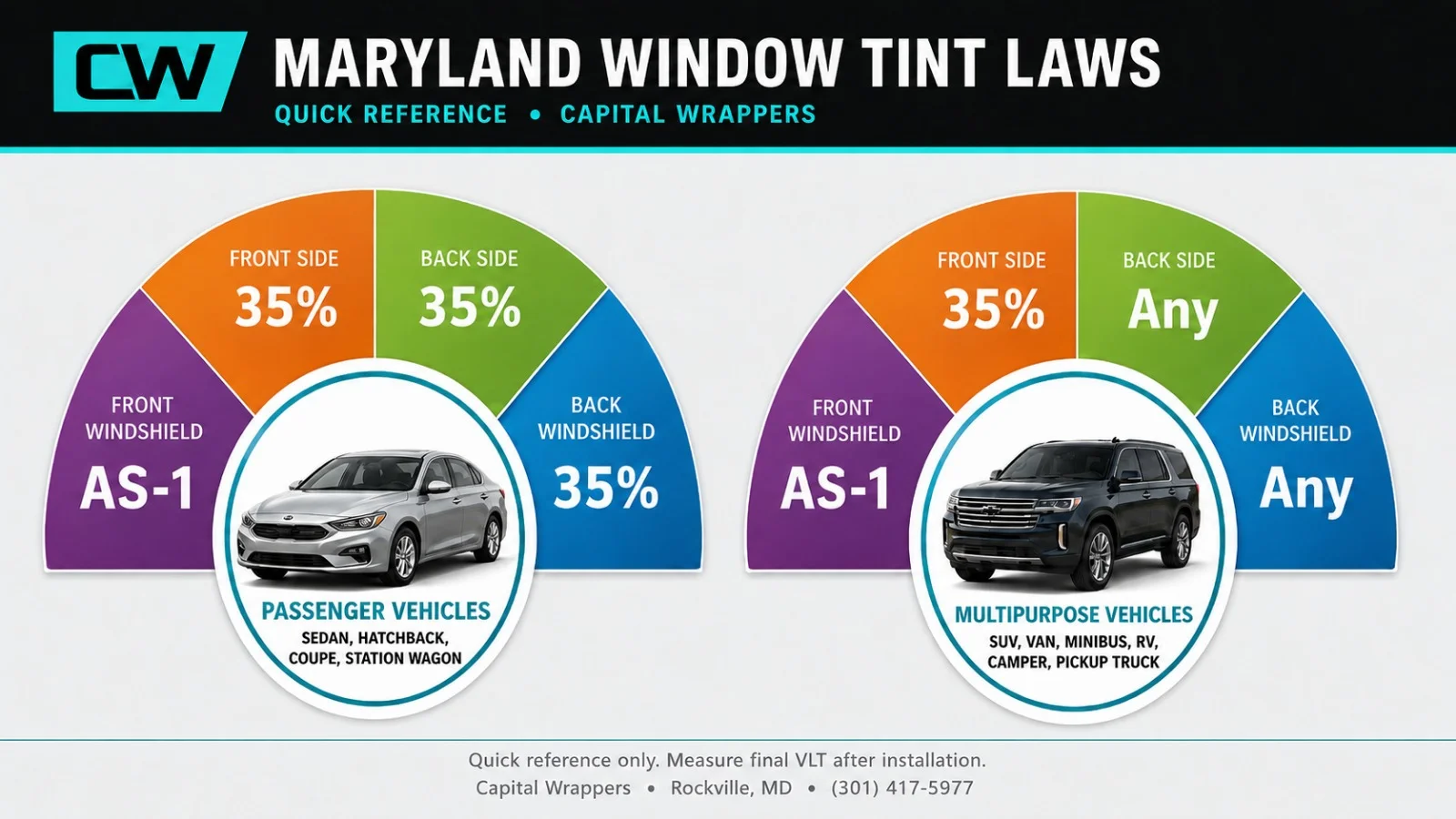
Maryland requires regulated windows to transmit at least 35% of outside light after installing aftermarket film. Passenger cars have regulated side and rear windows. Multipurpose vehicles and qualifying light trucks have different rules for windows behind the driver.
The windshield rule applies across common vehicle classes. Aftermarket film cannot extend below the AS-1 line or five inches from the top. The smaller permitted area controls.
|
Vehicle type |
Windshield |
Front side windows |
Rear side windows |
Rear window |
|
Passenger car, convertible, or station wagon |
Only above AS-1 line or within top five inches, whichever is less |
At least 35% final VLT |
At least 35% final VLT |
At least 35% final VLT |
|
SUV, van, or qualifying light truck |
Only above AS-1 line or within top five inches, whichever is less |
At least 35% final VLT |
May be darker, subject to vehicle class and other rules |
May be darker, subject to vehicle class and other rules |
These limits apply to the completed window. A film package marked 35% does not guarantee a legal final meter reading. Drivers can use this table before booking window tinting in Rockville, MD, but the final recommendation still requires measurement.
2 Front Windows
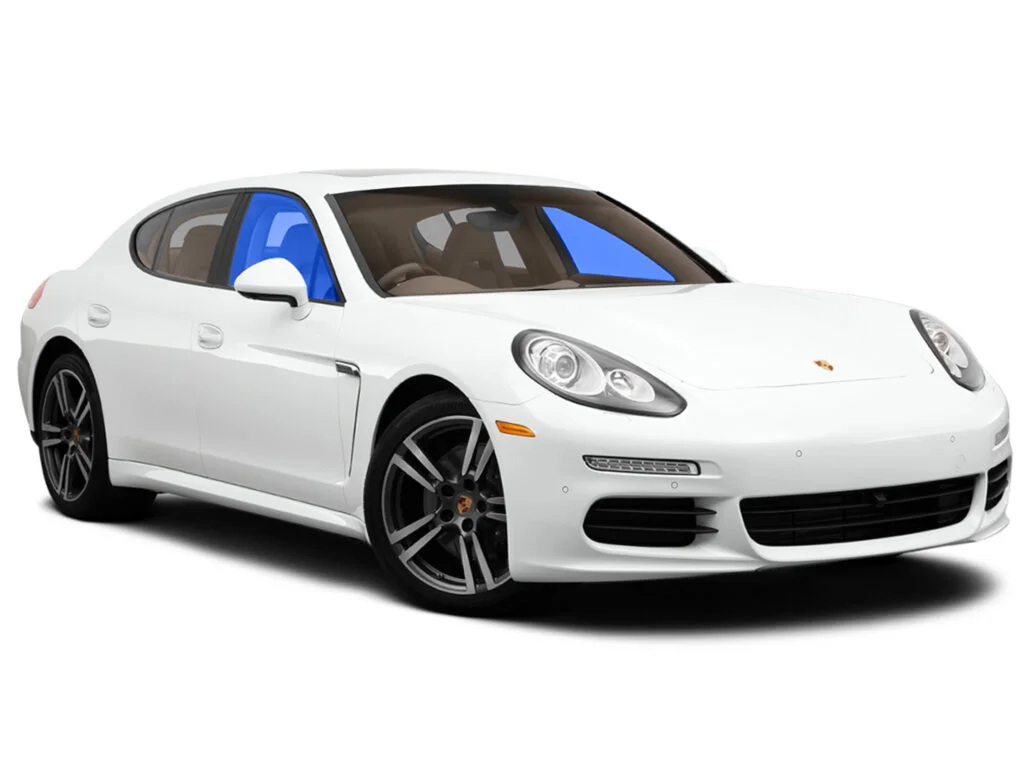
Side & Back
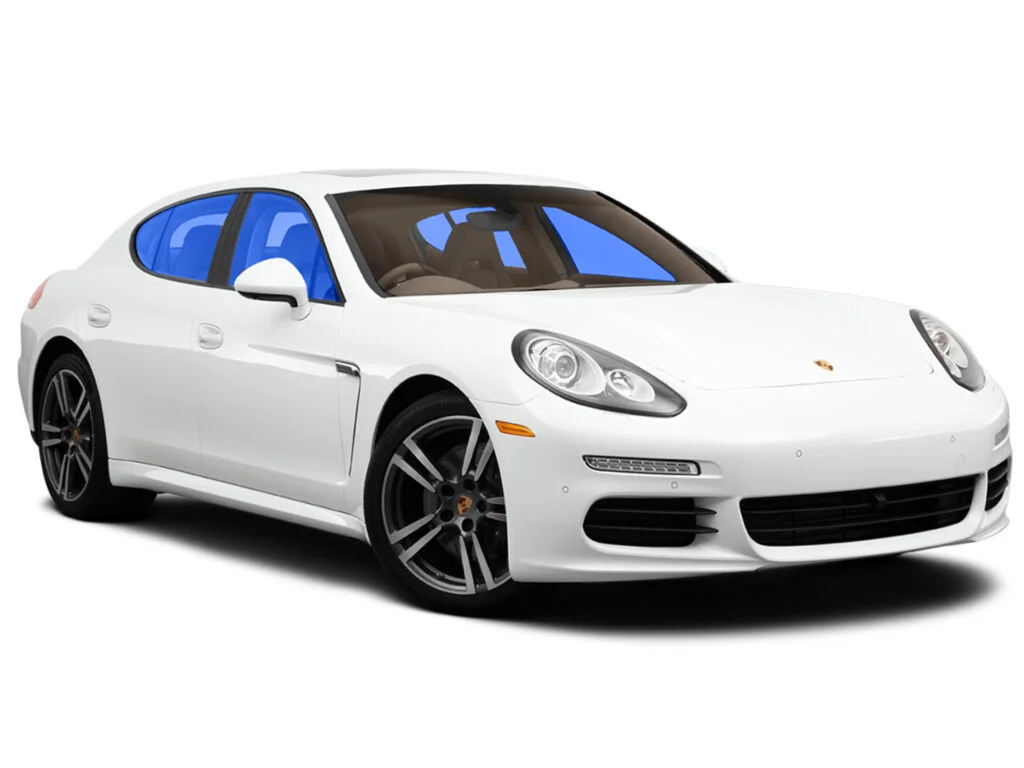
Windshield

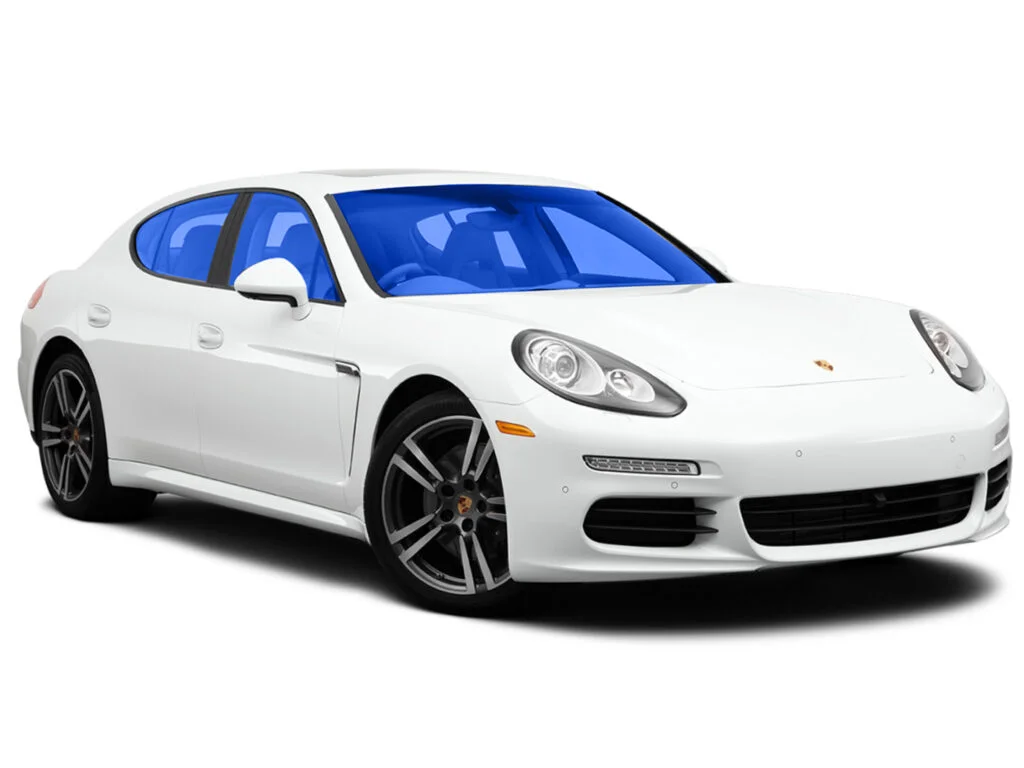
Full Car
What Does 35% VLT Mean on a Car Window?
VLT means Visible Light Transmission. It measures how much visible light passes through glass and film. A higher VLT number means a lighter window. A lower number means a darker window.
Maryland measures the complete window after installation. Factory glass already reduces some light. Capital Wrappers accounts for that starting VLT before recommending a film percentage.
The approximate calculation is simple:
glass VLT × film VLT = combined VLT
For example, 75% factory glass with 50% film produces about 37.5% combined VLT. The same glass with 35% film produces about 26.3%. That second combination would fall below Maryland’s 35% minimum on a regulated window.
A meter reading matters more than the package label. Glass composition, film tolerance, and meter tolerance can change the final result. A careful installer should measure before and after application.
Maryland Tint Limits for Passenger Cars, Convertibles, and Station Wagons
Maryland treats passenger cars more strictly than many multipurpose vehicles. All regulated side and rear windows must transmit at least 35% of light after application.
Front side windows
The driver and front passenger windows need at least 35% final VLT. A 35% film placed over factory glass will usually read below that threshold. Lighter film may be needed.
Rear side windows
Rear door glass on a passenger car also needs at least 35% final VLT. The darker rear-window allowance for many SUVs does not apply automatically to sedans.
Rear window
The rear window needs at least 35% final VLT. The vehicle must also have an outside mirror on each side. Film cannot cover the area in front of an interior high-mounted brake lamp.
Vehicle body style can cause confusion. A hatchback, crossover, or wagon may not follow the rule a driver expects. The registration class provides the safer reference point.
Maryland Tint Limits for SUVs, Vans, and Light Trucks
Maryland regulates windows immediately beside the driver on multipurpose vehicles and qualifying light trucks. Those front side windows need at least 35% final VLT. The windshield placement rule also remains in force.
Windows behind the driver may use darker film on a qualifying vehicle. This allowance covers rear side glass and rear glass. Two outside rearview mirrors remain required. Film must not cover an interior high-mounted brake lamp.
Not every vehicle marketed as an SUV receives the same registration treatment. A compact crossover can create uncertainty. Installers at Capital Wrappers check vehicle details before recommending a film percentage for Rockville drivers.
Rockville drivers comparing legal film percentages can call (301) 417-5977 for a glass reading and vehicle-specific recommendation. Use the contact form to check legal tint options before scheduling installation.
Can You Tint the Front Windshield in Maryland?
Maryland does not permit aftermarket film across the normal viewing area of a windshield. Film may stay above the manufacturer’s AS-1 line. Without a usable AS-1 mark, the top five inches set the boundary. The smaller area controls when both references exist.
The permitted strip must also follow Maryland’s appearance and colour rules. It cannot have a mirrored, one-way, or sparkling effect. Red, yellow, and amber film are prohibited.
A medical exemption does not authorize film below the AS-1 line or five-inch boundary. Maryland Transportation Article § 22-406 keeps that restriction in place. Drivers should not treat clear or lightly shaded ceramic film as an automatic exception.
Full-windshield heat rejection and legal windshield coverage are different questions. A film can appear nearly clear and still count as aftermarket material. The installation area, not only darkness, determines compliance.
Are 5%, 20%, 35%, 50%, and 70% Window Films Legal in Maryland?
No film percentage is legal everywhere on every Maryland vehicle. The final meter reading and window location control. Vehicle registration class also affects rear-window choices.
|
Film label |
Common meaning |
Possible legal use in Maryland |
|
5% |
Very dark film with about 5% light transmission |
Not legal on regulated windows; may be possible behind the driver on qualifying multipurpose vehicles or light trucks |
|
20% |
Dark film with about 20% light transmission |
Not legal on regulated windows; may be possible on qualifying rear windows |
|
35% |
Film transmits about 35% of visible light |
Usually too dark for regulated factory glass because the combined reading falls below 35% |
|
50% |
Film transmits about half of visible light |
May produce a legal result on some regulated windows after existing glass is measured |
|
70% |
Light film with high visible transmission |
Often leaves more compliance margin, but the completed window still needs measurement |
A 35% product name causes the most confusion. Maryland’s minimum applies after the film and factory glass work together. It does not refer only to the film roll.
Drivers seeking darker rear glass should confirm the registration class first. A sedan cannot copy the rear-window setup of a qualifying SUV simply because both vehicles have four doors.
 Which Window Film Colours and Appearances Are Prohibited?
Maryland prohibits aftermarket film that creates a mirrored, one-way-vision, or sparkling effect. The state also prohibits red, yellow, and amber film. Material that changes to one of those colours does not comply.
Reflective appearance is not measured with a 35% reflectivity allowance. The old version of this article used that incorrect description. The current rule focuses on prohibited appearance effects and colours.
Ceramic and carbon products are not exempt from these rules. Their construction may reduce signal interference or manage heat differently. The finished window must still meet VLT, colour, appearance, placement, mirror, and brake-lamp requirements.
Film labels and manufacturer specifications can help with product selection. A final meter test remains the practical compliance check for regulated windows.
Can Police Pull You Over for Window Tint in Maryland?
Yes. Maryland Transportation Article § 22-406 allows an officer to stop a driver after observing a suspected violation. The officer may issue a citation and a Safety Equipment Repair Order, commonly called a SERO.
This answers the “primary offence” question more accurately than local anecdotes. An observed violation can provide a legal basis for a stop. Enforcement frequency does not change the written requirement.
Police and inspection stations may use VLT meters. A window that looks close to legal can still test below 35%. Factory glass and added film create the final reading together.
Exact citation costs can change and may depend on the charge. This article does not repeat an unsupported fixed ticket amount. Repair, removal, and inspection costs may also apply after a violation.
What Happens After a Tint SERO or Failed Maryland Inspection?
Maryland State Police currently gives two important deadlines. The owner should correct the defect within 10 days. A licensed Maryland inspection station must inspect and certify the correction within 30 days.
The normal process follows these steps:
- Remove or replace the noncompliant film.
- Take the vehicle and SERO to a licensed inspection station.
- Obtain certification that the defect was corrected.
- Submit the certified order to the Maryland State Police Automotive Safety Enforcement Division.
- Keep the driver copy with the vehicle records.
Tint-related repairs require licensed-station certification, even after complete film removal. An officer’s visual sign-off does not replace that inspection requirement.
Missing the 30-day submission deadline can lead to registration suspension. A suspended owner cannot legally drive or renew the registration. Maryland may also require returning the license plates.
Used vehicles and recent Maryland arrivals deserve an early meter check. Dark film installed in another state can fail a Maryland safety inspection. Careful professional removal also reduces risk around rear-window defroster lines.
How Can Drivers Choose Legal Film Without Giving Up Heat Rejection?
Film darkness and heat rejection are not the same property. A lighter ceramic product may reject substantial solar energy without looking dark. Product performance depends on the film line, glass, installation, and tested specifications.
A sound selection process includes four checks:
- Confirm the vehicle’s Maryland registration class.
- Measure untreated glass on every regulated window.
- Choose film with enough VLT margin for the completed window.
- Meter the installed glass before delivering the vehicle.
Drivers should also compare glare control, UV performance, colour stability, signal compatibility, and written warranty terms. A darker product is not automatically better. Night visibility and regular driving conditions deserve equal attention.
An installer should explain the expected combined VLT before starting work. The final recommendation should match the vehicle, window location, and driver’s comfort goals. It should not rely on a shade name alone.
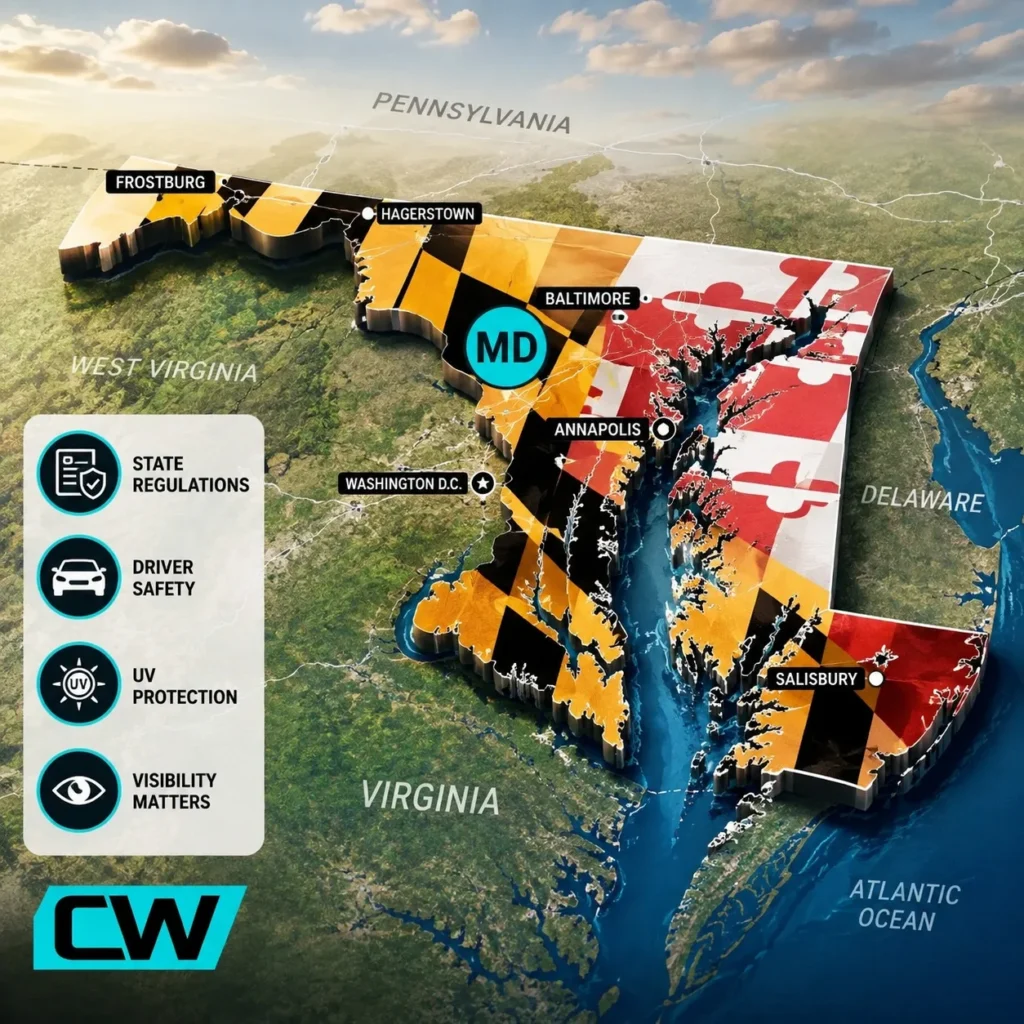 Does a Maryland-Legal Film Stay Legal in D.C. and Virginia?
A compliant installation in Maryland does not guarantee compliance in another jurisdiction. D.C. and Virginia apply their own vehicle-window requirements. Drivers who cross jurisdiction lines should check the rules for each regular destination.
This issue matters near the Capital Beltway and across the wider DMV. A Rockville commuter may enter D.C. or Virginia during an ordinary workday. Local registration does not prevent another jurisdiction from applying its traffic rules.
Cross-border percentages can change. This guide does not use another jurisdiction’s numbers as a substitute for its current official sources. Drivers who travel interstate often may prefer a lighter setup to reduce avoidable disputes.
How Does a Maryland Medical Window Tint Exemption Work?
A vehicle owner who needs added sun protection for medical reasons may qualify for an exemption. Approved documentation can allow less than 35% VLT on regulated windows. It does not remove the windshield placement restriction.
The current Maryland Window Tint Limitations form requires medical certification in the accepted format. The exemption applies to the listed owner and vehicle. The owner must keep the approved document inside the vehicle for police review.
Maryland changed exemption duration rules in October 2025. Certification may remain valid indefinitely when the medical professional identifies a permanent condition. A temporary need follows the stated medical period and generally cannot exceed two years.
An exemption is not a general permission slip for every installation. Prohibited colors, mirrored effects, windshield placement, and other equipment rules still apply. Owners should use the current form, not an older copy saved online.
Choosing Maryland-Compliant Window Tint
Maryland’s core rule is straightforward. Regulated windows need at least 35% final VLT. Vehicle class changes the rear-window rules. Windshield film must stay above the AS-1 line or five-inch boundary. Medical paperwork changes VLT permission, not every equipment restriction.
Proper measurement prevents most mistakes. Capital Wrappers can assess factory glass, vehicle class, and desired performance before installation. Drivers can also compare services with their budget and review window tint pricing in Rockville.
Capital Wrappers measures existing glass and recommends film based on vehicle class, desired comfort, and final VLT. Call (301) 417-5977 or request a tint quote for a Rockville appointment.
Frequently Asked Questions
What is the darkest legal window tint for a passenger car in Maryland?
Maryland passenger cars need at least 35% final VLT through regulated side and rear windows. The glass and added film are measured together. A roll labelled 35% will usually test below the limit on factory glass, so an installer may need a lighter product. A meter test should confirm the result.
Is 20% window film legal on an SUV in Maryland?
Twenty-percent film is not legal beside an SUV driver. Those regulated windows need at least 35% final VLT. It may be allowed on rear windows of a qualifying multipurpose vehicle. Mirror, colour, appearance, and brake-lamp rules still apply. You should still measure final VLT after installation.
Can Maryland police pull a driver over only for dark window film?
Yes. Maryland law permits an officer who observes a suspected window-film violation to stop the driver. The officer may issue a citation and a Safety Equipment Repair Order. Actual enforcement frequency does not change the 35% final VLT requirement. A meter reading may support the violation.
Can a medical exemption allow film over the full windshield in Maryland?
No. A Maryland medical exemption can permit less than 35% VLT on regulated windows. It does not authorise film below the AS-1 line or top five-inch windshield boundary. Approved medical documentation must remain inside the listed vehicle. The current State Police form controls approval.
Is ceramic window film legal in Maryland if it blocks more heat?
Ceramic window film can be legal, but its material does not create an exemption. Regulated windows still need at least 35% final VLT, and windshield placement rules still apply. Drivers should compare heat performance separately from visible darkness. A final meter reading confirms compliance.
Are tinted tail lights legal in Maryland?
Maryland State Police says required lamp lenses and reflectors cannot be covered or tinted. Tail-light rules are separate from vehicle-window requirements. A film that reduces required light output or covers a reflector can create an equipment violation and a repair order. Repair costs may also apply.