Best Ceramic Coating in Rockville, MD – Complete Cost, Benefits and Protection Guide
Ceramic coating has become one of the most searched automotive protection topics among Rockville, MD drivers, and for good reason. The DMV area delivers some of the most demanding year-round conditions a vehicle can face. Scorching humid summers from June through September push paint oxidation. Heavy road salt and brine from November through March accelerate corrosion on every exposed surface. Stop-and-go traffic on I-270, I-495, and Rockville Pike accumulates brake dust, road grime, and industrial fallout that bonds to paint continuously. A quality ceramic coating in Rockville, MD addresses all of these threats simultaneously through a single certified installation that lasts years rather than weeks.
The problem is that the ceramic coating market in the DMV area ranges from genuine installer-grade products applied by certified shops to consumer sprays sold at big-box retailers that share the name but deliver a fraction of the results. Understanding what ceramic coating actually is, what it costs at different quality tiers, which benefits are real and which are marketing exaggeration, and how to choose the right installer makes the difference between a ten-year investment and a disappointing six-month outcome. Capital Wrappers has been providing ceramic coating in Rockville, MD since 2015, and this guide reflects what genuinely works for vehicles driven in this specific market.
What Ceramic Coating Actually Is
Ceramic coating is a liquid polymer that chemically bonds to the clear coat of a vehicle’s painted finish when applied and cured correctly. The result is a hard, semi-permanent barrier that sits on top of the factory paint and acts as a sacrificial defense layer between the paint and every environmental threat the vehicle faces daily.
How Ceramic Coating Differs From Wax and Paint Sealant
Wax is a natural or synthetic compound that sits on the paint without forming a chemical bond. It provides temporary water beading and basic contamination resistance for four to eight weeks before washing and UV exposure wear it away. Paint sealants last longer, typically three to six months, but also rest on the surface without chemical bonding. Both require regular reapplication to maintain any defense.
Ceramic coating forms a chemical bond with the clear coat at the molecular level. This bond does not wash away in rain, degrade under UV, or wear off from normal vehicle use. It creates an active barrier that maintains its hydrophobic and chemical resistance properties for years rather than weeks, which is the fundamental difference that justifies the higher initial investment.
The Chemistry Behind the Protection
Expert-grade ceramic coatings are formulated around silicon dioxide particles at high concentrations. When the liquid coating is applied to a prepared paint finish and cures, the SiO2 molecules crosslink with the clear coat and form a nano-ceramic matrix that is harder than the clear coat alone. This hardened layer resists the micro-abrasions that cause swirl marks during washing, the chemical etching from acidic grime, and the UV degradation that fades paint across years of Maryland sun exposure.
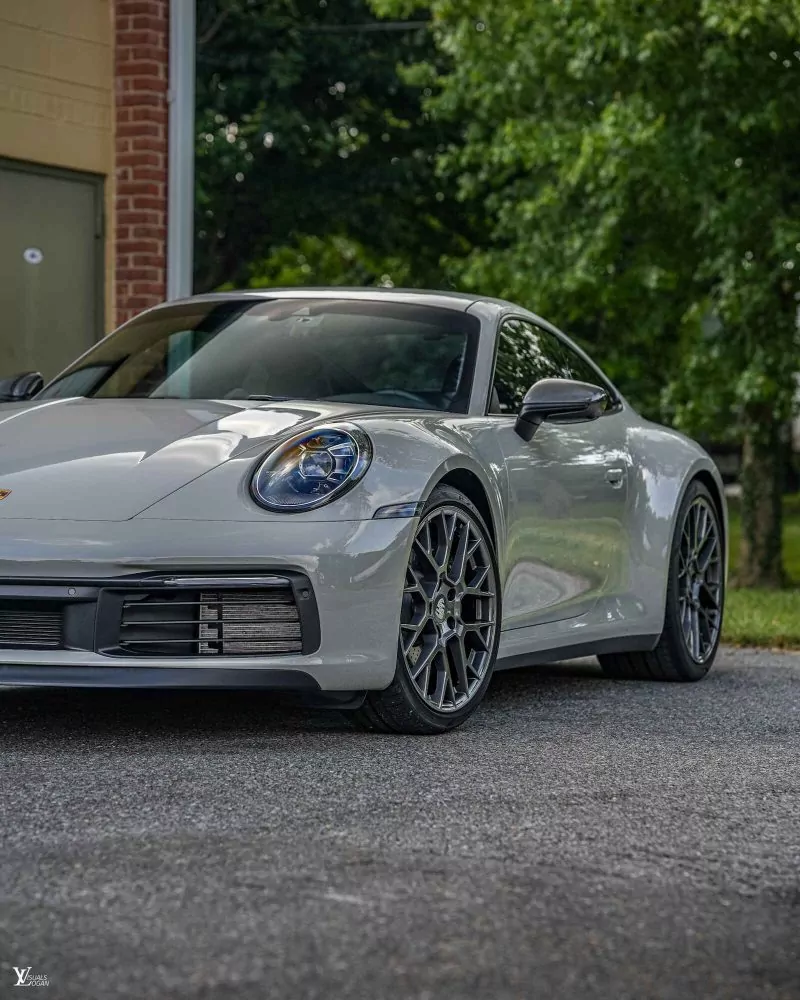
Benefits of Ceramic Coating for Rockville, MD Drivers
Understanding the specific benefits ceramic coating delivers in the Rockville and DMV market helps drivers evaluate whether the investment matches their ownership goals.
UV Protection Through Maryland’s Long Sun Season
Maryland’s UV season runs from March through October with UV index values regularly reaching 8 to 10 during peak summer months. This sustained UV exposure oxidizes clear coat, fades paint color, and degrades the interior surfaces visible through glass across years of outdoor parking. Ceramic coating blocks UV radiation from reaching the factory paint beneath, preventing the oxidation and color fading that makes unprotected vehicles look older than their actual age. Unlike wax UV defense that disappears within weeks, ceramic coating UV blocking works every day across the full covered lifespan of the product.
Hydrophobic Performance in DMV Humidity and Rain
The DMV area’s combination of summer humidity and the regular rainfall that characterizes Maryland’s climate creates persistent water exposure that accelerates paint buildup in ways that dry climates do not experience. Ceramic coating’s hydrophobic surface causes water to bead tightly and roll off the finish rather than spreading and drying to leave mineral deposits and water spots. For Rockville drivers who park outdoors through Maryland’s wet springs and rainy fall seasons, this water-shedding behavior reduces the grime bonding that requires aggressive washing to address on unprotected paint.
Chemical Resistance Against Road Salt and Contaminants
Road salt and brine on I-270 and I-495 from November through March coats every vehicle in the DMV area with corrosive chemistry during winter commutes. Salt that lands on a ceramic-coated finish has significantly less adhesion than on bare or wax-treated paint, which means winter washing removes deposits more completely and leaves less residual buildup in paint micro-scratches between washes. The chemical resistance also guards against brake dust, industrial fallout, bird droppings, bug splatter, and tree sap, all of which arrive in quantity during different seasons of Maryland’s year.
Gloss Enhancement and Long-Term Appearance
Ceramic coating fills microscopic surface texture in the clear coat and creates a uniformly smooth layer that reflects light more consistently than uncoated paint. The result is a gloss depth and visual richness that makes factory paint colors appear more vivid and saturated. For luxury vehicles, performance cars, and any vehicle where appearance matters to the owner, this gloss enhancement is immediately visible and persists throughout the coating’s lifespan as long as the finish is maintained correctly.
How Much Does Ceramic Coating Cost in Rockville, MD
Pricing transparency is one of the most important factors in evaluating ceramic coating in Rockville, MD, and it is an area where quotes from different providers often vary significantly without clear explanation of what drives the difference.
Entry-Level Ceramic Coating
Entry-tier shop-applied ceramic coatings in the Rockville and DMV market typically range from 300 to 600 dollars for a standard sedan. These products use lower SiO2 concentrations that provide one to two years of covered performance. They deliver real hydrophobic properties, basic UV resistance, and improved gloss compared to wax. For older vehicles nearing the end of planned ownership or secondary cars with lower mileage, this tier is a legitimate choice at an accessible price point.
Mid-Tier Professional Ceramic Coating
Mid-range installer-grade coatings in the Rockville market run from 600 to 1,000 dollars for a standard sedan. These products deliver three to five years of backed performance, stronger hydrophobic properties, better UV resistance, and more thorough paint correction preparation before application. For daily drivers in the DMV market who want meaningful long-term defense without the premium tier investment, this is the practical value choice that holds up across Maryland’s demanding seasonal cycle.
Premium Multi-Year Ceramic Coating
Top-tier certified ceramic coatings in the Rockville, MD market range from 1,000 to 2,000 dollars or more for a standard sedan, with larger and more complex vehicles running higher. These products deliver five to ten years of manufacturer-backed performance from brands that stand behind the product with real coverage. The preparation process for these installations includes comprehensive paint correction that addresses existing swirl marks, water spots, and surface oxidation before the coating locks in the finish condition for the backed period. Capital Wrappers installs top-tier ceramic formulations that carry genuine manufacturer warranty documentation confirming the product, coverage terms, and application date.
What Affects Your Final Price
Several specific variables move the final price within these tier ranges. Vehicle size directly affects both material usage and labor time. Paint condition determines how much correction work is required before coating application, and correction cost increases proportionally with the severity of existing defects. Coating applied over uncorrected paint preserves defects permanently for the covered period, which is why skipping correction to reduce cost almost always produces a disappointing result. The tier itself determines product cost and covered lifespan. The installation environment quality affects the consistency of the cured result in ways that are visible in the finished product.
Is Ceramic Coating Worth It for Maryland Drivers
The True Cost of Not Protecting Your Paint
The financial case for ceramic coating becomes clear when the cost of unprotected paint maintenance is calculated across a typical ownership period. Having your car waxed every six weeks costs 80 to 150 dollars per appointment. Over five years of consistent waxing, this totals 3,500 to 6,500 dollars in detailing costs for a product that provides a fraction of ceramic coating’s defense level. Paint correction to address the swirl marks and oxidation that accumulate on unprotected paint during that same period adds 300 to 600 dollars when the vehicle is eventually detailed comprehensively. The break-even calculation for ceramic coating versus consistent wax maintenance typically falls within the first two years, after which every additional year of coating defense is delivered at no additional cost.
How Ceramic Coating Compares to PPF
Paint Protection Film and ceramic coating are the two primary paint protection options in the Rockville and DMV market, and understanding their relationship helps drivers make informed decisions about which investment makes sense for their situation.
PPF is a physical film that absorbs rock chip impacts before they reach the paint. It is the only product that prevents the chips and scratches that highway debris creates during commutes on I-270 and I-495. Ceramic coating creates a hard chemical layer that resists micro-abrasions and chemical etching but cannot absorb the physical impact energy of a rock chip at highway speed.
Ceramic coating excels at everything PPF does not address specifically: UV blocking, hydrophobic water management, chemical contamination resistance, and gloss enhancement across the full vehicle surface. PPF excels at the physical impact defense that ceramic coating cannot provide.
The Best Combination for Complete Protection
Capital Wrappers offers the Ultimate Protection Package that combines PPF on high-impact zones with ceramic coating over the full vehicle. This delivers physical impact defense on the front bumper, hood, fenders, and mirrors where highway debris strikes most frequently, while the coating covers every surface simultaneously with UV, chemical, and maintenance benefits. For DMV area drivers who want comprehensive coverage against every damage category that Maryland roads and climate deliver, this combined approach is the most cost-effective option available.
How Long Does Ceramic Coating Last in Maryland Conditions
What Determines Lifespan in the DMV Market
Maryland’s wide seasonal temperature range creates thermal cycling conditions that test coating adhesion annually. The difference between a January overnight below freezing and a July afternoon pushing 95 degrees means ceramic coating adhesive systems experience more thermal stress in the DMV than in stable-climate markets. Installer-grade ceramic products from established manufacturers are formulated for exactly this kind of temperature range, maintaining consistent bonding through the full seasonal cycle. Consumer-grade retail ceramic sprays begin showing degradation from hydrophobic loss and micro-cracking within the first two to three seasons under DMV conditions.
Realistic lifespans in Maryland conditions by tier are as follows. Entry-tier shop-applied ceramic: one to two years. Mid-range installer-grade ceramic: three to five years. Top-tier certified ceramic: five to ten years with proper upkeep.
Maintenance That Extends Ceramic Coating Life
Hand washing with pH-neutral automotive shampoo and a soft microfiber mitt preserves ceramic coating performance significantly better than automatic car wash brushes that introduce micro-abrasions across every wash cycle. Ammonia-based glass cleaners and harsh degreasers degrade coating chemistry when they contact the treated surfaces. Annual maintenance booster product application refreshes the outermost sacrificial layer that absorbs environmental exposure and extends full-coat hydrophobic behavior across additional Maryland seasons. Ceramic coating in Rockville, MD maintained correctly consistently achieves its covered lifespan. Coating maintained with incorrect products or aggressive washing falls short of that lifespan by a meaningful margin.
The Professional Ceramic Coating Application Process
Paint Correction Before Coating
A quality ceramic coating installation begins with thorough vehicle decontamination including iron fallout removal, clay bar treatment, and a two-bucket wash that removes every category of surface buildup. Machine polishing then removes existing swirl marks, light scratches, and surface oxidation before the coating locks the paint condition in permanently. This step is where the majority of the labor cost in a quality ceramic job is invested, and it is the step that budget shops most commonly skip or rush to offer lower prices. Capital Wrappers performs paint correction before every ceramic coating installation because the quality of the paint finish at application directly determines the appearance and adhesion quality of the cured result.
Application and Curing
After correction, each panel is wiped with a dedicated panel preparation product that removes any remaining polish residue or contamination. The liquid coating is applied to each panel in controlled passes using a foam applicator. As the product begins to flash and cure on each panel, a clean microfiber towel levels it and removes the carrier solvent. The vehicle then enters a curing period of 24 to 48 hours during which it must remain dry for the initial bond to develop fully. Full chemical cure takes two to four weeks depending on ambient temperature and humidity conditions.
What to Avoid After Installation
Avoid washing the vehicle for the first seven days after installation to allow the full curing process to complete without water interruption. Do not apply any wax, sealant, or other product over the fresh coating during the curing period. Avoid parking under trees that drop sap during the first two weeks. After curing, follow the washing and upkeep guidelines provided by the shop to ensure the coating reaches its full backed performance level.
Why Certified Installation Matters More Than the Product
Product quality is important but installation quality determines whether the coating performs as specified for the full covered period. Applying coating in a climate-controlled, dust-free environment eliminates the contamination that creates permanent imperfections in amateur applications. Technician experience accumulated across hundreds of actual coating projects produces the panel preparation, application timing, and leveling technique that consistently clean results require. Capital Wrappers applies ceramic coating in Rockville, MD inside a dedicated installation environment built for this kind of precision work, and every project is handled by trained technicians with the hands-on experience that manufacturer warranty eligibility requires.
Common Ceramic Coating Myths Rockville Drivers Believe
Ceramic coating is scratch-proof. Ceramic coating resists the micro-abrasions that cause swirl marks during washing and minor contact. It does not prevent rock chips or deep scratches from physical impacts. Drivers who expect ceramic coating to eliminate all paint damage will be disappointed when a stone chip from I-270 leaves a mark.
Consumer ceramic spray delivers the same result for less money.
Consumer ceramic sprays use diluted SiO2 formulations that provide temporary gloss enhancement lasting weeks to months. Installer-grade coatings use significantly higher SiO2 concentrations with more sophisticated crosslinking chemistry that produces the multi-year bonded defense that makes the investment worthwhile.
Ceramic coating never needs maintenance.
Ceramic coating requires regular washing with appropriate products and annual maintenance booster application to achieve its rated lifespan. Neglected coating loses its hydrophobic properties progressively and reaches end-of-life earlier than the covered period.
New cars do not need ceramic coating because the paint is already perfect.
New vehicles often have swirl marks introduced during the dealer prep wash process before delivery. Early coating installation within the first month of ownership locks in factory-fresh paint at minimal correction cost. Every month of unprotected driving accumulates grime and minor damage that either requires correction before coating or gets locked in permanently.
Conclusion
Ceramic coating in Rockville, MD delivers genuine defense against the UV, road salt, humidity, and chemical grime that Maryland’s four-season climate produces continuously across every year of vehicle ownership. The right product tier matched to the ownership period and driving intensity, applied correctly by certified technicians after thorough paint correction, produces a result that protects and enhances the vehicle’s appearance for years while reducing the upkeep burden of keeping that finish looking its best.
Capital Wrappers brings SunTek-authorized ceramic coating expertise, a controlled installation environment, and transparent written quotes to every Rockville, MD and DMV area vehicle owner who wants installer-grade protection rather than the marketing claims that consumer alternatives deliver. The investment in quality ceramic coating pays back through years of preserved paint condition, reduced maintenance costs, and the consistent appearance that reflects the care the vehicle deserves.
Get a Transparent Ceramic Coating Quote in Rockville, MD Today.
Ceramic coating that lasts years rather than months starts with the right product, the right preparation, and the right installer. Capital Wrappers in Rockville, MD provides written quotes that cover product specification, paint correction scope, warranty terms, and installation timeline before any commitment is made. Stop by the shop or call (301) 417-5977 to discuss your vehicle’s specific condition and find out which ceramic coating package delivers the best value for your ownership goals.
Frequently Asked Questions
How long does ceramic coating last on a daily driver in Rockville, MD?
Entry-tier shop-applied ceramic coating lasts one to two years on a daily driver in Maryland conditions. Mid-range installer-grade coating lasts three to five years. Top-tier coating from established manufacturers lasts five to ten years with proper upkeep. Maryland’s thermal cycling between winter cold and summer heat tests coating adhesion more than stable-climate markets, which is why product tier and installation quality matter more here than in southern or western markets with narrower seasonal temperature ranges.
Does ceramic coating protect against Maryland road salt?
Yes, meaningfully. Ceramic coating’s chemical resistance significantly reduces salt adhesion to the painted finish compared to bare or wax-treated paint. Salt that deposits on a coated finish during winter commutes on I-270 and I-495 washes off more completely and leaves less residual buildup between washes. The coating does not make paint invulnerable to salt but it creates a barrier that slows the corrosion process at chip sites and reduces the contamination accumulation that winter driving produces on unprotected surfaces.
Can ceramic coating be applied over existing paint protection film?
Yes. Applying ceramic coating over PPF is a recommended combination that adds chemical resistance, hydrophobic behavior, and gloss enhancement to the film-protected surfaces while extending the same benefits to every other painted panel. The standard installation sequence is PPF first on high-impact zones, then ceramic coating over the entire vehicle including on top of the PPF where both products overlap. Capital Wrappers offers the Ultimate Protection Package combining both services for comprehensive coverage.
How do I know if my vehicle needs paint correction before ceramic coating?
Any vehicle with visible swirl marks under direct sunlight, water spots that have not responded to regular washing, surface oxidation showing as a dull hazy appearance on dark paint, or minor scratches that are visible but not feelable require paint correction before coating. Applying coating over these defects preserves them permanently for the covered period. A pre-installation paint inspection under appropriate lighting confirms what correction is needed and prevents the common disappointment of paying for ceramic coating and receiving a coated but still visibly imperfect finish.
What is the difference between SunTek ceramic coating and consumer retail products?
SunTek ceramic coating is an installer-grade product sold exclusively through authorized networks at significantly higher SiO2 concentrations than consumer retail ceramic sprays. The higher SiO2 content produces a harder, more completely bonded layer with measurably stronger hydrophobic behavior, better UV blocking, and a longer backed lifespan than diluted retail formulations can achieve. Consumer sprays provide temporary gloss enhancement lasting weeks to a few months. SunTek certified ceramic coating provides the multi-year bonded defense that justifies the investment.