Top Benefits of Ceramic Coating for Cars in Rockville MD That Every Driver Should Know
Ceramic coating has become one of the most discussed automotive protection options among Rockville, MD car owners, and the conversation often focuses on whether the benefits justify the investment. The honest answer is that they do for most Maryland drivers, but the specific reasons why ceramic coating shops in Rockville, MD pays off here are more directly tied to local conditions than most guides explain. Maryland’s road salt season, its sustained UV exposure, its humid summers, and the daily stop-and-go commuting reality of I-270 and I-495 all create paint damage conditions that ceramic coating addresses with measurable, real-world impact.
This guide covers every genuine benefit that ceramic coating delivers for Rockville, MD drivers, explains why each benefit is particularly relevant in this specific market, and identifies who gets the most value from the investment and who should consider whether their specific situation warrants the cost. Capital Wrappers has been providing best ceramic coating in Rockville, MD since 2015, and the benefit analysis here reflects what drivers in this market actually experience after installation rather than what manufacturer marketing literature claims in isolation.
Why Ceramic Coating Delivers More Value in Maryland Than Most Markets
The benefits of ceramic coating exist everywhere, but they pay back faster and more completely in Maryland than in markets with milder or more stable climates. Understanding why Maryland specifically amplifies the value of ceramic coating makes every individual benefit more concrete.
How Maryland’s Four Seasons Work Against Unprotected Paint
Maryland delivers four genuinely distinct seasonal damage categories across every twelve months of vehicle ownership. Winter brings road salt and brine that coat every painted surface with corrosive chemistry on commuting days from November through March. Spring brings heavy pollen, acid rain events, and the residual salt contamination that thaws out of road surfaces during warm periods. Summer delivers sustained UV exposure from Maryland’s long sun season with UV index values regularly reaching 8 to 10 from June through August. Fall brings tree sap, falling leaves that trap moisture against paint, and the early return of road brine as temperatures drop.
Each of these seasonal threats creates a different damage category on unprotected paint, and ceramic coating addresses multiple categories simultaneously through a single installation. A vehicle that goes through one full Maryland seasonal cycle with ceramic coating protection accumulates significantly less total paint damage than the same vehicle without it, which is why the investment pays back on a shorter timeline here than in climates with fewer distinct seasonal threats.
Why the DMV Commute Accelerates Paint Damage
The daily commuting reality of Rockville, MD and the broader DMV area creates paint exposure conditions that add to the seasonal damage cycle. Brake dust from heavy stop-and-go traffic on I-270 and the Beltway deposits iron particles onto paint that embed over weeks of accumulation. Industrial fallout from the DC area’s density of commercial and industrial activity settles on parked vehicles continuously. Construction debris and road work aggregate from the constant infrastructure projects along Maryland’s major corridors creates chip and abrasion exposure at speeds where the damage is most concentrated. Ceramic coating addresses the contamination bonding, chemical resistance, and maintenance efficiency aspects of this daily exposure in ways that wax and sealant alternatives cannot sustain.
Road Salt Defense Through Maryland Winters
Road salt and brine application on Maryland roads from November through March is one of the most damaging seasonal realities for vehicles in the DMV area. Every winter commute on I-270, I-495, and the Rockville Pike during or after a winter weather event coats the vehicle’s painted surfaces with salt chemistry that remains active between washes.
How Ceramic Coating Reduces Salt Adhesion on Painted Surfaces
The hard, hydrophobic surface of ceramic coating significantly reduces the adhesion of road salt to painted surfaces compared to bare or wax-protected paint. Salt that lands on a ceramic-coated finish releases more completely during washing because the surface chemistry prevents the salt from bonding as aggressively as it does to an uncoated clear coat. Between washes, the ceramic surface offers meaningful chemical resistance against the corrosive chemistry of salt in moisture, buffering the exposure time before the vehicle can be cleaned.
This benefit is most visible at chip sites. An uncoated vehicle with even minor rock chips that reach the metal beneath the primer layer accumulates salt in those chip sites during every winter event, creating the moisture and chemistry conditions that generate rust beneath the paint surface over time. Ceramic coating does not stop chips that have already occurred, but it significantly slows the chemical progression within existing chip sites compared to uncoated surfaces.
Why This Benefit Is Worth More in Maryland Than Warmer States
The road salt benefit of ceramic coating is essentially irrelevant in Florida, Arizona, or Southern California where roads receive no winter treatment. In Maryland, this benefit is actively engaged during five months of the year across every vehicle that commutes on treated roads. The cumulative protection across five winter seasons of a five-year ownership period represents one of the clearest financial returns ceramic coating delivers in this specific market.
UV Protection Through Maryland’s Long Sun Season
How UV Accumulates Damage on Unprotected Paint
UV radiation breaks down clear coat at the molecular level through a process that is invisible in the short term and becomes obvious over years of accumulated exposure. Clear coat oxidation, paint color fading, and the chalky surface degradation visible on neglected vehicles are all outcomes of this long-term UV accumulation. Maryland’s UV season runs from March through October, which means vehicles parked outdoors face high-UV conditions for approximately seven months every year. Over five years of ownership, that accumulation is substantial enough to produce visible color fading and surface dullness on unprotected paint even on vehicles that are regularly washed.
What Ceramic Coating Blocks and What It Preserves
Ceramic coating blocks UV radiation from reaching the factory clear coat and color coat beneath the ceramic layer. The UV inhibitor chemistry in installer-grade ceramic products maintains its blocking effectiveness for the full warranted lifespan of the coating, providing continuous UV defense across every high-UV Maryland day throughout the coverage period. Unlike wax UV defense that degrades within weeks, ceramic coating delivers persistent UV blocking that compounds its protective value across every additional season it remains active. For Rockville, MD vehicles parked outdoors through Maryland’s long sun seasons, this persistent UV blocking prevents the clear coat degradation that would otherwise accumulate across years of ownership.
Hydrophobic Performance in DMV Rain and Humidity
How Water Beading Changes the Daily Maintenance Equation
The hydrophobic surface of ceramic coating causes water to bead tightly and roll off rather than spreading and drying to leave mineral deposits and water spots. In Maryland’s combination of humid summers, frequent spring and fall rainfall, and the water spray from wet roads during winter commutes, this water-shedding behavior changes the maintenance equation for the vehicle in practical, daily ways.
Every rain event becomes a partial rinse cycle for a ceramic-coated vehicle because water rolls off the surface carrying loosely attached contamination rather than spreading and evaporating to leave it behind. The mineral deposits from hard water that create water spots on unprotected paint during rain events form less aggressively on the slick ceramic surface. For Rockville, MD drivers who cannot always wash their vehicle immediately after rain or road spray events, this self-cleaning tendency reduces the contamination accumulation between professional washes in ways that are visible over weeks and months of ownership.
Chemical Resistance Against Everyday Contaminants
Bird Droppings Tree Sap and Bug Splatter in Maryland Conditions
Maryland’s mix of urban, suburban, and wooded environments creates consistent exposure to the organic contaminants that cause the most acute paint damage on a per-event basis. Bird droppings contain uric acid that etches into unprotected clear coat when left on the surface in warm weather for more than a few hours. Tree sap from the abundant tree coverage throughout Montgomery County and the Rockville area drips onto parked vehicles during spring and summer and hardens to a material that bonds aggressively to paint. Bug splatter from highway driving, particularly on the I-270 corridor during warmer months, deposits acidic compounds that etch into clear coat similarly to bird droppings.
The ceramic layer provides a chemical buffer between these contaminants and the factory clear coat. Contaminants that land on ceramic-coated paint have significantly less adhesion than on bare paint, which means they release more easily during washing and cause less permanent damage during the window between contamination and cleaning. For Rockville, MD vehicles parked under trees or near wooded areas, this chemical resistance converts potentially permanent etching events into manageable surface cleaning events.
Why Chemical Resistance Matters More on Older Clear Coat
Vehicles that are three or more years old have clear coat that has already begun the gradual degradation that UV and contamination exposure produces. Thinner, slightly degraded clear coat is more vulnerable to the chemical etching from bird droppings and sap than factory-fresh clear coat. Ceramic coating on an older vehicle with paint-corrected but still somewhat depleted clear coat provides the chemical buffer that allows the remaining clear coat to last significantly longer than it would without protection.
Gloss Enhancement and Long-Term Appearance
What Changes Visually After a Quality Installation
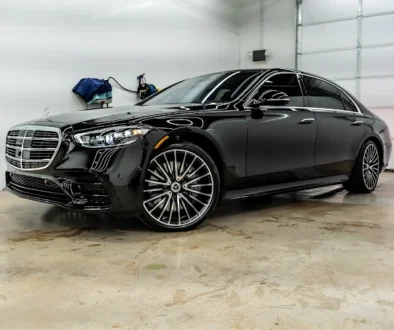
The visual transformation of a vehicle after a quality ceramic coating installation is one of the most consistently noticed outcomes by drivers in the Rockville, MD market. The coating fills microscopic surface texture in the clear coat and creates a uniformly smooth layer that reflects light more consistently and deeply than uncoated paint. Factory paint colors appear more saturated and vivid. Dark paint shows a liquid-mirror quality that it may not have had even when the vehicle was new, because the paint correction that precedes quality ceramic installation removes the swirl marks that scattered light and reduced the depth of the reflection.
This visual enhancement persists throughout the coating’s covered lifespan rather than fading after the first wash. For any driver who takes pride in how their vehicle looks, ceramic coating in Rockville, MD delivers an appearance upgrade that compounds with the protection benefits rather than existing separately from them.
Reduced Maintenance Time and Cost
The Real Savings From Fewer Detail Appointments
The hydrophobic and chemical resistance properties of ceramic coating reduce the frequency and intensity of the detailing appointments needed to maintain a vehicle’s paint condition. Contamination that requires aggressive washing and clay bar decontamination on unprotected paint releases more easily from ceramic-coated surfaces, which means standard washing produces cleaner results and full decontamination treatments are needed less frequently. The accumulation of swirl marks from washing is slower on the harder ceramic surface than on bare clear coat, which means paint correction cycles are extended.
For Rockville, MD drivers who currently invest in quarterly or biannual detail appointments to maintain their vehicle’s appearance, ceramic coating reduces the intensity of each session and extends the interval between full correction treatments. The per-year maintenance cost of a ceramic-coated vehicle is consistently lower than the same vehicle maintained without coating protection, which contributes meaningfully to the return on investment calculation over a five-year ownership period.
Preserved Resale Value in the DMV Market
How Paint Condition Affects Trade-In and Private Sale Value
The DMV area’s used vehicle market is competitive, and buyers inspect paint condition carefully before making offers. A vehicle with factory-fresh paint protected by documented ceramic coating coverage commands a stronger trade-in and private sale position than an equivalent vehicle with visible swirl marks, UV fading, and bird-dropping etching accumulated across the same ownership period. In the Rockville, MD and broader Maryland market where buyers have significant options, paint condition is one of the clearest visual differentiators that influences offer strength.
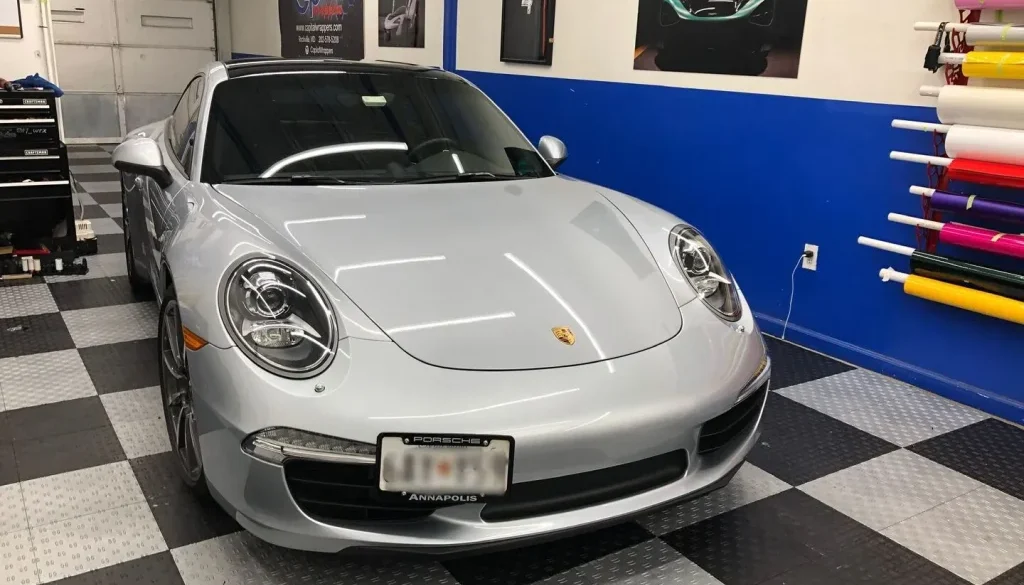
The resale benefit of ceramic coating is most pronounced on luxury vehicles, performance cars, and EVs where the cost of paint correction and repainting is proportionally higher and buyers are more discerning about surface condition. Capital Wrappers installs ceramic coating on Tesla, Rivian, Porsche, BMW, and Mercedes vehicles in Rockville, MD specifically because these owners understand that the coating investment is also a resale value investment that pays back at the end of ownership.
Signal Compatibility for Technology-Equipped Vehicles
One benefit that generic ceramic coating guides rarely address is the signal compatibility advantage of ceramic coating over metallic alternatives. The DMV area has one of the highest concentrations of technology-equipped vehicles in the country. Tesla, Rivian, luxury German brands, and technology-heavy SUVs with adaptive cruise control, forward collision warning, and GPS-dependent navigation systems all depend on unobstructed signal transmission through the vehicle’s glass and exterior surfaces.
Ceramic coating uses non-metallic chemistry that produces zero interference with GPS signals, toll transponders on Maryland’s ICC and Express Toll lanes, cell phone reception, or any electronic system in the vehicle. This is a direct contrast to older metallic paint protection products whose conductive particles interfere with these frequencies. For Rockville, MD and DMV area drivers whose vehicles depend on seamless connectivity and driver assistance systems, ceramic coating’s non-interference property is a genuine functional benefit.
Who Gets the Most From Ceramic Coating in Rockville MD
Daily Highway Commuters
Drivers covering daily commutes on I-270, the Beltway, and Maryland’s major corridors accumulate the brake dust, industrial fallout, road salt, and UV exposure described throughout this guide at the highest rate of any driver profile. The maintenance reduction, salt defense, and UV protection benefits of ceramic coating compound across every commuting day, making the return on investment faster for high-mileage daily drivers than for any other ownership pattern.
New Vehicle Owners
New vehicle owners who install ceramic coating within the first month of ownership lock in factory-fresh paint at zero additional correction cost. Every month of unprotected driving on Maryland roads accumulates swirl marks, contamination, and UV exposure that either requires correction before coating or gets locked in permanently if coating is applied without correction. The earlier the installation, the more completely the coating preserves factory paint condition across the full ownership period.
Luxury and EV Owners
Luxury vehicle and EV owners in Rockville, MD benefit from ceramic coating on multiple dimensions simultaneously. The appearance enhancement is most visible and most valued on premium paint colors. The resale value preservation is most financially significant on vehicles with higher initial values. The signal compatibility benefit is most relevant to vehicles with extensive electronic systems. Capital Wrappers serves Tesla, Rivian, Porsche, and luxury brand owners across the DMV area specifically because these vehicles represent the ownership profile where ceramic coating’s full benefit set delivers the strongest combined return.
What Ceramic Coating Cannot Do
Common Benefit Claims That Are Exaggerated
Ceramic coating delivers genuine and significant benefits but some marketing claims overstate its capabilities in ways that create unrealistic expectations and ultimately disappointed customers.
Scratch-proof claims are false. Ceramic coating resists the micro-abrasions from washing and minor contact that cause swirl marks. It does not prevent rock chips, deep scratches, or physical impacts. Maryland drivers who install ceramic coating expecting complete scratch immunity will be disappointed when highway debris from I-270 leaves a chip through the coating.
Self-cleaning claims are overstated. The hydrophobic surface reduces contamination adhesion and makes washing more effective. It does not make washing unnecessary. Vehicles still accumulate contamination that requires regular washing to address. The benefit is reduced maintenance effort, not eliminated maintenance.
Permanent protection claims are misleading. Every ceramic coating has a warranted lifespan that reflects its actual durability. No ceramic coating is genuinely permanent. Premium coatings last five to ten years in Maryland conditions with proper maintenance. Coatings that are not maintained correctly fall short of their warranted lifespan regardless of the product tier.
Conclusion
Ceramic coating delivers eight distinct benefits for Rockville, MD drivers that are each amplified by Maryland’s specific climate, road conditions, and driving patterns. Road salt defense during Maryland winters. UV protection across the long sun season. Hydrophobic performance against DMV rainfall and humidity. Chemical resistance against the organic contamination that Maryland’s environment delivers consistently. Gloss enhancement that lasts years. Reduced maintenance time and cost. Preserved resale value in a competitive DMV used vehicle market. Signal compatibility for the technology-equipped vehicles that define the Rockville, MD ownership profile.
None of these benefits exist in isolation. They compound across every day of ownership into a return on investment that typically breaks even within two years for daily Maryland commuters and continues delivering value across the full covered lifespan of the installation. For Rockville, MD drivers considering ceramic coating, understanding these benefits in the context of local driving and climate conditions is what makes the decision straightforward rather than speculative.
Find Out Which Ceramic Coating Package Fits Your Vehicle.
Eight genuine benefits. One professional installation. Capital Wrappers in Rockville, MD provides transparent written quotes that explain exactly what each ceramic coating tier delivers for your specific vehicle and driving situation. Stop by the shop or call (301) 417-5977 to discuss your vehicle’s paint condition, your daily driving patterns, and which ceramic coating package delivers the strongest return for your ownership goals.
Frequently Asked Questions
How quickly do ceramic coating benefits become noticeable after installation in Rockville, MD?
The gloss enhancement and hydrophobic water beading are noticeable immediately after the initial curing period of 24 to 48 hours. The road salt defense and chemical resistance benefits are active from the moment the coating fully cures. The UV protection benefit accumulates its value across the first full UV season after installation. The maintenance reduction benefit becomes fully apparent after the first few washes when the ease of contamination removal compared to uncoated paint is directly experienced.
Does ceramic coating benefit older vehicles in Maryland or only new cars?
Ceramic coating benefits vehicles of any age as long as the paint is in reasonable condition and paint correction is performed before application. Older Maryland vehicles with paint that has survived multiple salt seasons and UV cycles benefit particularly from the chemical resistance and UV blocking that slows further degradation of the remaining clear coat. The correction required before coating on older vehicles adds cost but the combined result of corrected paint plus ceramic protection delivers a visible improvement and meaningful ongoing protection for the remaining ownership period.
How does Maryland road salt specifically interact with ceramic coating during winter commutes?
Road salt and brine spray from treated Maryland roads deposits onto all vehicle surfaces during winter commutes. On ceramic-coated paint, this salt has less surface adhesion than on bare or wax-treated surfaces, which means it disperses more completely during rinsing and leaves less residual chemistry between washes. The ceramic surface also provides a chemical buffer at existing chip sites where salt moisture contact is most concentrated, slowing the corrosion initiation process that unprotected chip sites experience through repeated winter exposure.
Can ceramic coating be combined with paint protection film on the same vehicle in Rockville, MD?
Yes. Applying ceramic coating over paint protection film is a recommended combination that adds hydrophobic performance, chemical resistance, and gloss enhancement to the film-covered zones while delivering the same benefits across all other painted surfaces simultaneously. Capital Wrappers installs both products as part of the Ultimate Protection Package, and the combined installation is scheduled as a single appointment that reduces total preparation labor compared to booking each service separately.
Does the ceramic coating benefit vary between vehicle colors in Maryland conditions?
The protection benefits including road salt defense, UV blocking, and chemical resistance apply equally across all paint colors. The visual benefits vary by color. Dark colors including black, navy, and dark grey show the gloss enhancement most dramatically because the reduction in light-scattering micro-scratches is most visible against a deep background. White and silver vehicles show the hydrophobic beading most clearly in rain and after washing. Light-colored vehicles show the UV fading prevention benefit most clearly over time because color shift from oxidation is most noticeable on lighter backgrounds.