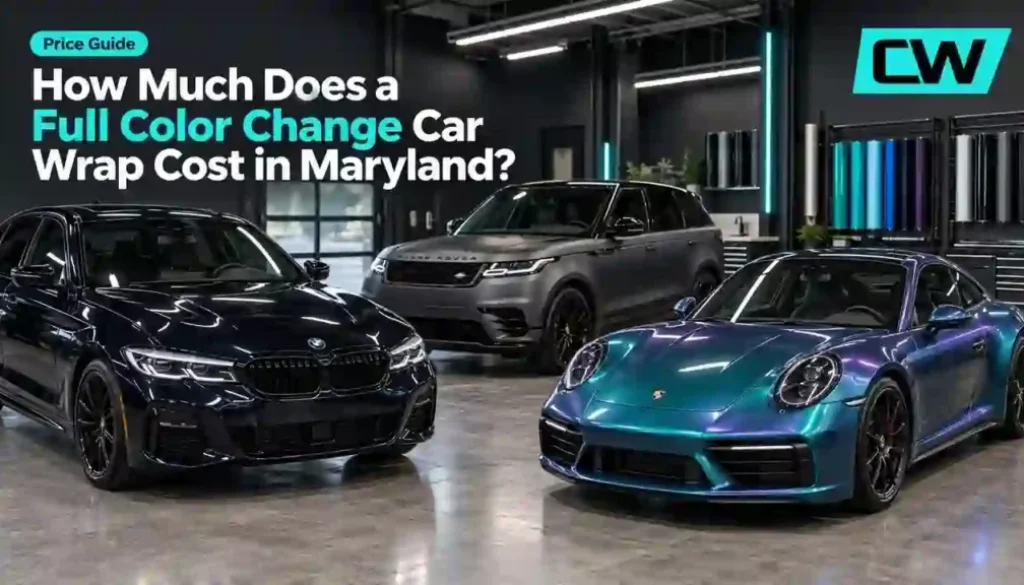
How Much Does a Full Color Change Car Wrap Cost in Maryland? (2026 Guide)
A full color change car wrap cost in Maryland typically runs $2,500 to $6,500. The exact price depends on vehicle size, vinyl tier, and finish. Rockville drivers often hear one number from a friend. Then they get a completely different quote from a shop. Capital Wrappers installs color-change car wraps in Rockville every week and sees this confusion constantly. This guide breaks down exactly what drives that price, panel by panel and finish by finish.
What Drives the Cost of a Full Color Change Wrap in Maryland
Six factors set the final number on a wrap quote. Each factor moves the price up or down on its own. That is why two vehicles that look similar can carry very different totals once the quote arrives.
Vehicle Size and Panel Count
Larger vehicles need more vinyl wrap material types and more labor hours. A compact sedan uses roughly 55 to 70 square feet of film. A full-size SUV can use over 150 square feet, which raises both material and labor cost. Fenders, mirrors, and door handles add extra cutting and trimming time that a flat panel does not require.
Vinyl Brand and Product Tier
Entry-level and premium cast vinyl differ by $1.50 to $3.00 per square foot in material cost alone. On a typical sedan that gap adds up to $75 to $210 in material terms. The gap grows once labor and manufacturer warranty backing get factored into the total price.
Finish Type and Material Difficulty
Gloss is the baseline finish for most quotes. Matte, satin, chrome, and color-shift each carry added material cost. They also take longer to install. The film reacts differently to heat, stretching, and edge wrapping than standard gloss vinyl does.
Installation Depth: Surface Wrap vs Full Disassembly
A surface wrap stops at panel edges and leaves a visible seam line. A full disassembly wrap removes trim and lights, tucking film into recessed areas instead. Disassembly costs more in labor, but it holds up far better against Maryland’s road salt and winter grime.
Paint Condition and Surface Prep
A vehicle with rock chips, faded clear coat, or old touch-up paint needs correction before wrapping. Paint correction typically adds $200 to $600 to the total. Skipping this step traps imperfections under the vinyl and shortens how long the finished wrap looks clean.
Installer Certification
Certified installers carry manufacturer-backed training on specific vinyl lines. Uncertified shops can buy and apply the same vinyl roll. They cannot, however, register that installation for manufacturer warranty coverage if a defect shows up later.
Full Wrap Pricing by Vehicle Type in the Rockville Market
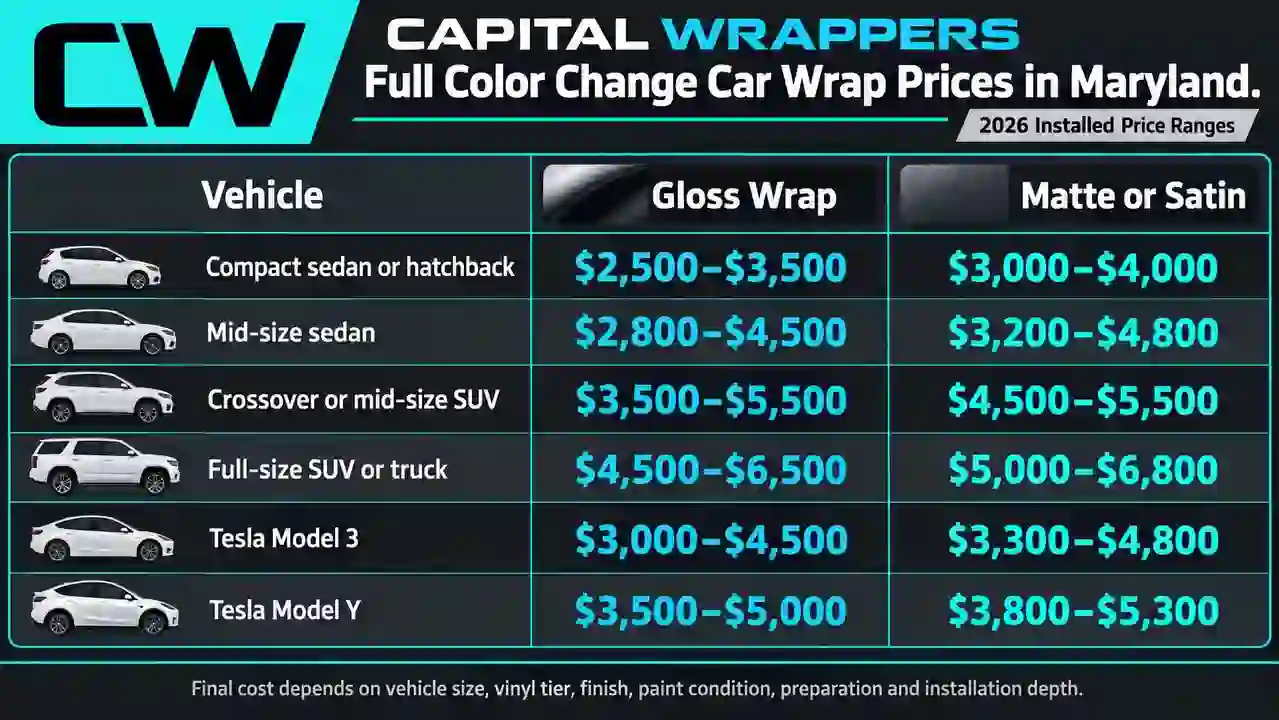
Vehicle category is the biggest price driver after finish type. Capital Wrappers quotes the ranges below for a full exterior color change wrap installed by a certified installer. Standard gloss cast vinyl is the baseline material.
|
Vehicle Type |
Full Wrap Cost (Gloss) |
Full Wrap Cost (Matte or Satin) |
|
Compact sedan or hatchback |
$2,500 – $3,500 |
$3,000 – $4,000 |
|
Mid-size sedan |
$2,800 – $4,500 |
$3,200 – $4,800 |
|
Crossover or mid-size SUV |
$3,500 – $5,500 |
$4,500 – $5,500 |
|
Full-size SUV or truck |
$4,500 – $6,500 |
$5,000 – $6,800 |
|
Tesla Model 3 |
$3,000 – $4,500 |
$3,300 – $4,800 |
|
Tesla Model Y |
$3,500 – $5,000 |
$3,800 – $5,300 |
Compact Sedans and Hatchbacks
Compact cars sit at the low end of the range because they need less material and less labor time overall. A partial wrap on a compact profile is often the better value. Fewer panels are needed to noticeably change how the whole car looks on the road.
Crossovers and Mid-Size SUVs
This is the most common vehicle category on the road in Montgomery County, and pricing reflects the added panel area over a standard sedan. Deep window trim and larger side mirrors add modest labor time on most crossover and mid-size SUV models.
Full-Size SUVs and Trucks
Extended panel area and complex body geometry push full-size vehicles to the top of the pricing range. Truck beds, running boards, and tailgates all add material and labor. Two-tone designs can actually reduce total vinyl use compared to a full single-color wrap.
Tesla and Other EVs in the DMV
Glass roofs are excluded from wrap coverage on most EVs sold in the DMV. Tesla’s factory clear coat also runs thinner than on many gas vehicles. That calls for a gentler heat-gun technique during installation, since aggressive heat can stress the thinner paint layer underneath.
Partial Wraps: A Lower-Cost Alternative
A partial wrap on a hood, roof, or set of mirror caps typically runs $500 to $1,500 depending on panel size and prep work needed first. A well-placed partial wrap on high-visibility panels often delivers more visual impact per dollar spent. A full wrap in a less dramatic finish often costs more for a similar visual result.
Full Wrap Pricing Across the DMV: Rockville, Bethesda, and Beyond
Pricing stays consistent across most of the DMV service area, since labor and material costs do not change much within a 30-mile radius. Rockville, Gaithersburg, North Bethesda, Potomac, Aspen Hill, and Derwood drivers all see the same vehicle-type pricing outlined above. Sterling, Virginia customers fall into the same range.
Baltimore and other locations farther from Rockville can add a modest travel or pickup fee. The amount depends on the vehicle and scheduling. A quick call or photo-based quote is usually enough to confirm whether an address falls inside standard pricing.
Local pricing consistency matters most to shoppers comparing quotes across cities. A wrap quoted in Bethesda should land close to a quote for the same vehicle in Rockville. That holds true as long as both shops use comparable vinyl tiers and installation depth.
Vinyl Cost Per Square Foot: What You Are Really Paying For in 2026
Shoppers comparing quotes often ask what the vinyl itself costs per square foot, separate from labor. That number varies more than most people expect. It also explains why two quotes for the exact same car can look so different on paper.
|
Vinyl Tier |
Cost Per Sq Ft (Material Only) |
Typical Lifespan |
Examples |
|
Calendered or budget film |
$2 – $6 |
2 – 3 years |
Unbranded or signage-grade vinyl |
|
Cast vinyl, standard |
$6 – $10 |
5 – 7 years |
3M 2080, Avery Dennison SW900 |
|
Cast vinyl, premium or specialty |
$12 – $25+ |
5 – 7 years |
Inozetek, KPMF chrome and color-shift lines |
Material cost is only part of the invoice. Labor, surface prep, edge wrapping, and disassembly typically make up more than half the total price on a professional install. A shop quoting far below these ranges is almost always cutting corners in one of those areas. It is rarely just a matter of cheaper vinyl.
Calendered vinyl feels similar to cast vinyl in a showroom. That similarity is exactly why budget quotes can look tempting at first glance. The difference shows up after a year or two of Maryland sun and salt. Calendered film starts to shrink, crack at the edges, or lift around curved panels. Cast vinyl handles those same conditions without issue.
Specialty Finishes: What Matte, Chrome, and Color-Shift Wraps Cost
Finish type changes both material cost and labor difficulty. Capital Wrappers works with a short list of vetted vinyl lines for specialty finishes. Not every product performs the same once it sits on a body panel through a full Maryland winter.
Matte and Satin Finishes
Matte and satin finishes on a sedan run $3,000 to $5,500. These finishes show installation errors more visibly than gloss. A matte panel has no reflective surface to hide a seam or stretch mark. Gloss vinyl can hide those flaws far more easily.
Chrome Finishes
Chrome finishes start around $6,000 and can exceed $10,000 on larger vehicles. The film requires a specialized heating and stretching technique with a narrower margin for error than gloss or matte film. That technical difficulty drives most of the added labor cost over a standard color change.
Color-Shift Finishes
Color-shift wraps change hue depending on viewing angle and light. These finishes typically cost $5,000 to $8,000. That price reflects the premium film cost and the extra care involved. Keeping the color-shift effect consistent across every panel seam takes a steady hand.
Choosing the right wrap finish for a specific vehicle takes more than personal taste. Body shape and panel geometry matter just as much as the color itself.
Full Wrap vs Repainting: Which Costs Less in Maryland
What a Comparable Repaint Costs in the Rockville Market
A standard color respray in the Rockville market runs $3,000 to $6,000. Premium paint jobs with clear coat upgrades run $5,000 to $10,000 or more. Specialty finishes applied in paint add another $1,500 to $3,000 on top of that base price.
|
Factor |
Full Color Change Wrap |
Repaint |
|
Cost (standard finish) |
$2,500 – $4,500 |
$3,000 – $6,000 |
|
Cost (specialty finish) |
$3,000 – $8,000 |
$5,000 – $13,000+ |
|
Turnaround time |
2 – 3 days |
1 – 2 weeks |
|
Reversibility |
Removable, factory paint intact |
Permanent |
|
Paint protection |
Shields from chips, UV, salt |
None added |
Why Most Maryland Drivers Choose a Wrap
Wraps come out ahead on three points. They protect the factory paint instead of replacing it. They cost less at every specialty finish tier, and they take days instead of weeks. Full color change wraps and styling work also let an owner return to factory paint later. Most paint jobs can’t offer that option at resale.
When a Full Respray Still Makes Sense
Repainting still makes sense in specific cases. A vehicle with rust through the body panels or existing structural damage needs bodywork first. The same is true if the paint has failed down to bare metal. Don’t decide on a wrap or paint until you address the underlying damage.
Wondering what a specific vehicle would cost to wrap in Rockville? A firm, itemized quote can be put together after a quick photo review or an in-person look at the vehicle, covering vinyl tier, finish, and panel disassembly for a full color change wrap. Call 301-417-5977 or get in touch online to schedule a walk-through. You can lock in current 2026 pricing before booking.
How Long a Color Change Wrap Lasts in Maryland’s Climate
What Four Seasons Do to Vinyl in the DMV
Maryland’s weather is harder on vinyl than a mild, stable climate. Summer heat from June through September puts sustained thermal stress on the film and its adhesive layer. Long stretches of direct UV exposure add to that stress. Winter brings road salt and freeze-thaw cycling. Both accelerate wear at edge seams and panel gaps faster than dry, temperate regions ever see.
How Long a Quality Wrap Lasts With Proper Care
Manufacturer warranties on quality cast vinyl run 5 to 7 years. Reaching that full lifespan takes routine care, especially during the salt season from November through March. How long a vehicle wrap really lasts depends heavily on everyday driving conditions. Regular washing is consistently the single habit that extends wrap life the most in this region. Matte and satin finishes need slightly more attention than gloss. Their textured surface holds road grime and salt residue longer between washes.
How Long Does a Full Vehicle Wrap Take to Install
A full color change wrap on a sedan or compact SUV typically takes 2 to 3 working days from drop-off to final inspection. Full-size SUVs and trucks with more panel area can run 3 to 4 days. Chrome and other specialty finishes often add a half day to a full day. The material is simply less forgiving during application than standard gloss vinyl.
That timeline includes surface prep, any needed paint correction, and panel removal on jobs with wrapped edges. It also includes a final quality check before the vehicle leaves the shop. Rush jobs completed in a single day are a warning sign. You can’t safely compress proper prep and cure time that much.
A Sample Quote: What Goes Into a Full Wrap for a Crossover
A real quote breaks down into clear line items, not just a single total. The example below shows a typical gloss color change wrap on a mid-size crossover in the Rockville market.
|
Line Item |
Typical Cost |
|
Vinyl material (cast, standard tier) |
$650 – $900 |
|
Surface prep and minor paint correction |
$250 – $400 |
|
Panel disassembly and edge wrapping |
$600 – $900 |
|
Installation labor |
$1,600 – $2,400 |
|
Estimated total |
$3,500 – $4,900 |
This breakdown matches the crossover range shown earlier in this guide. Labor makes up the largest single line on almost every quote, not the vinyl itself. A quote that skips disassembly, or lists one flat number with no breakdown, deserves a few more questions before booking.
How to Evaluate a Color Change Wrap Quote in Rockville
What a Legitimate Written Quote Covers
A legitimate written quote should name the exact vinyl manufacturer and product line, not just say “premium vinyl.” It should also spell out warranty terms and the installation approach. Panel disassembly, surface prep, and the total price should all appear with no vague add-ons expected later.
Red Flags in Low-Cost Quotes
Watch for calendered vinyl substituted for cast vinyl without disclosure, since calendered film is stiffer and conforms poorly to curved panels. A quote with no mention of surface prep or panel removal is another warning sign worth asking about directly. How to choose a vehicle wrap shop in Rockville covers certification checks in more depth. It is a useful next step before booking any quote, alongside a look at the shop’s own portfolio. Price alone rarely tells the full story. A quote thousands of dollars below these ranges usually means a lower vinyl tier. It can also mean a shortcut somewhere in prep.
Warranty Coverage and What It Means for a Wrap Investment
Certified installers can register a wrap with the vinyl manufacturer for a backed warranty. That coverage typically runs 5 to 7 years depending on the product line and finish chosen. Uncertified shops cannot register that coverage, even when they install the exact same vinyl roll.
That distinction matters more than it sounds. A manufacturer warranty covers defects like premature fading, cracking, or adhesive failure under normal conditions. It does not cover damage from an accident, improper washing methods, or aftermarket chemicals applied to the film. Full vehicle wrap warranty coverage terms vary by vinyl brand and finish. Ask a shop to show the specific manufacturer documentation before signing off on any quote.
Vehicle Registration and Other Costs Maryland Drivers Should Plan For
Do Wraps Need to Be Reported to Maryland’s MVA
A full color change wrap changes a vehicle’s exterior color, which some owners assume needs to be reported somewhere. A removable vinyl wrap is not a permanent paint change. If you are unsure, confirm current requirements directly through Maryland’s vehicle registration resources. Rules can change, so it pays to check before booking a wrap.
Removal, Chrome Delete, and Trim Add-Ons
A few smaller costs round out most quotes. Removing an older wrap typically costs $500 to $1,500. The price depends on how long the film has been on the vehicle. Chrome delete or trim work on badges and window surrounds typically adds $300 to $800. Door jamb wrapping extends the film into door openings for a cleaner finished look. It adds another $300 to $600 to a quote.
Final Thoughts on Color Change Wrap Pricing in Maryland
A full color change wrap in Maryland typically costs $2,500 to $6,500 for standard finishes and $5,000 to $10,000 or more for chrome and specialty films. Vehicle size, vinyl tier, finish, and installation depth explain nearly the entire gap. Those four factors separate a budget quote from a premium one.
Drivers weighing a wrap against other paint protection options should also look at paint protection film pricing in Maryland. Material tier and coverage area drive most of the price gap there, too. Capital Wrappers quotes both services the same way. Each quote ties a firm number to the exact vehicle, vinyl, and finish involved. It is never a vague estimate pulled from a price list.
Ready to see an accurate number for a specific vehicle? Capital Wrappers can walk through vinyl options, finish choices, and total cost for a full color change wrap. You can have that conversation over the phone or in person at the Rockville shop. Call 301-417-5977 or use the contact page to schedule a quote. A firm price can be locked in before committing to a color.
Frequently Asked Questions
How much does a full color change wrap cost for a sedan in Rockville, Maryland?
Standard gloss on a sedan runs $2,500–$4,500 in the Rockville market. Matte or satin typically runs $3,000–$5,500. Chrome and color-shift finishes typically run $5,000–$10,000+, depending on panel count, vinyl tier, and the prep work a certified installer completes before starting the job.
Is a full car wrap cheaper than repainting in Maryland?
For a standard gloss finish, a full wrap and a quality repaint cost roughly the same in Maryland, around $2,500–$6,000. For chrome, color-shift, or other specialty finishes, a wrap typically costs thousands less than comparable custom paint, while also protecting the factory paint underneath.
How much does a chrome wrap cost compared to a standard color change?
Chrome finishes start around $6,000 and can exceed $10,000 on larger vehicles, due to the specialized technique the film requires. Standard gloss color change wraps run $2,500–$6,500 depending on vehicle size, roughly half the cost of a comparable chrome installation in most cases.
How long does a color change wrap actually last in Maryland’s weather?
Quality cast vinyl carries a manufacturer warranty of 5–7 years. Maryland’s road salt season from November through March and summer UV exposure both accelerate wear at seams and edges, so regular washing during salt season is the biggest factor in reaching that full lifespan.
Can a leased vehicle be wrapped without violating the lease terms?
Most lease agreements allow a removable vinyl wrap since it does not alter the factory paint underneath. Still, it’s worth checking the specific lease terms first. Cast vinyl from a certified installer removes cleanly at lease-end, leaving the original paint in its starting condition.
How much vinyl does it take to wrap an average car, and what does it cost per square foot?
A typical sedan needs roughly 55–70 square feet of vinyl for a full wrap. Material alone runs $2–$25+ per square foot depending on tier, from budget calendered film to premium cast vinyl, before labor, prep, and installation costs are added, with larger SUVs needing well over 100 square feet.