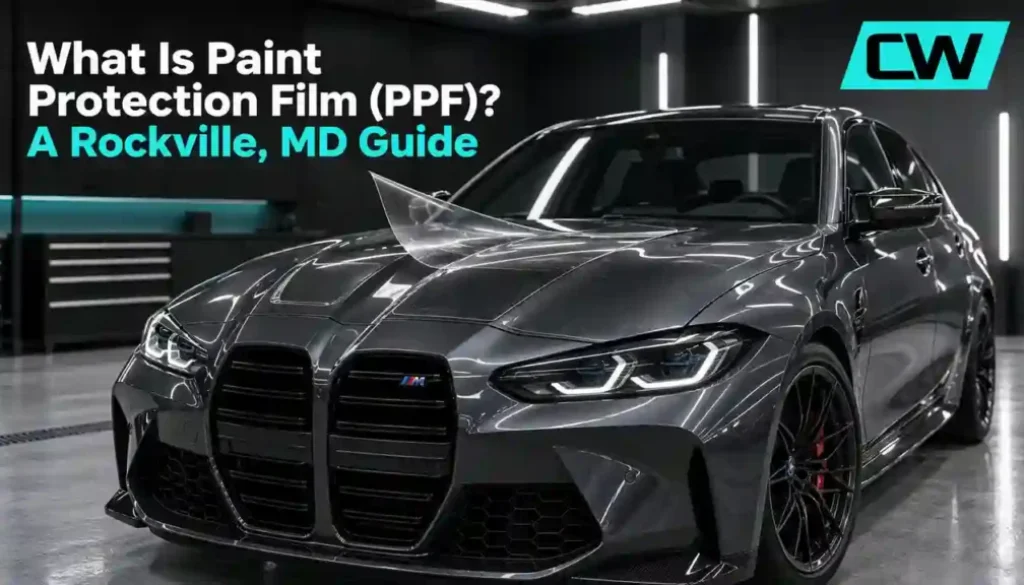
What Is Paint Protection Film (PPF)? A Complete Guide for Rockville Drivers
Rockville drivers asking what paint protection film is usually want one direct answer. It is a clear, self-healing film bonded over factory paint to block chips and scratches. Capital Wrappers installs paint protection film in Rockville, MD, on daily commuters and new Tesla and Rivian deliveries.
Key Takeaways
- PPF stands for paint protection film, a clear urethane layer bonded over factory paint to block chips and scratches.
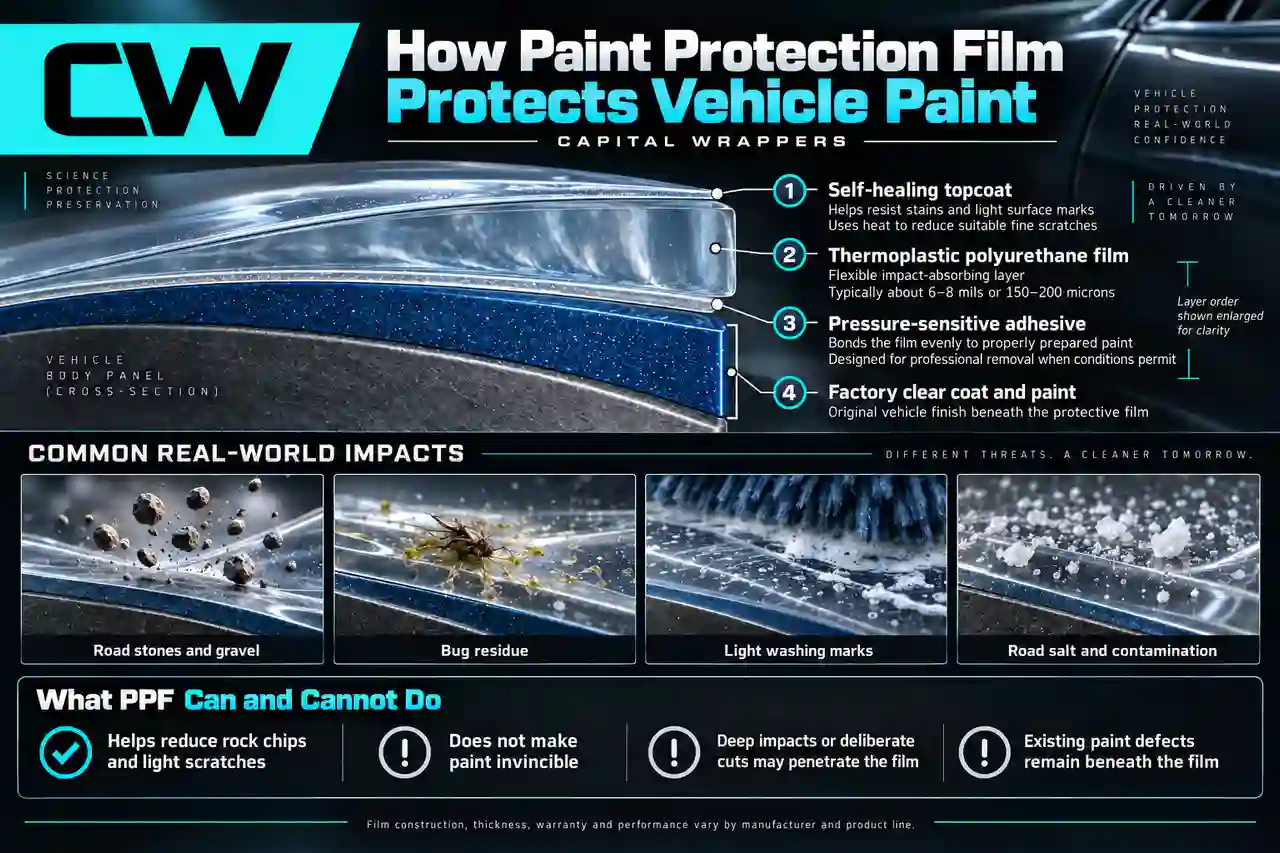
- Most quality film is thermoplastic polyurethane (TPU), 150 to 200 microns thick, with a self-healing top coat and an impact-absorbing base layer.
- Coverage comes in tiers, from partial front kits to full front, track packages, and full-vehicle wraps.
- Professional PPF installation in Maryland runs roughly $900 to $9,000 or more in 2026, depending on coverage area and vehicle size.
- PPF absorbs physical impacts like rock chips and keying; ceramic coating provides UV and chemical resistance.
- Quality film carries a manufacturer warranty of 7 to 12 years, with proper hand washing and maintenance extending its working life.
What Does PPF Stand For, and What Does It Actually Protect Against?
PPF stands for paint protection film. It is a thin, transparent or tinted film applied over factory paint, headlights, or trim.
The film absorbs impact before it reaches the clear coat underneath. It physically blocks contact between road debris and paint, rather than just adding a slick surface layer like wax. The technology traces back to polyurethane film developed for helicopter rotor blades, later adapted for car paint.
Paint protection film typically guards against these everyday threats:
- Rock chips and stone kickback from highway driving
- Fine scratches and swirl marks from washing and parking lots
- Bug splatter, tree sap, and bird droppings that etch clear coat
- UV fading and oxidation on hoods, mirrors, and bumpers
- Road salt and de-icing chemicals common on Maryland winter roads
What Is Paint Protection Film Made Of?
Most modern PPF is made from thermoplastic polyurethane, often shortened to TPU. This material stretches around curves yet resists punctures well.
A finished film has three working layers. A polyurethane base absorbs impact, and a self-healing top coat smooths out light marks with heat. An adhesive layer then bonds the whole film to paint.
Film thickness usually runs 6 to 8 mils, or roughly 150 to 200 microns. Capital Wrappers sources film built to that standard, since thinner films wear out faster on Maryland’s busy roads. Cheaper films sometimes use PVC instead of TPU, which is stiffer, yellows faster, and rarely self-heals.
How Does Paint Protection Film Actually Work?
Paint protection film works as a sacrificial barrier. Debris strikes the film first, and the film absorbs that energy before it can chip the paint below.
The self-healing top coat is the part most drivers notice first. Light swirls and fine scratches soften and disappear when warmed by sunlight or a hot cloth. Over time, oils in that same coating evaporate under UV exposure, which is normal wear.
The adhesive layer matters just as much as the top coat. A properly cured adhesive lets a trained installer remove PPF years later without damaging the clear coat underneath.
What Types of Paint Protection Film Are Available?
Most installers offer three main film categories, each suited to a different look and budget.
Clear Paint Protection Film
Clear film is the standard choice. It preserves the factory paint color while adding a nearly invisible layer across high-impact panels.
Matte Paint Protection Film
Matte film swaps gloss for a satin finish while still protecting the paint underneath. Drivers who want a factory-matte look typically choose this option. Capital Wrappers installs matte paint protection film as an alternative to matte vinyl wraps, since the film also self-heals.
Colored Paint Protection Film
Colored film combines protection with a color change, similar to a wrap. It works well for drivers who want color flexibility without a full repaint.
Deciding between partial front coverage and a full wrap depends on how much highway driving a car sees each week. The Rockville shop offers a free in-person assessment to map out which panels need PPF first. Call 301-417-5977 or get in touch to schedule a walkthrough and receive a scoped quote for this vehicle.
How Much of the Car Should Be Covered in PPF?
PPF is sold in coverage tiers, not as one fixed package. Picking the right tier depends on how a car is driven, not just the sticker price.
Partial Front and Full Front Kits
A partial front kit covers the edges most exposed to rock strikes, such as the bumper and hood edge. A full front kit extends that coverage across the entire hood, bumper, fenders, and mirrors.
Track Package and Full Vehicle Coverage
A track package adds rocker panels and rear impact zones for aggressive highway driving. Full vehicle coverage wraps every exterior panel, which suits daily drivers that rarely get garaged.
Choosing a Tier by Driving Habit
Short commutes on local roads rarely need more than a front kit. Long I-270 or I-495 commutes justify moving up to a track package or full coverage.
Is Paint Protection Film Worth the Cost in 2026?
Cost is the most common hesitation, and it is a fair one. Professional PPF installation in Maryland typically runs $900 for a partial front kit to $9,000 or more for full-vehicle coverage.
That range depends heavily on coverage area, vehicle size, and paint condition before installation. Full-vehicle jobs cost more up front but remove the need to pick panels one at a time.
Set against a repaint bill or a lower trade-in appraisal, that upfront number often looks smaller. For exact pricing by coverage level, see the 2026 PPF cost guide with every package broken down.
Does Paint Protection Film Protect Against Keying and Rock Chips?
This is one of the most searched PPF questions, and the honest answer is nuanced. PPF significantly reduces both risks, but it does not make a car invincible.
Rock Chip Protection
Rock chips are PPF’s strongest use case. At 150 to 200 microns thick, the film absorbs highway debris that would otherwise chip factory paint.
Ceramic coating cannot do this job. A coating measures just 1 to 2 microns, with no material depth left to absorb a stone strike.
Keying and Deep Scratches
Against keying, PPF adds a real buffer, but a deliberate deep scratch can still mark the film. The upside is that the damage stays in the film layer, not the paint underneath. See our full breakdown of ceramic coating and rock chips for more on impact resistance.
A scratched PPF panel can often be replaced on its own. A scratched clear coat usually means a full panel respray to match factory color.
How Is Paint Protection Film Different From a Vinyl Wrap?
PPF and vinyl wraps look similar at a glance, but they solve different problems. PPF is built for impact protection, while wraps are built for color change and branding.
Vinyl wrap material is thinner than PPF and lacks the same self-healing top coat. It changes appearance well, but it was never designed to absorb rock strikes. Cost splits differently too, since a full color-change wrap in Maryland typically runs $2,500 to $8,000 depending on finish.
Many owners in Rockville combine both. The same shop runs color-change wrap services in Rockville alongside PPF installation, and both fit into one visit.
Paint Protection Film vs Ceramic Coating: Which Do Maryland Drivers Need?
PPF and ceramic coating are often marketed as competitors, but they protect against different threats. Most Maryland drivers benefit from running both together.
|
Factor |
Paint Protection Film |
Ceramic Coating |
|
Primary job |
Physical impact protection |
Chemical and UV resistance |
|
Typical thickness |
150 to 200 microns |
1 to 2 microns |
|
Stops rock chips |
Yes, absorbs impact |
No, too thin to absorb energy |
|
Adds gloss and hydrophobic finish |
Some gloss, not primary purpose |
Yes, main benefit |
|
Typical Maryland cost, 2026 |
$900 to $9,000+ |
$300 to $2,000+ |
|
Best applied to |
Hood, fenders, mirrors, bumper |
Full exterior |
Ceramic coating cannot stop a stone from chipping paint. Its 1 to 2 micron layer has nothing to absorb the impact with. PPF handles that job, while ceramic coating in Rockville, MD covers UV fading and water spots at a lower cost.
Layering both is common for a reason. PPF absorbs the physical hits on high-impact panels, and a ceramic topper adds gloss and easier washing on top.
How Long Does Paint Protection Film Last, and How Do You Maintain It?
Quality PPF typically carries a manufacturer warranty of 7 to 12 years. Actual lifespan depends on the film brand and how the vehicle is maintained.
Keeping PPF in Good Condition
Hand washing with PPF-safe soap and avoiding automatic brush car washes both extend film life. A compatible ceramic topper every year or two helps as well.
Touchless washes are a safer machine option than brush tunnels, since spinning brushes can lift film edges. A quick rinse after road salt exposure also limits residue buildup along seams.
Signs PPF Needs Replacing
Yellowing edges and lifting corners are the clearest signs a section needs replacing. So is a top coat that no longer self-heals. Colored PPF tends to fade first, since pigment breaks down faster than clear film.
What Should Rockville and DMV Drivers Know Before Choosing PPF?
Maryland’s climate creates specific demands on any protective film. Humid summers, winter road salt, and constant highway grit on I-270 and I-495 all accelerate wear.
Salt exposure in particular pushes moisture into any gap left by a poor installation. That is why edge sealing matters more here than in drier states. Drivers commuting between Rockville, Gaithersburg, North Bethesda, and Potomac all cross the same salted arterial roads each winter.
UV exposure through long summer days stresses the polyurethane itself over years of use. For more on how these materials hold up under environmental stress, see the American Chemistry Council’s polyurethane applications overview.
Conclusion
Paint protection film is a urethane-based layer that absorbs rock chips, scratches, and UV damage. Factory paint cannot handle any of that alone. It costs more upfront than wax, but the film takes the damage instead of the paint underneath.
Rockville and DMV drivers weighing PPF against ceramic coating rarely need to pick just one. Capital Wrappers put together a full PPF vs ceramic coating comparison for Maryland drivers covering both side by side.
Paint protection film works best when it matches how a car gets driven, not how it looks in a photo. Capital Wrappers has installed PPF on enough commuters and weekend cars to know which coverage fits which habit. Call 301-417-5977 or get a specific recommendation for one particular vehicle.
Frequently Asked Questions About Paint Protection Film
What does PPF stand for on a car?
PPF stands for paint protection film, a clear or tinted urethane layer bonded over factory paint, headlights, and trim. It blocks rock chips, scratches, and UV fading instead of just adding shine like wax, and Rockville shops install it in coverage tiers from partial front kits to full vehicles.
Does paint protection film actually stop keying damage?
PPF reduces keying damage but cannot fully prevent it. A deep, deliberate scratch can still mark the film, though the damage stays in the sacrificial film layer instead of reaching the paint underneath, and a marked panel section can often be replaced on its own without a full repaint.
What is paint protection film made of exactly?
Most quality PPF is thermoplastic polyurethane, roughly 150 to 200 microns thick, built in three layers. A base layer absorbs impact, a self-healing top coat smooths out light marks with heat, and an adhesive layer bonds everything to the paint without trapping moisture underneath.
Is paint protection film worth the cost for a daily driver?
For highway commuters, yes. Partial front coverage starts around $900 in Maryland and prevents chip damage on the hood and bumper that costs far more to repaint later, especially on high-mileage vehicles that spend hours on I-270 or I-495 each week, where loose stone chips are constant.
What is the real difference between PPF and a vinyl wrap?
PPF absorbs impact and self-heals; vinyl wrap changes color and finish but lacks that impact-absorbing layer entirely. Many Rockville drivers run both together, using clear PPF on rock-chip zones like the hood and bumper, then a full color-change wrap across the rest of the car for a fresh look.
Can paint protection film be applied over ceramic coating?
Installers apply PPF first, directly to bare factory paint, then add ceramic coating on top once the film has fully cured. That order gives full impact protection from the film plus the coating’s added gloss, hydrophobic finish, and easier long-term washing across the whole vehicle.