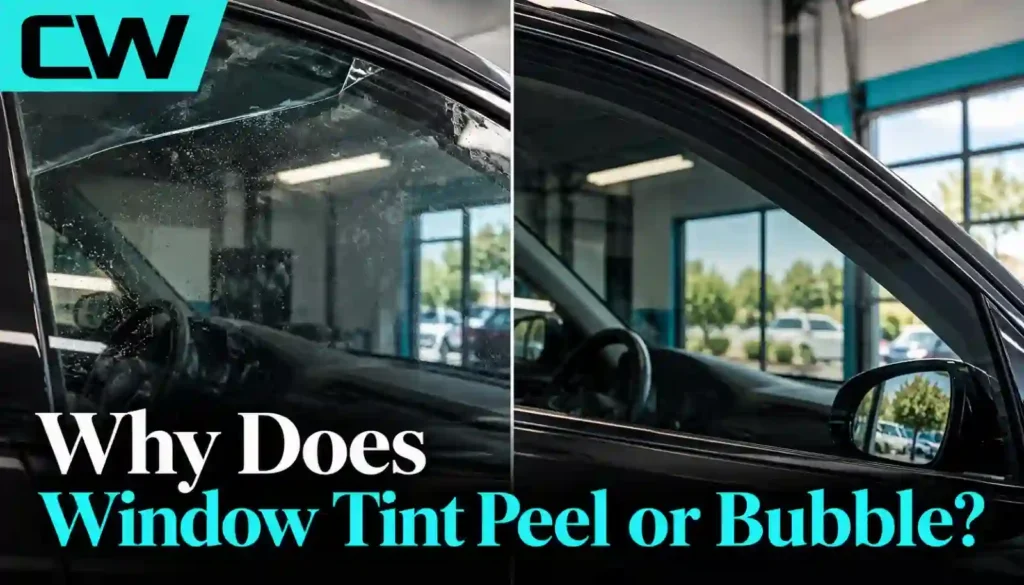
Why Does Window Tint Peel or Bubble? Causes, Fixes, and Prevention
Window tint that once looked flawless can start bubbling, peeling, or rippling within a few years, sometimes sooner. Rockville, MD drivers often ask why window tint peels or bubbles when the film looked fine at first. The short answer is adhesive breakdown, installation quality, or film grade.
Capital Wrappers has inspected hundreds of failing tint jobs across Montgomery County, and this guide breaks down the real causes. Anyone exploring professional window tinting in Rockville, MD should understand these failure patterns first.
What’s Normal After Installation and What’s a Real Tint Failure?
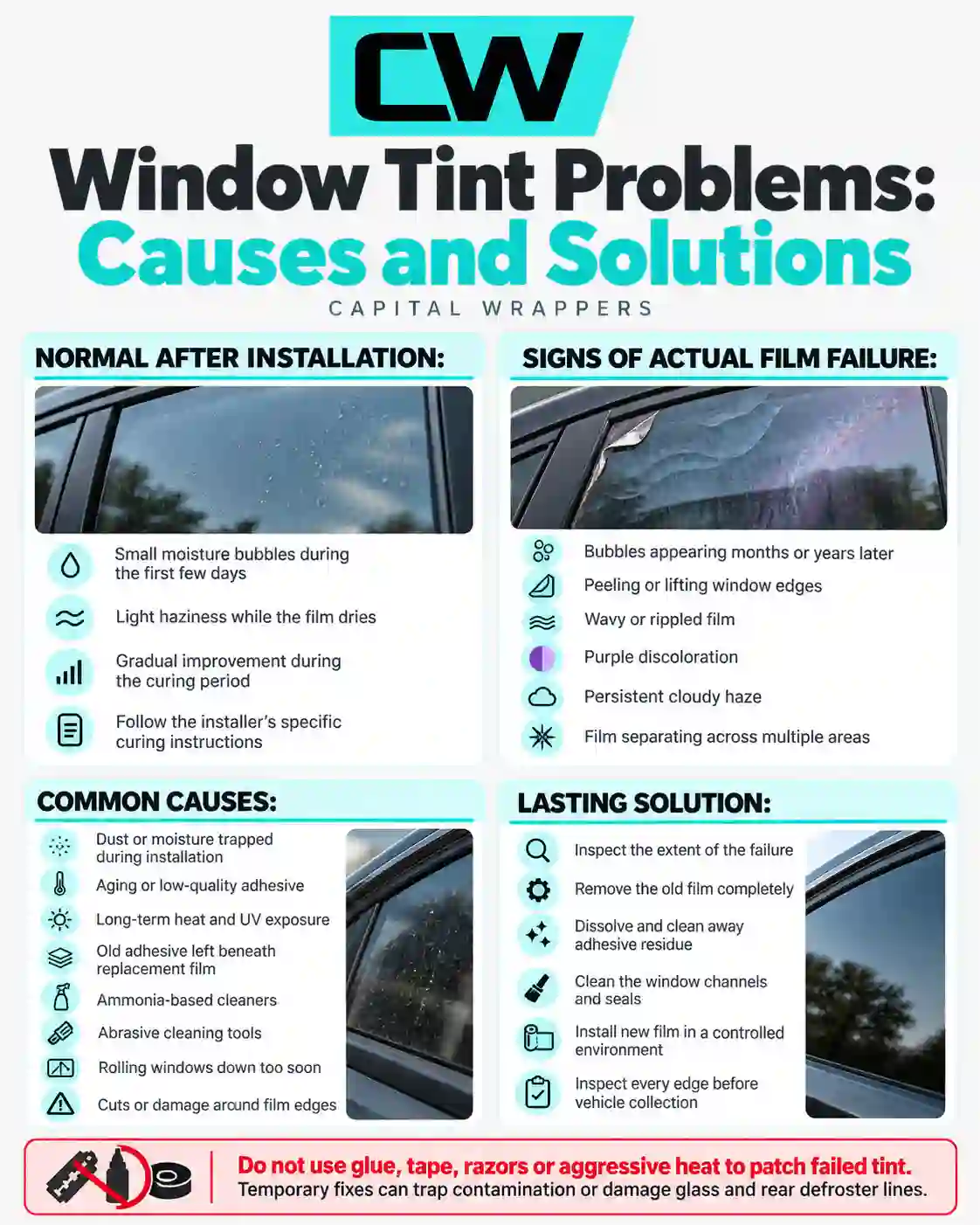
Small, evenly spaced bubbles in the first few days after installation are usually normal. Water-based adhesive needs time to cure, and trapped moisture works its way out as the film dries. These bubbles typically flatten within one to two weeks without any action.
Bubbles or ripples that show up months or years later point to a different problem. This pattern usually signals adhesive failure, since a fully cured film should stay flat afterward. Persistent bubbling, lifting edges, or a cloudy haze after the curing window has passed are signs of true tint failure. This is not leftover moisture.
A simple way to check is to take a photo on installation day. Comparing that photo to the film weeks or months later shows whether a bubble is new, growing, or unchanged. This makes it easier to tell normal curing from a developing failure.
What Causes Window Tint to Bubble or Peel?
Several factors drive early tint failure, and most trace back to the installation itself or environmental stress over time. Rockville’s humid summers and cold winters put extra strain on the adhesive bond compared with milder climates.
Poor Installation and Contamination
Dust, lint, or moisture trapped under the film during installation stops the adhesive from bonding evenly. This is the single biggest cause of early bubbling and peeling. Capital Wrappers installs every film in a clean, temperature-controlled bay specifically to avoid this problem.
Adhesive Failure and Low-Quality Film
Adhesive failure happens when the bonding layer breaks down chemically instead of simply aging. Budget films often use thinner, less stable adhesive that degrades faster under heat and sunlight. Once the bond fails, pressing or reheating the film will not restore it permanently.
Heat, UV Exposure, and Aging
Maryland summers push interior glass temperatures well above the outside air temperature, and that heat accelerates adhesive breakdown. UV-A rays also pass through glass and degrade materials over time, even when UV-B rays are blocked.
Older film that has absorbed years of heat and sun exposure eventually bubbles or peels as the adhesive dries out. Vehicles parked outdoors without shade through a Rockville summer see this breakdown fastest.
Damaged Film and Incorrect Aftercare
Scratches, cuts, or rock chips break the film’s protective seal and let moisture reach the adhesive underneath. Rolling windows down within the first few days can undo an otherwise solid install. So can using ammonia-based cleaners or scrubbing with abrasive tools.
A rock chip that nicks the film near a window edge is often where peeling starts. Weeks later, moisture works its way in through the break. These aftercare mistakes are avoidable and often the easiest cause to prevent.
Why Is Window Tint Peeling or Rippling at the Edges?
Edges and corners fail first because they take the most physical stress. Door handles, window switches, and everyday wear all concentrate pressure right where the film meets the trim.
Ripples or wave patterns across the film usually mean the tint was stretched or shrunk during installation. They can also mean heat has warped an aging film. Corner lifting often starts small, a millimeter or two, then spreads as moisture keeps working underneath. Left alone, minor edge lifting almost always grows into a larger peel.
Rockville’s freeze-thaw winters add another stress point. That repeated flexing works on any edge where the adhesive bond is already weak.
If bubbling or peeling has spread across more than one window on your Rockville vehicle, a quick on-site inspection helps. It can tell you honestly whether a repair or a full reinstall is the smarter, longer-lasting call for your car. Call 301-417-5977.
Window Tint Symptoms, Causes, and Solutions at a Glance
The table below matches common symptoms to their likely cause and the appropriate fix.
|
Symptom |
Likely Cause |
Recommended Solution |
|
Small bubbles in the first few days |
Trapped moisture still curing under fresh film |
Leave windows up 3 to 5 days; bubbles usually flatten on their own |
|
Bubbles that remain or grow after two weeks |
Adhesive failure, installation contamination, or a low-quality film |
Professional inspection; often needs a reinstall |
|
Film lifting at corners or the bottom edge |
Moisture through worn seals, edge trim errors, or aging adhesive |
Localized repair if caught early; full replacement if it spreads |
|
Wavy ripples across the film surface |
Film stretched or shrunk during installation, or heat distortion in older film |
Professional reinstallation with correctly prepped film |
|
Purple, hazy, or discolored film with peeling |
Dye-based film breaking down from prolonged UV and heat exposure |
Full removal and replacement with a UV-stable film |
|
Tint that fails again after a prior repair |
Adhesive residue or contamination never fully removed |
Complete strip to bare glass, then fresh professional installation |
When Does Bubbling or Peeling Tint Need Professional Replacement?
Small, isolated bubbles that appeared this week are worth monitoring, not replacing. Widespread bubbling, peeling along multiple edges, or a purple or hazy tint color mean something different. The adhesive has failed across the film, not just in one spot.
Every Rockville vehicle gets a case-by-case assessment from Capital Wrappers, not an assumption that one bubble means a full teardown. When contamination or adhesive breakdown has spread across a window, full removal and reinstallation is the only lasting fix. Patched sections rarely match the clarity of the surrounding film.
What Happens During Professional Tint Removal and Replacement
When film has failed across a window, full removal comes first. A heat gun gradually softens the adhesive. This lets a technician peel the old film without tearing the defroster lines embedded in rear glass. Adhesive removers made for tint dissolve any leftover residue, leaving clean, bare glass behind.
Skipping this step is the most common shortcut that leads to repeat failure. New film applied over old adhesive residue rarely bonds evenly, which is why tint keeps peeling even after a reinstall. A proper reinstallation starts with fully cleaning the glass, then applying a fresh sheet of film in a controlled space.
Technicians also clear debris from the window channel and door seal area before installing the new film. Leftover flakes or grit hidden under the trim can telegraph through fresh film as a small bump. That uneven edge can appear months later.
Why DIY Fixes Rarely Solve Bubbling or Peeling Tint
Heat guns and hairdryers can temporarily reactivate adhesive and press a bubble flat for a few days. The underlying bond has already broken down, so the same spot typically bubbles again within weeks.
Re-sticking peeling edges with glue or tape traps dirt and moisture under the film permanently. It can also scratch the glass or damage embedded defroster lines on rear windows. These fixes mask the adhesive failure instead of solving it.
How to Care for Window Tint So It Doesn’t Fail Early
New tint needs three to five days before you lower the windows, giving the adhesive time to fully cure. Ammonia-based glass cleaners break down tint adhesive over time, so ammonia-free formulas and a microfiber cloth are the safer choice.
Abrasive sponges, razor blades, and rough paper towels can scratch the film’s surface and open a path for moisture. Checking the edges every few months catches small lifting before it spreads into a full peel.
Parking in the shade or a garage during the first week reduces heat stress while the adhesive cures. According to the International Window Film Association, quality film blocks up to 99 percent of UV rays. That protection only holds if the adhesive bond stays intact. Automatic car washes with stiff spinning brushes can also catch on film edges. A touchless or hand wash is the safer option early on.
Winter ice scrapers deserve caution too. Scraping frost directly off a tinted rear or side window can nick the film’s edge. Clearing the glass with a defroster first avoids creating a new entry point for moisture.
Conclusion
Bubbling and peeling window tint almost always trace back to one of a few causes. The usual culprits are contamination during installation, adhesive breakdown from age and heat, low-quality film, or damage from harsh cleaning. A few bubbles in the first week are normal curing. Bubbling or peeling that shows up later signals a real failure that needs attention.
Choosing the right shop the first time prevents most of these problems. This guide on how to choose a window tint installer in Rockville, MD walks through what to check before booking. Capital Wrappers has built its Rockville reputation on installs that hold up, not ones that need revisiting a year later.
Capital Wrappers installs and repairs window tint for Rockville and Montgomery County drivers. We do the work with SunTek film in a clean, climate-controlled bay every time. Call 301-417-5977 to get bubbling or peeling tint fixed right the first time.
Frequently Asked Questions
Is it normal to have a few bubbles after window tinting?
Yes, small bubbles in the first few days after installation are normal curing. Trapped moisture escapes from under the film as it cures, and bubbles typically flatten within one to two weeks. Bubbles that remain past that window, or appear months later, point to adhesive failure instead.
Why is my window tint bubbling years after it was installed and looked fine?
Adhesive breaks down slowly from years of heat and UV exposure. This happens even on tint that looked perfect when first installed. Once the bond weakens, trapped air or moisture forms visible bubbles. This is aging tint failure, and it usually means replacement instead of a quick patch job.
What causes ripples or wave patterns in car window tint?
Ripples usually mean the film was stretched or shrunk during installation. They can also mean heat has warped an older film over time. Unlike small curing bubbles that flatten out on their own, ripples do not go away. They typically need a full professional reinstall to correct properly.
Can I fix peeling window tint myself with a hairdryer or glue?
A hairdryer can temporarily reheat the adhesive and press a bubble flat. The underlying bond has already failed, though, so the same spot often bubbles again within weeks. Glue or tape traps dirt and moisture permanently underneath. Professional reinstallation is the fix that actually lasts.
Why does my window film keep falling off even after it was reinstalled?
Repeated failure usually means contamination or old adhesive residue was never fully removed before the last reinstall attempt. Leftover residue stops a new film from bonding properly to the glass surface underneath. A full strip down to bare, clean glass is needed before any new film goes on.
When should bubbling or peeling tint be professionally replaced instead of repaired?
Isolated, small bubbles can often be left alone and monitored over time. Bubbling on multiple windows, peeling along several edges, or noticeable discoloration mean the adhesive has failed broadly. At that point, full removal and reinstallation lasts far longer than a patch repair.