How Ceramic Coating Works at the Molecular Level to Repel Water and Dirt
Ceramic coating is more than a glossy finish for your car—it’s a powerful layer that works at the molecular level to protect your paint. By bonding tightly to the surface, ceramic coating creates a shield that resists water, dirt, UV rays, and harsh chemicals.
This invisible armor keeps your vehicle looking cleaner and newer for longer, even in tough driving conditions.
What makes ceramic coating unique is how it changes the way surfaces interact with the environment. Instead of allowing water or debris to cling, it causes them to bead up and roll away. That simple effect helps reduce stains, fading, and damage over time.
For drivers, the result is a vehicle that maintains its shine while staying protected from daily wear.
What Is Ceramic Coating Made Of?
Ceramic Coating Rockville is not just liquid shine—it’s a mix of engineered compounds. These elements work together to form a strong protective layer that bonds with paint.
The science starts with nanotechnology, which allows the coating to penetrate even the smallest pores. By doing so, it creates a smooth, uniform surface that feels almost like glass.
Understanding Nanotechnology in Coatings
Nanoparticles are extremely tiny—so small you can’t see them with your eyes. When applied, they fill imperfections in paint, leaving no room for dirt or moisture.
This makes the surface incredibly smooth, which is why water and dust have trouble sticking. It’s almost like sealing cracks in a sidewalk so nothing can get trapped.
The Role of Silicon Dioxide (SiO₂)
The backbone of ceramic coating is silicon dioxide, also found in glass and quartz. This compound provides hardness, clarity, and a strong base layer.
When bonded to paint, silicon dioxide creates a transparent, durable shell. It doesn’t change the look of your car but makes it tougher and more resistant.
Why Polymers and Additives Matter
Polymers and additives play supporting roles in ceramic coating. They help improve flexibility, enhance bonding, and fight off harsh chemicals.
Without them, the layer would be brittle and less protective. With them, the coating becomes stronger, lasting longer against real-world conditions.

The Science Behind Hydrophobic Properties
One of the most exciting features of ceramic coating is its hydrophobic nature. That means it naturally repels water instead of letting it spread out.
When you see raindrops forming little beads on a coated car, that’s hydrophobic science at work. It looks amazing, but it’s also practical because water carries dirt away.
Surface Tension Explained Simply
Water has surface tension, which makes it “clingy.” Ceramic coating increases this tension so water holds onto itself instead of the paint.
The result is round droplets that don’t spread flat. They roll off easily, keeping the surface clean with minimal effort.
How Molecular Bonds Create Water Beading
At the molecular level, ceramic coating reduces how much water can touch the paint. Less contact means less chance for stains or water spots.
This is why you’ll often see perfect beads of rain just slide away. It’s science giving your car that freshly detailed look longer.
Dirt Repellence: More Than Just a Shine
It’s not only water that gets repelled—dirt behaves differently too. Dust, mud, and other debris don’t grip as easily on a ceramic-coated car.
This means your vehicle stays cleaner for longer, even in tough weather. Washing also becomes quicker since dirt doesn’t bond tightly to the paint.
Self-Cleaning Effect of Ceramic Coating
The hydrophobic effect helps with dirt as much as water. When droplets roll off, they take small particles of dust and mud with them.
This is often called the “self-cleaning” property. It doesn’t replace washing, but it definitely makes maintenance easier.
The Lotus Leaf Effect in Action
Scientists borrowed inspiration from nature when developing coatings. Lotus leaves, for example, stay spotless even in muddy water.
That’s because their surfaces have tiny bumps that prevent dirt from sticking. Ceramic coating mimics this natural design on cars.
How Ceramic Coating Bonds to Automotive Surfaces
Unlike wax or sealants, ceramic coating doesn’t just sit on top. It bonds chemically to your car’s paint for long-lasting protection.
This bonding makes the coating semi-permanent, so it won’t wash away easily. It becomes part of the paint, not just a temporary layer.
The Role of Paint Pores and Anchoring
Car paint may look smooth, but it has microscopic pores. Ceramic coating fills those tiny gaps like puzzle pieces snapping into place.
By locking into these pores, the coating anchors itself firmly. This prevents peeling and gives a stronger connection.
Cross-Linking Reactions for Durability
Once applied, the coating undergoes cross-linking—a chemical hardening process. Molecules connect tightly, forming a strong protective grid.
This reaction is why ceramic coatings last years instead of weeks. It transforms into a tough, resilient surface over time.

UV Protection at the Molecular Level
The sun’s UV rays are one of the main reasons paint fades. Over years, sunlight breaks down the chemical bonds in paint.
Ceramic coating acts like sunscreen for your car. It absorbs and scatters UV rays, protecting the surface from oxidation and dulling.
Blocking Oxidation and Fading
Oxidation causes paint to look chalky and faded. With ceramic coating, those damaging rays don’t reach the paint molecules directly.
Instead, they get blocked or weakened before hitting the surface. This keeps colors rich, glossy, and newer for longer.
Heat Resistance and Chemical Shielding
Cars face more than just water and UV rays. Heat, bird droppings, and chemicals from the road can also harm paint.
Ceramic coating provides a barrier against these daily challenges. It doesn’t burn away in heat or dissolve with acidic contaminants.
How Ceramic Coating Withstands Extreme Temperatures
Engines get hot and hoods absorb sunlight quickly. But ceramic coatings remain stable even under extreme temperatures.
Their chemical structure doesn’t break down easily, so they keep protecting. Even in summer, your coating stays intact and effective.
Protection Against Acidic and Alkaline Contaminants
Things like bug splatter, bird droppings, and acid rain are highly corrosive. They can eat into paint if left untreated.
Ceramic coating resists those chemical attacks. It gives you more time to clean without permanent damage.
Misconceptions About Ceramic Coating
Some people think ceramic coating is invincible. In reality, it’s durable but not indestructible.
It helps with many issues, but it can’t stop dents or rock chips. Knowing what it can and cannot do is important.
What It Can Do vs. What It Cannot Do
Ceramic coating blocks UV rays, repels water, and reduces scratches. It also makes washing easier and keeps the shine longer.
But it won’t stop a car door ding or protect against deep scratches. That’s why realistic expectations are key.
Comparing Natural Wax, Sealants, and Ceramic Coating
Waxes and sealants look good but wear off quickly. Ceramic coating bonds chemically, making it far more durable.
Think of wax as a raincoat you wear once. Ceramic coating is more like a permanent layer of weatherproofing built into the paint.
Why Molecular Science Gives Ceramic an Edge
The difference comes down to bonding strength. Waxes cling weakly, while ceramic bonds on a molecular level.
That’s why it lasts years instead of weeks. The science behind it makes all the difference.
Everyday Examples of Hydrophobic Surfaces
You’ve seen hydrophobic effects outside of cars too. Nature is full of surfaces that repel water beautifully.
Lotus leaves, duck feathers, and even some insects use this feature. Scientists studied them to inspire modern ceramic coatings.
How Nature Inspired Modern Coating Technology
Lotus leaves, in particular, stay clean in dirty water. Their surface texture makes dirt roll off easily with droplets.
By copying this natural design, coatings can keep cars cleaner. It’s nature’s brilliance applied to automotive care.
Why Professionals Like Capital Wrappers Rely on Molecular Science
Applying ceramic coating isn’t as simple as wiping it on. It needs careful preparation and skill to work properly.
At Capital Wrappers, installers clean, correct, and prep every car before coating. This ensures the molecules bond strongly for lasting protection.
Capital Wrappers Serving the Lincoln Park and Beyond in Rockville, MD
Capital Wrappers is dedicated to serving the diverse needs of the local community of Rockville, MD including individuals residing in neighborhood like Lincoln Park With its convenient location near landmarks such as the So five Soccer Centers Rockville, College Gardens Park
and major intersections like Mannakee St & N Washington St (355) and Dover Rd & Lincoln Ave (coordinates:(39.09328480231137, -77.14746192058081) We offer Ceramic coating
Get Ceramic coating Services Lincoln Park at Now
Call Us :+(301) 417-5977
Navigate from Lincoln Park to Capital Wrappers Now
How Ceramic Coating Works at the Molecular Level to Repel Water and Dirt?
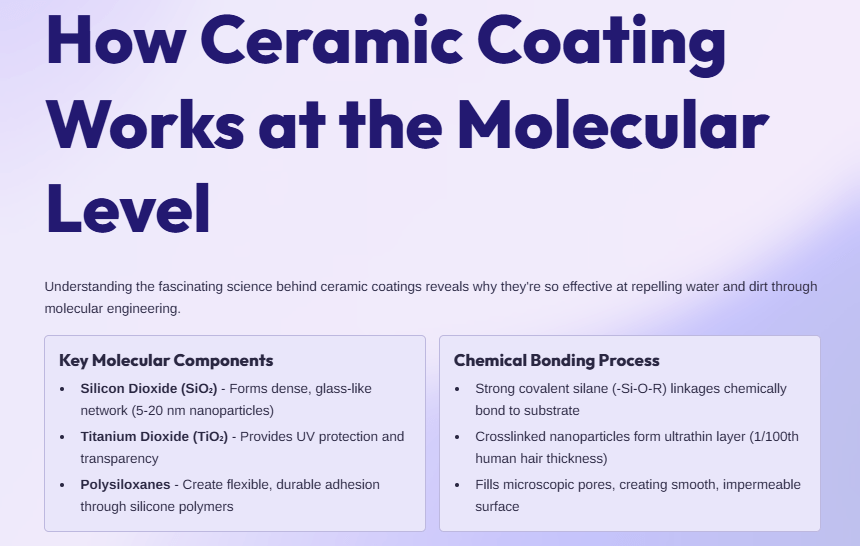
- Key Ingredients & Molecular Structure:
- Silicon Dioxide (SiO₂) nanoparticles (5-20 nm) form a dense, glass-like network bonded chemically to the surface.
- Titanium Dioxide (TiO₂) adds UV protection and transparency.
- Polysiloxanes (silicone polymers) create flexible, durable adhesion.
- Molecular Bonding & Surface Formation:
- Ceramic coating chemically bonds via strong covalent silane (-Si-O-R) linkages to the substrate.
- Crosslinked nanoparticle network forms an ultrathin (~<1/100th human hair) but extremely hard, durable layer.
- This layer fills microscopic pores, creating a smooth, impermeable surface.
- Hydrophobic Effect & Water Repellency:
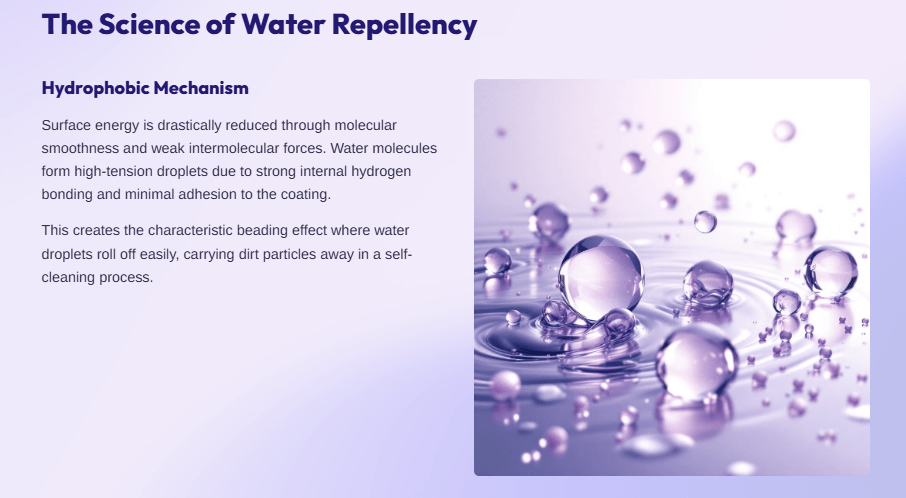
- Surface energy drastically reduced by molecular smoothness and weak intermolecular forces.
- Water molecules form high surface tension droplets (beading) due to strong hydrogen bonding internally and minimal adhesion to coating.
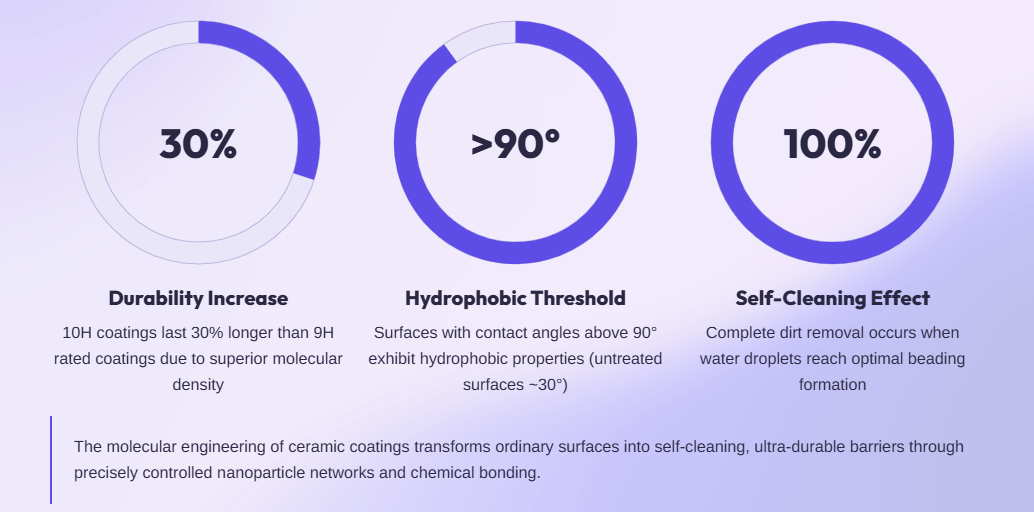
- Water droplets roll off easily, carrying dirt away (self-cleaning effect).
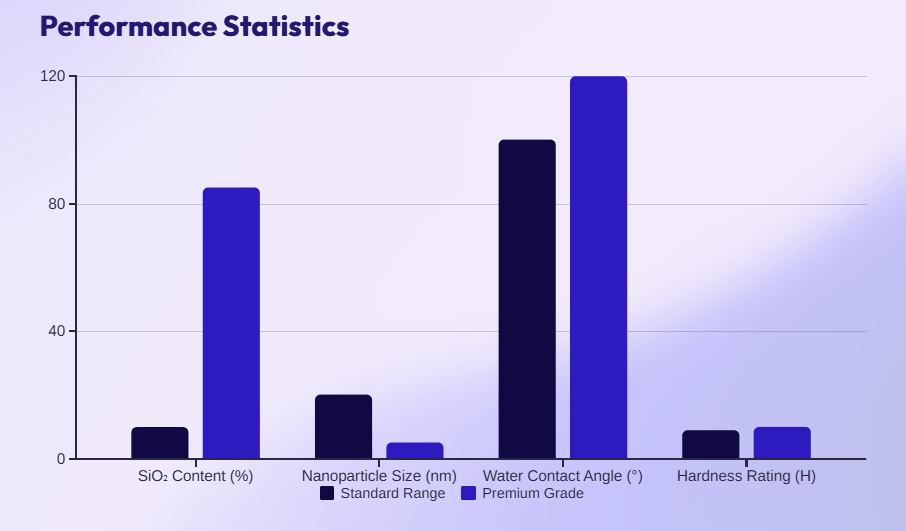
- Statistical Highlights (Visual Chart):
- SiO₂ Content: 10-85% of coating formula correlates with hardness and durability.
- Nanoparticle Size: 5-20 nm ensures deep surface penetration and strong bonding.
- Hardness Rating: Up to 10H on pencil hardness scale (10H coatings last 30% longer than 9H).
- Water Contact Angle: >100° (hydrophobic surfaces have contact angles >90°, untreated surfaces ~30°).
- Visual Chart Concept:
- Left: Molecular diagram showing SiO₂ nanoparticles crosslinked on surface.
- Centre: Water droplet beading on coated vs uncoated surface (contact angle comparison).
- Right: Bar graph comparing hardness (9H vs 10H) and durability (months of protection).
Sources: Official California Detailing (2025), Kovalent Coatings (2024), Wax is Dead (2024), Car Studios (2025)
[image suggestion: schematic molecular network of ceramic coating with water droplets beading, plus bar charts of hardness and water contact angle]
Importance of Professional Application
If the surface isn’t prepped right, the coating won’t stick. That means it could wear off much sooner than expected.
Professionals know the right techniques to get the best bond. That’s why trained installers make such a difference.
Long-Term Performance and Maintenance
Ceramic coating isn’t maintenance-free, but it’s much easier. Regular washing is enough to keep it working well.
With the right care, it lasts for years while keeping your car glossy. That’s the beauty of molecular science on your vehicle.
FAQs
Does ceramic coating completely prevent scratches?
It reduces light scratches but won’t stop deep ones or rock chips. The coating helps but isn’t bulletproof.
How does ceramic coating differ from wax at the molecular level?
Wax sits on top of paint and fades fast. Ceramic bonds chemically, so it lasts years instead of weeks.
Why is silicon dioxide important in ceramic coating?
It provides hardness, clarity, and the slick surface that repels water. Without it, coatings wouldn’t work as well.
Can ceramic coating protect against UV rays?
Yes, it blocks harmful rays that cause fading. That’s why coated cars keep their color longer.
Why should I choose a professional installer like Capital Wrappers?
Professionals prep the surface correctly. This ensures the coating bonds well and performs at its best.