What Does a Car Wrap Warranty Cover?
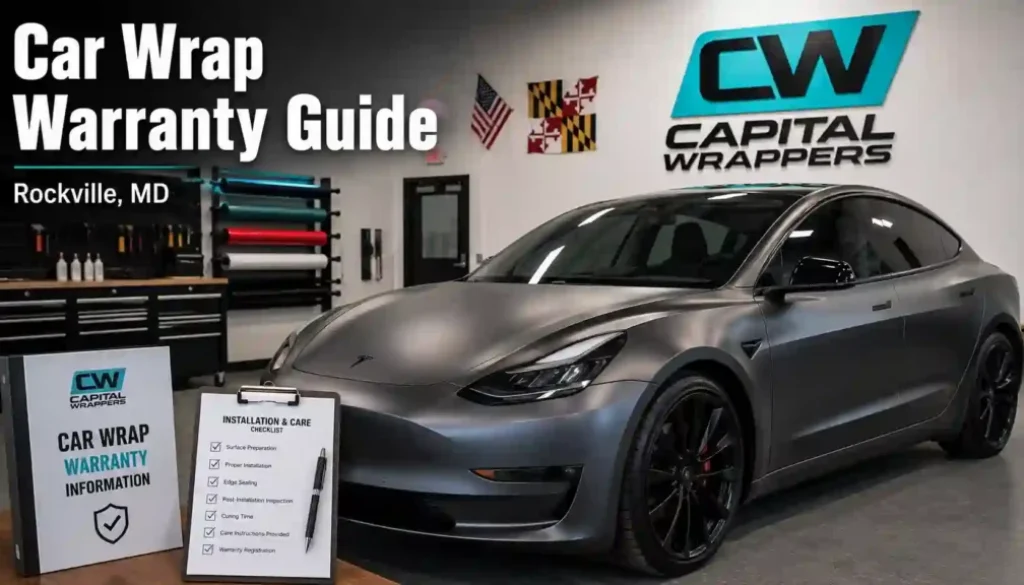
A car wrap warranty can protect against specific film or installation defects. It does not promise a free repair for every scratch. Lifted edges and color changes may also be excluded. Capital Wrappers provides color-change vehicle wraps in Rockville, MD. Project details reflect the vehicle, film, and paint condition. This guide explains coverage types, common exclusions, and claim steps. It also lists key questions to ask before installation.
What Does Wrap Coverage Mean on a Car?
The phrase “wrap coverage” has more than one meaning. A wrap estimate may describe the panels included. That could mean a partial or full vehicle wrap. A warranty may describe covered defects, surfaces, remedies, and time limits.
Some vehicle service contracts also use “wrap coverage.” Those products add mechanical protection to an existing powertrain warranty. This page discusses vinyl automotive wraps. It does not cover mechanical repair contracts.
A clear estimate should identify both meanings. It should list every wrapped panel. It should also explain the warranty for the installed film.
What Types of Vehicle Wrap Warranties Are Available?
Most professional projects involve separate layers of protection. One warranty rarely covers the film, labor, paint, accidental damage, and removal together.
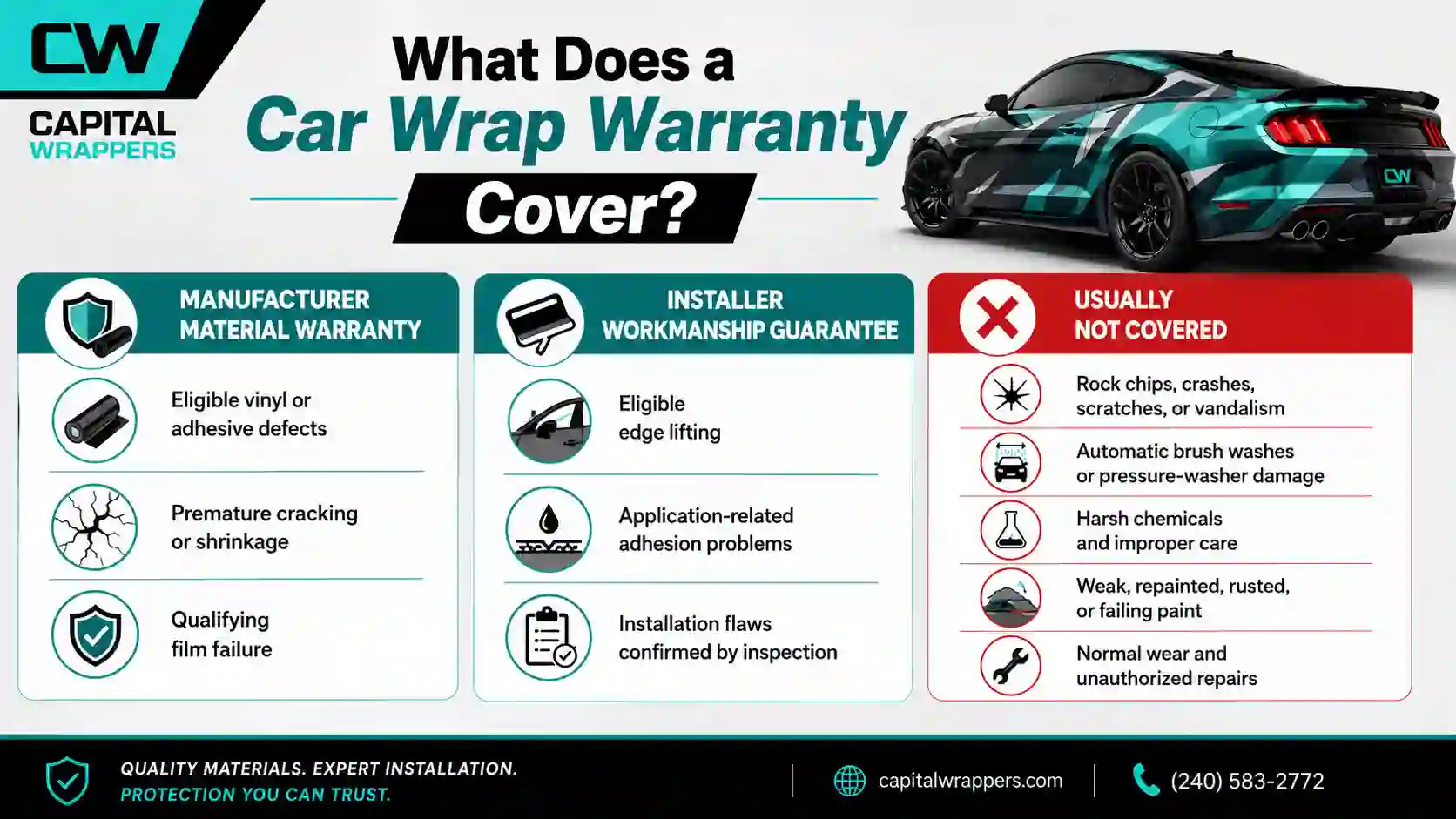
Manufacturer Material Warranty
The film manufacturer may cover defects in the vinyl or adhesive. Examples can include premature cracking, excessive shrinkage, or another documented product failure. Terms vary by film series, finish, exposure, application angle, region, and installation method.
Installer Workmanship Guarantee
The installation shop may cover defects caused by its preparation or application. Covered issues can include an edge that lifts without impact or misuse. The written terms should state the period, inspection process, and available remedy.
Printed Graphic System Coverage
Commercial graphics can involve film, ink, laminate, printing, and installation. Each part may have different terms. Businesses comparing commercial fleet wraps in Rockville should ask who handles the claim.
Vehicle and Paint Warranty
The vehicle maker’s warranty remains a separate agreement. Factory paint and repainted panels need separate review. So do removed trim, cameras, sensors, and electrical parts.
What Warranty Coverage Does the Shop Publish?
Capital Wrappers publishes a one-year craft guarantee for some full wraps. The vehicle must have pristine OEM paint. Owners can contact the shop when peeling or another install flaw appears. The shop can then inspect the issue.
That guarantee differs from the film maker’s material warranty. The written estimate and warranty papers control the exact coverage. Owners should confirm the film series and workmanship term. They should also check exclusions and the claim remedy.
Repainted panels, existing chips, failing clear coat, rust, or poor bodywork can change eligibility. A pre-installation inspection helps both parties record those conditions.
What Is Usually Covered by a Vinyl Wrap Warranty?
Coverage depends on the written terms. The following issues may qualify when a product or installation defect caused the failure.
|
Reported issue |
Possible coverage source |
Important distinction |
|
Vinyl lifts at a properly prepared edge |
Installer |
Impact, pressure washing, or altered trim may exclude it |
|
Film cracks earlier than its stated term |
Manufacturer |
Exposure and application angle can affect eligibility |
|
Adhesive fails on sound OEM paint |
Manufacturer or installer |
Paint condition and surface preparation must be reviewed |
|
Graphic layer separates |
Manufacturer or print provider |
Printed films can have separate component terms |
|
Installation bubble remains after settling |
Installer |
Small moisture pockets may need an initial settling period |
Coverage does not always mean a complete rewrap. A provider may repair one panel, replace defective film, or offer prorated material credit. Labor, removal, shipping, and reinstallation may be handled separately.
What Is Usually Excluded from Wrap Warranty Coverage?
Most warranties exclude normal wear and road debris. Collisions, vandalism, scratches, stone chips, and brush washes are also common exclusions. Close pressure washing can lift an edge. Harsh cleaning chemicals can also cause damage.
Poor paint creates another major exclusion. Vinyl cannot stabilize weak clear coat, rust, filler, primer, or failing repaint work. Film removal may expose or lift an existing paint problem.
Shop standards also matter. Owners can compare prep, records, shop conditions, and written terms when choosing a qualified vehicle wrap shop. Capital Wrappers recommends sharing all repair and paintwork details before the inspection.

Ready To Plan Your
Window Tint Installation?
Ready to plan your window tint installation? Call Capital Wrappers at 301-417-5977 or request a tint quote for your vehicle.
How Long Does a Car Wrap Warranty Last?
A warranty period and a wrap’s useful life are not the same. Film may remain attractive after limited warranty coverage ends. It can also suffer excluded damage while the warranty period is still active.
There is no sound universal term for every vinyl wrap. The term depends on the film maker and product line. Finish, region, panel angle, use, and shop guarantee also matter. Color-change film and printed graphics can carry different papers.
Ask for dates instead of a verbal range. The papers should state when coverage starts and ends. They should also name the party that handles each defect.
What Does a Lifetime Car Wrap Warranty Mean?
“Lifetime” does not always mean the life of the vehicle. It may refer to the first buyer. It may instead mean a shop term or a limited fix for set defects. Coverage may end when ownership changes.
The term has little value without a written definition. Owners should check transferability, exclusions, required maintenance, labor coverage, and any prorated schedule.
A lifetime promise also does not replace a manufacturer warranty card. The shop and film manufacturer can remain responsible for different parts of the project.
Does Wrapping a Car Void Its Factory Warranty?
Installing a vinyl wrap does not automatically cancel every unrelated factory warranty. However, a vehicle maker or dealer may dispute a specific claim. This can happen when wrap installation, disassembly, wiring, or removal caused the reported damage.
Common areas of concern include cameras, sensors, badges, trim clips, antennas, and paint. New or leased vehicle owners should review their agreements. They should request written advice for unusual surfaces or sensitive equipment.
Keep the wrap estimate, inspection photos, film information, and installation invoice. Those records can help separate an unrelated mechanical problem from wrap-related damage.
Does a Wrapped Car Need Special Insurance?
A wrap can change the vehicle’s appearance and value. Owners should tell their insurer about a full color change or costly commercial graphics. The insurer can explain how the modification should appear on the policy.
Standard collision or comprehensive coverage may not pay the full rewrap cost. Some policies cover only the damaged panel. Others require declared custom equipment coverage or documented added value.
Commercial owners should also confirm coverage for printed branding. A warranty addresses eligible product or workmanship defects. Insurance addresses covered losses such as crashes, theft, weather, or vandalism.
What Care Mistakes Can Void Wrap Coverage?
The installed film needs care that matches its product instructions. Common problems include harsh solvents, abrasive polish, and automatic brush washes. Neglected fuel spills and close-range pressure washing can also cause damage.
Owners should follow pickup instructions while the first bond forms. The guide to car wrap curing time covers early washing and weather. It also explains edge care after installation.
Keep maintenance receipts and photographs when a warranty requires them. Never cut, heat, glue, or reposition a failing area before the installer inspects it.
How Should Paint Condition Be Documented?
A proper inspection should record chips, scratches, dents, and rust. It should also note weak clear coat, body filler, and repainted panels. Photos should show the full vehicle and close views of doubtful areas.
Owners should disclose bodywork even when it looks smooth. Refinish paint can have different adhesion strength from factory paint. A wrap installer cannot confirm every hidden repair through visual inspection alone.
The estimate should explain areas that carry reduced or no paint-related coverage. This record also helps evaluate later claims and removal concerns.
What Should Be Included in a Written Warranty?
A useful warranty states more than a number of years. Before booking, look for these details:
- Exact film manufacturer, series, color, and finish
- Wrapped panels and excluded surfaces
- Separate material and workmanship periods
- Start date and transferability
- Vertical and horizontal exposure limits
- Paint and repaint exclusions
- Required aftercare and inspection steps
- Labor, removal, and reinstallation responsibility
- Available repair, replacement, or prorated remedy
- Claim contact, evidence, and deadline
Verbal promises are difficult to verify later. Ask for revised paperwork when a salesperson offers coverage not shown in the estimate.
How Does a Vehicle Wrap Warranty Claim Work?
Contact the installer as soon as a suspected defect appears. Continued driving, washing, or attempted repair can make the damage worse. It can also make the original cause harder to identify.
Provide the invoice, vehicle identification, installation date, film information, and clear photographs. Include wide views, close views, affected panel locations, and recent care details.
The installer may inspect the vehicle and contact the film maker. The final reply should name the cause and covered remedy. It should also state labor costs and the expected schedule.
What Warranty Red Flags Should Vehicle Owners Avoid?
Be cautious when a provider cannot name the film series. The shop should also separate material terms from work coverage. Broad promises should appear in writing with clear remedies.
Other warning signs include no paint check or invoice. Vague lifetime terms, missing exclusions, and no claim contact are also concerns. A transferable warranty should explain the transfer process.
Price alone does not reveal warranty value. Compare the product, installer responsibility, documentation, and response process together.
Where Can Owners Verify General Auto Warranty Rights?
The FTC auto warranty guidance says aftermarket parts do not always cancel a vehicle warranty. A maker or dealer may still deny one claim. The part or poor installation must have caused the damage.
That general guidance does not decide one wrap claim. Vehicle terms and state law can affect the result. The cause and saved records also matter. Owners in a dispute may need advice from the maker, insurer, or a lawyer.
Conclusion
A car wrap warranty works best when each duty is in writing. Owners should separate film defects from poor work. Crash damage, paint failure, insurance losses, and factory repairs are different issues. Film choice, panel coverage, exposure, care, and remedy all matter.
Capital Wrappers can record the film and install terms before a Rockville project begins. Owners can review how long a vehicle wrap lasts. That guide compares warranty length with useful service life.
Get A Clear
Wrap Estimate Before Installation
Capital Wrappers can review paint condition, film selection, panel coverage, and available workmanship terms before installation. Call 301-417-5977 or request a written wrap estimate. The estimate can state the planned coverage and known exclusions.
Frequently Asked Questions
What does a car wrap warranty usually cover?
A car wrap warranty may cover a film defect or install fault. Its written terms control. Material and workmanship coverage are usually separate. Road damage, poor care, accidents, weak paint, and unauthorized repairs are common exclusions. Terms vary. Each provider sets its own rules.
Does wrapping a car void the factory warranty?
A vinyl wrap does not automatically cancel every factory warranty. A maker may deny one claim when the wrap caused the damage. Work on trim, wires, or removal may also cause harm. Keep inspection photos and invoices. Review the vehicle warranty before installation. Terms vary. Ask first.
How long does a vinyl car wrap warranty last?
There is no single term for every wrap. Duration varies by film series, finish, climate, panel angle, application, and installer guarantee. Ask for exact start and end dates in writing. A film’s expected service life can be longer than its limited warranty period. Read both documents carefully.
What can void vehicle wrap warranty coverage?
Coverage may be denied after harsh washing or chemicals. Close pressure washing, crashes, and weak paint can also cause loss. Neglected spills and unauthorized repairs create more problems. Follow the care guide. Contact the installer before touching a suspected defect. Keep records.
Does a lifetime wrap warranty last for the vehicle’s life?
Not necessarily. “Lifetime” may mean the first buyer’s ownership period. It may also mean a term set by the shop. Labor, paint, impact damage, and normal wear can be excluded. Ask for its meaning, transfer rules, remedy, and prorated limits. Get it in writing. Read the exact terms first.
Should a vehicle wrap be reported to an insurer?
Owners should tell their insurer about a color change or commercial graphic. A high-value wrap should also be reported. Rules vary, and a standard policy may pay for only one damaged panel. Ask how to list the change and prove its value after a loss. Keep receipts. Save the written policy reply.