How Window Tinting Contributes to Long-Term Vehicle Preservation
When you think about window tinting, what comes to mind? For many, it’s about style, privacy, or maybe reducing a bit of glare. But what if I told you that window tinting is one of the most effective tools you have for protecting your car’s long-term value and condition?
It’s like putting a suit of armor on your vehicle’s interior. Over the years, the sun’s relentless assault can silently and permanently damage your car, eroding its appearance and its worth. A professional window film isn’t just a cosmetic touch; it’s a critical shield against the forces of nature that constantly threaten your investment.
Understanding How Sunlight Damages a Vehicle
To understand the solution, you must first understand the problem. The sun, while necessary for life, is a formidable enemy to your car’s interior. It launches a two-pronged attack with invisible rays and intense heat, each causing a different kind of damage that accumulates over time.
The Invisible Enemy: Ultraviolet (UV) Radiation
When we step outside on a sunny day, we know to put on sunscreen to protect our skin from UV rays. But we often forget that those same harmful rays are passing right through our car windows and into the cabin. A car is essentially a magnifying glass, concentrating these rays and causing them to wreak havoc on everything they touch.
How UV Rays Fade and Degrade Interior Materials
Think about your car’s upholstery. Over time, that once-vibrant black or tan fabric starts to look dull, faded, and worn. This isn’t a natural aging process; it’s a direct result of UV radiation breaking down the chemical bonds in the dyes and fibers. Leather, in particular, becomes dry, brittle, and prone to cracking. This fading not only makes your car look older and less cared for, but it also reduces its resale value. It’s a subtle but relentless process that cheapens the look and feel of your vehicle’s interior.
The Silent Breakdown of Plastics and Vinyl
It’s not just fabric and leather that suffer. All the plastic and vinyl surfaces in your car—the dashboard, door panels, and center console—are also under constant assault. UV rays cause these materials to become brittle and discolored. Have you ever seen an older car with a cracked dashboard? That’s not a coincidence. It’s often a result of years of direct sun exposure. The damage weakens the material, making it susceptible to cracking and peeling. This degradation is a major factor in the devaluation of a vehicle.
Infrared (IR) Rays and Interior Degradation
The other component of sunlight’s attack is heat, primarily carried by infrared (IR) rays. While UV rays are responsible for the fading, IR rays are what make your car feel like an oven on a hot summer day. This isn’t just about discomfort; it’s about a constant thermal cycle of expansion and contraction that puts enormous stress on your car’s internal components.
How Trapped Heat Accelerates Wear and Tear
When your car is parked in the sun, the interior temperature can soar far beyond the outside air temperature. This trapped heat creates a sauna-like environment that puts stress on every material. Glues and adhesives that hold your dashboard and trim together begin to break down. Plastic and vinyl become soft and then harden, leading to brittleness and cracking. The stitching on your steering wheel and seats can weaken and unravel. This high-temperature environment is a breeding ground for premature aging and wear.
The Impact on Electronics and Components
Modern cars are filled with sensitive electronics, from the infotainment screen to the various sensors and control modules hidden behind the dash. These components are not designed to function in extreme heat. The constant exposure to elevated temperatures can shorten their lifespan, leading to costly malfunctions and replacements down the road. Protecting your interior from heat is a vital step in preserving the integrity of your car’s technology.
The Shielding Power of Professional Window Tinting
So, how does a thin layer of film stand up to such a powerful and persistent threat? It’s all in technology. Professional-grade films are engineered to selectively filter different parts of the solar spectrum, targeting the most destructive elements of sunlight.
The Science of Light and Heat Rejection
Window tinting Rockville works by managing three types of solar energy: visible light (what we see), ultraviolet (UV) rays (the cause of fading), and infrared (IR) rays (the cause of heat). While a simple, dark tint can block some visible light, high-performance films are designed to be much more intelligent. They can block a massive percentage of UV and IR rays while still allowing a comfortable amount of visible light to pass through. This means you can have a film that is relatively light in color but provides superior protection.
Comparing Different Films for Ultimate Preservation
The world of window tinting films has evolved significantly. What you choose will determine the level of protection your vehicle receives.
Dyed Films: Basic Protection with Limitations
Dyed films are the most basic and affordable option. They are made by infusing a layer of dye into the film, which primarily absorbs visible light. While they offer some minimal UV protection, they are largely ineffective at blocking heat. They also tend to fade over time, which not only looks bad but also means their protective qualities diminish significantly. If preservation is your goal, dyed films are a short-term fix at best.
Metalized Films: Heat Reflection with Potential Drawbacks
Metalized films contain tiny metallic particles that reflect solar energy away from the car. They are highly effective at rejecting heat and UV rays. However, the metal content can interfere with radio, GPS, and cell phone signals, which can be a major inconvenience in our connected world. While they offer better preservation benefits than dyed films, the signal interference is a significant drawback for many drivers.
Carbon Films: A Modern and Stable Shield
Carbon films are infused with microscopic carbon particles that provide excellent heat rejection and UV protection. They are highly durable, won’t fade, and—most importantly—are non-metallic, so they do not interfere with any electronic signals. Carbon films offer a fantastic balance of performance and aesthetics, making them a great choice for long-term vehicle preservation.
Ceramic Films: The Gold Standard in Vehicle Preservation
For the ultimate in vehicle preservation, ceramic films are the undisputed champion. These films are infused with non-conductive ceramic particles that are incredibly effective at blocking UV and infrared rays. They can reject up to 99% of UV rays and a massive portion of IR heat, all without being excessively dark or interfering with signals. A ceramic film is like an invisible shield that silently protects every aspect of your car’s interior from the elements, ensuring its long-term health and value.
Beyond Aesthetics: The Tangible Benefits for Your Car’s Value
The connection between window tinting and vehicle preservation is a tangible one that can be seen and felt.
Preserving the Appearance of Your Interior
When you go to sell your car, one of the first things a potential buyer will notice is the condition of the interior. A faded dashboard, cracked leather seats, or discolored vinyl panels are immediate red flags that the car hasn’t been well-maintained, and they will directly impact the resale price. By preventing this damage, professional tinting helps maintain a “like new” look for years, which can significantly increase your car’s value.
Reducing the Strain on Your Car’s Cooling System
When your car is parked in the sun without tinting, the interior gets incredibly hot. When you start the car, your air conditioning system has to work in overdrive to cool it down. This constant, hard work puts a lot of stress on the AC compressor and other components, shortening their lifespan and leading to expensive repairs. A properly tinted car stays cooler, meaning your AC system doesn’t have to work as hard, which preserves its performance and durability.
The Link Between Tinting and Fuel Efficiency
This leads to a surprising but very real benefit: improved fuel efficiency. Since your AC unit is powered by your engine, a system that works less uses less energy. In a gas-powered car, this means less fuel consumption. In an electric vehicle, it means less battery drain. So, by preserving your car’s interior, you’re also helping to preserve its long-term operational efficiency.
Why Professional Installation Is Crucial for Long-Term Results
The quality of the installation is just as important as the quality of the film. A professional job ensures the tint performs as intended for years to come.
The Flaws of DIY: A Short-Term Fix with Long-Term Problems
DIY tinting kits are a short-term solution that often leads to long-term problems. The films are typically of lower quality, and the application process is difficult for a novice. Bubbles, peeling, and improper fitting can not only look terrible but also compromise the film’s ability to protect your vehicle. The tint can fade, bubble, and peel off within a year or two, leaving you with a mess to clean up and a need to do the job all over again.
The Expertise of Professional Service Providers
A professional installer has the right tools, a controlled environment, and the years of experience needed to get the job done right the first time. They can ensure a flawless, bubble-free finish and an exact fit for your vehicle’s windows. This attention to detail ensures that the film’s protective qualities are maximized and that it will last for a decade or more.
Choosing a Trusted Partner Like Capital Wrappers
When it comes to protecting your car’s value, you need a partner you can trust. A company like Capital Wrappers understands the deep connection between window tinting and long-term vehicle preservation. They use high-quality, scientifically advanced films and provide expert installation that ensures you get the maximum protective benefits. They aren’t just selling you a product; they are providing you with a solution that will help your car look and feel newer for much longer.
Capital Wrappers Serving the Glen Echo Heights Community and Beyond in Rockville
Capital Wrappers is dedicated to serving the diverse needs of the local community of Rockville including individuals residing in neighbourhoods like Glen Echo Heights. With its convenient location near landmarks such as the Glen Echo Heights Neighborhood Park, Woodacres Local Park and major intersections like Sangamore Rd & MacArthur Blvd and Osceola Rd & Wynwood Rd (coordinates:38.95835473533987, -77.11876960170824, we offer window tinting
Get window tinting Services at Glen Echo Heights Now
Navigate from Glen Echo Heights to Capital Wrappers Now
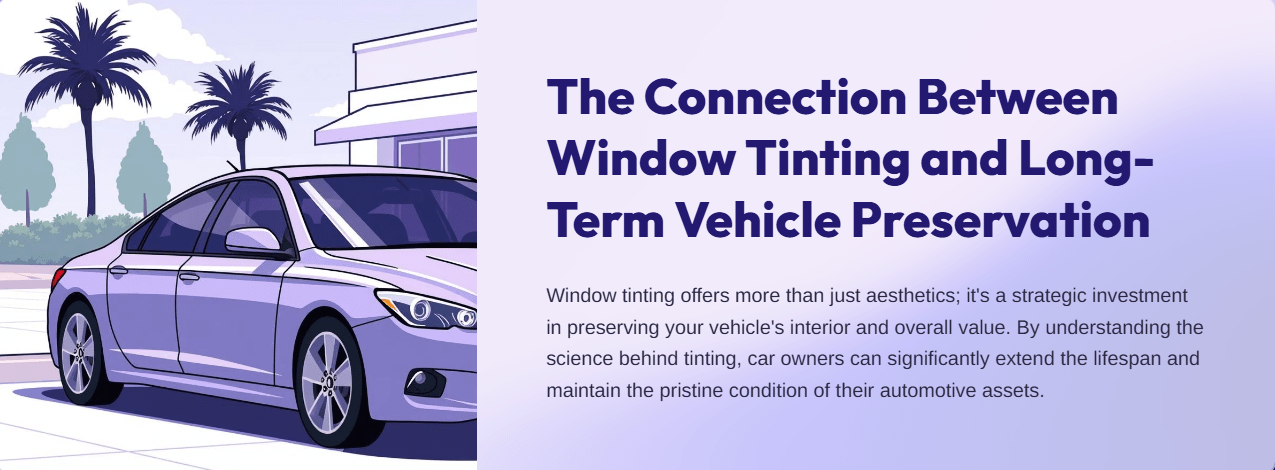
The Connection Between Window Tinting and Long-Term Vehicle Preservation
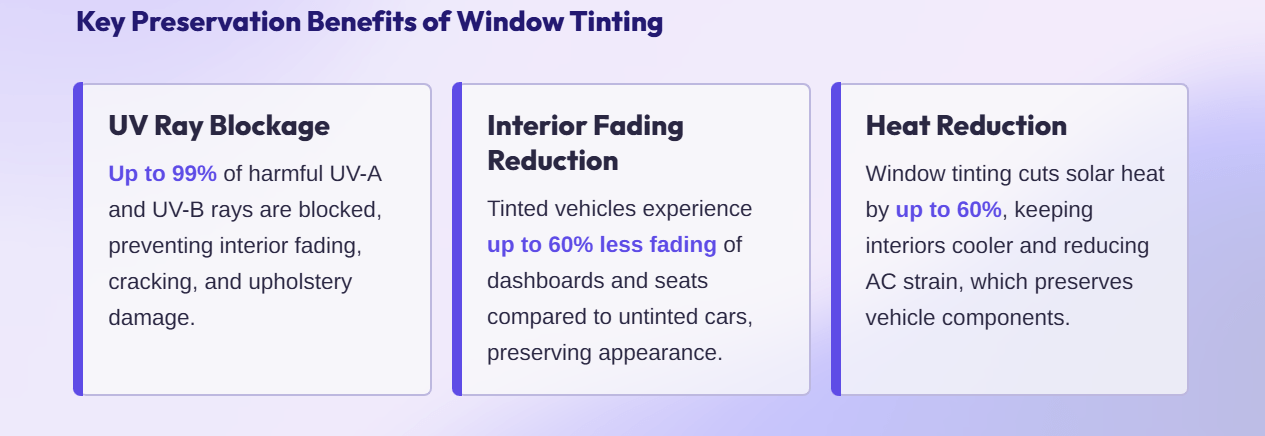
- Up to 99% UV Ray Blockage: High-quality window tints block nearly all harmful UV-A and UV-B rays, preventing interior fading, cracking, and upholstery damage.
- 60% Less Interior Fading: Studies show tinted vehicles experience up to 60% less fading compared to untinted cars, preserving dashboard and seat appearance longer.
- Heat Reduction by 60%: Window tinting cuts solar heat entering the vehicle by up to 60%, keeping interiors cooler and reducing air conditioning strain, which helps maintain vehicle components.
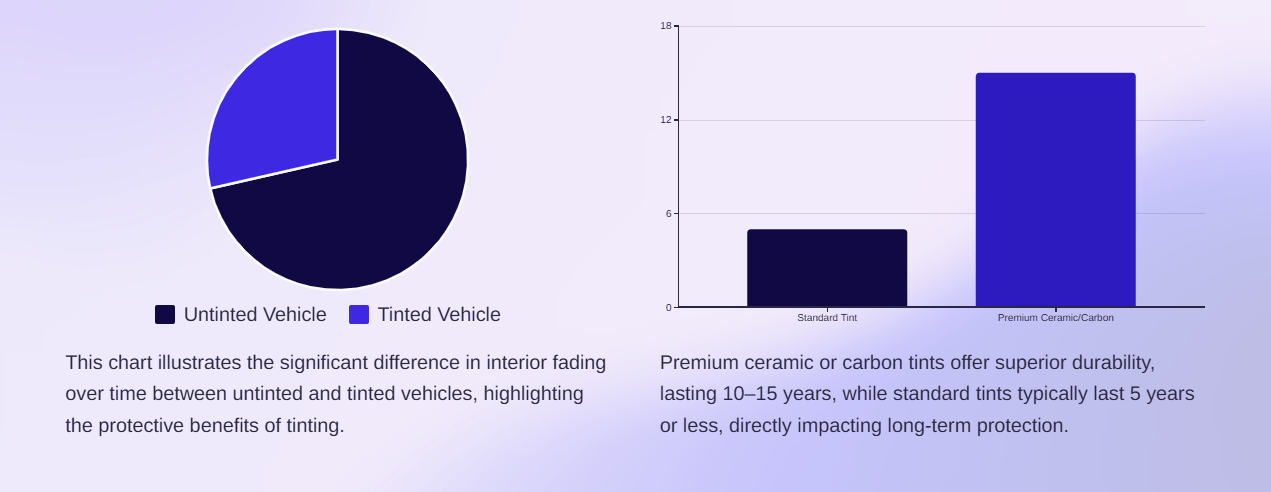
- Tint Lifespan: Premium ceramic or carbon tints last 10–15 years, maintaining protection and appearance, while standard tints last 5 years or less.
- Resale Value Impact: Vehicles with quality, legal window tinting often retain higher resale value due to better interior condition and enhanced privacy/security features.
Visual Chart Suggestions for Slide:
- Bar Chart: Interior fading (%) comparison — Untinted (100%) vs. Tinted (40%)
- Pie Chart: UV Ray Penetration — Untinted (50%) vs. Tinted (1%)
- Line Graph: Temperature inside vehicle over time — Untinted vs. Tinted (showing 60% heat reduction)
- Timeline: Tint durability — Standard (5 years) vs. Premium (10–15 years)
FAQs
Is it true that even light-colored tint can provide good UV and heat protection?
Yes, that’s absolutely true. Modern ceramic and carbon films are designed to be highly effective at blocking UV and IR rays without having to be very dark. This allows you to choose a lighter shade while still getting the full benefits of a high-performance film.
How much does window tinting typically cost?
The cost of window tinting can vary widely depending on the type of film you choose, the number of windows, and the make and model of your vehicle. While it may seem like a significant upfront cost, it is an investment that pays for itself over time by helping to preserve your car’s value and reduce potential repair costs.
Does window tinting void my car’s warranty?
In most cases, a professional window tinting installation will not void your car’s factory warranty. However, it’s always a good idea to check with your dealership or car manufacturer to be sure. Most reputable tint shops use films and techniques that are safe for your vehicle’s components.
How do I know what tinting is legal in my state?
Every state has specific laws regarding the legal darkness of window tinting, measured by VLT (Visible Light Transmission). A professional tint shop will be knowledgeable about these laws and can help you choose a film that complies with all local regulations.
Does window tinting prevent the glass from shattering in an accident?
While window tinting is not a safety-rated shatterproof film, it does add a layer of integrity to the glass. In the event of a collision, the tint can help hold the shattered glass pieces together, which can prevent them from flying into the vehicle’s interior and potentially causing injury.