How Window Tinting Helps Prevent Glare-Related Driving Hazards
Imagine you’re driving down the highway, sun low in the sky, and suddenly a blinding flash of light bounces off a car’s windshield ahead. In that split second, you’re essentially driving blind. It’s a familiar and frightening scenario for countless drivers, a moment of compromised safety that happens in the blink of an eye. This is the very real hazard of glare.
It’s a constant challenge on the road, whether it’s from a setting sun, a wet road, or the dazzling high beams of an oncoming vehicle. Glare isn’t just an inconvenience; it’s a genuine risk that compromises your ability to see and react. But what if there was a simple, effective solution? This is where professional window tinting comes into play. It’s more than just a cosmetic upgrade for your car—it’s an essential safety feature designed to combat the unpredictable and dangerous effects of glare.
Understanding Glare and Its Dangers on the Road
Before we can appreciate how window tinting helps, we first need to understand the enemy. Glare is an insidious adversary because it’s not always obvious until it’s too late. It’s the visual equivalent of a loud, unexpected noise that makes you jump. It disrupts your concentration and messes with your eyes, and on the road, that’s a recipe for disaster.
The Anatomy of Glare: What Causes It?
Glare is, at its core, a form of light that is scattered or reflected in a way that overwhelms your vision. It’s a bit like trying to read a book with a bright flashlight shining directly into your face. Your eyes can’t adjust, and the details of the page—or the road—are lost.
Daytime Glare: The Sun’s Sneaky Attacks
During the day, the sun is the primary culprit. We often think of direct sunlight as the main issue, but reflected sunlight is often worse. Think of light bouncing off the hood of your car, off a puddle in the road, or off the chrome on a truck. Each of these surfaces acts like a mirror, sending concentrated light directly into your eyes. These blinding moments are most common during sunrise and sunset when the sun is low on the horizon, but they can happen at any time of day, particularly with a high sun on a hot day with a lot of reflective surfaces.
Nighttime Glare: The Blinding Onslaught of Headlights
Night driving comes with its own set of challenges, and glare is a top one. Modern headlights, especially those using LED or HID technology, are incredibly bright and can feel like lasers aimed at your retinas. When an oncoming car with high beams on approaches, the light can momentarily blind you, leaving you to navigate a few seconds purely on instinct and memory. This is especially dangerous when you are in a high-traffic area or navigating a difficult turn.
Beyond Annoyance: The Serious Safety Risks of Glare
You might think of glare as just a temporary inconvenience, something you tough out by squinting or using your hand as a visor. But the truth is, the consequences are far more severe than a bit of discomfort.
The Silent Impact on Reaction Time and Decision-Making
When you encounter glare, your brain and eyes go into overdrive to try and process the situation. That little moment of visual distraction, when your eyes can’t properly focus on what’s ahead, has a direct and measurable effect on your reaction time. Even a delay of a half-second can be the difference between stopping in time and causing a rear-end collision. Your brain is a supercomputer, but it can’t make a decision about braking or swerving if it isn’t receiving clear, uncompromised visual data.
Glare-Induced Eye Strain and Driver Fatigue
Think about all the squinting you do when driving in glaring conditions. That constant tightening of your eye muscles is exhausting. This isn’t just a feeling; it’s a physical strain that contributes to driver fatigue. When your eyes are tired, your focus and concentration wane. You might miss a cyclist on the side of the road, fail to notice a change in the traffic pattern, or simply become too tired to drive safely. Glare isn’t just about a moment of blindness; it’s about the cumulative effect of stress on your body over a long drive.
The Scientific Solution: How Window Tinting Battles Glare
So, how does a thin film on your car windows act as such a powerful shield against glare? It’s all about controlling and filtering light.
The Technology Behind Light Filtration
Window tinting Rockville isn’t about slapping a dark film on your glass. It’s about a finely engineered product that manages light. The most important metric here is Visible Light Transmission (VLT). VLT measures the percentage of visible light that is allowed to pass through the film and into your car. A film with a lower VLT is darker, allowing less light in. By carefully selecting a film with the right VLT for your state’s legal limits, you can significantly reduce the amount of light entering your vehicle, including the scattered light that causes glare.
Comparing Different Tint Films for Glare Protection
Not all films are created equal. Just like different types of sunglasses, different kinds of tinting films offer varying levels of protection against glare.
Dyed Films: The Budget-Friendly, Basic Glare Solution
Dyed films are the most affordable option. They are made by infusing dye into the film’s adhesive layer. This dye absorbs some light, giving the window a darker appearance and providing a basic level of glare reduction. While they help, they don’t offer the same performance as more advanced films, and they tend to fade and lose their effectiveness over time. They’re a step up from no tint at all, but they won’t provide the comprehensive glare protection that professional drivers or those with light sensitivity truly need.
Carbon Films: A Modern, Effective Approach to Glare
A more advanced option, carbon films are embedded with carbon particles. These particles are excellent at blocking infrared light, which is the primary source of heat. By doing so, they also do a much better job of cutting down on glare. Carbon films are highly stable, don’t fade, and provide a clear, non-reflective finish that looks great and offers substantial protection without interfering with radio or GPS signals, which is a common problem with older, metalized films.
Ceramic Films: The Ultimate Gold Standard for Glare and Clarity
If glare is your primary concern, ceramic films are the undisputed champion. These films are infused with tiny, non-metallic ceramic particles. What makes them so special is their ability to selectively filter light. They are incredibly effective at blocking both UV and infrared rays, but they don’t have to be super dark to do it. A ceramic film with a higher VLT can still block more heat and glare than a much darker dyed film. This means you get superior protection without compromising your ability to see clearly at night or in low-light conditions. For anyone who drives frequently or struggles with glare, ceramic window tinting is a wise investment.
The Real-World Benefits of Reduced Glare for Drivers
Let’s move from the scientific theory to the practical reality of what reduced glare means for you on a daily basis.
Enhanced Visibility for a Safer Commute
This is the most direct benefit. When you’re not struggling with glare, you can see everything on the road more clearly. Road signs are easier to read, traffic lights are more distinct, and pedestrians are more visible. This enhanced visibility translates directly into a safer commute. You’ll find yourself less stressed, more relaxed, and better prepared to handle the unexpected.
Long-Term Benefits for Health and Vehicle
The protection offered by window tinting goes beyond just your comfort in the moment. It extends to your health and the longevity of your vehicle.
Protecting Your Eyes from Constant Strain
The constant squinting and strain from glare can have long-term consequences for your eyes. By reducing this stress, tinting helps to maintain your eye health and prevents headaches and fatigue. It’s a proactive measure to protect one of your most vital senses.
Preserving Your Car’s Interior from Sun Damage
Glare is a symptom of intense sunlight. That same sunlight, over time, can do serious damage to your car’s interior. The UV rays that come with sunlight can cause upholstery to fade and crack, especially on dashboards and seats. Tinting acts as a shield, slowing down this process and helping to maintain the value and appearance of your car’s interior for years to come.
Professional Installation: The Key to Effective Glare Prevention
While the films themselves are powerful, their effectiveness is only as good as the installation.
Why DIY Tinting Can Fail to Address Glare
Attempting to install window tint yourself can be a frustrating and often unsuccessful endeavor. DIY kits are typically made of lower-quality material that doesn’t have the same glare-reducing properties as professional films. Additionally, getting a perfect, bubble-free, and wrinkle-free application is extremely difficult, and imperfections can actually worsen glare or create visual distortions.
The Expertise of Professional Installers
This is where a professional shop makes all the difference. Skilled installers have the right tools, a controlled environment, and the expertise to ensure a flawless application. They understand the different properties of various films and can recommend the perfect solution for your needs and local laws. They can also ensure that the film is properly cured, which is crucial for its long-term performance and durability. A truly professional installation is a one-time job that delivers years of safety and comfort.
Capital Wrappers Serving the Lowes Island Community and Beyond in Rockville
Capital Wrappers is dedicated to serving the diverse needs of the local community of Rockville including individuals residing in neighbourhoods like Lowes Island. With its convenient location near landmarks such as the Trump National Golf Club Washington DC, Seneca Regional Park and major intersections like Lowes Island Blvd & River Bank St and Rhyolite Pl & Rippling Pl (coordinates:39.048343861961825, -77.35018613187506, we offer window tinting
Get window tinting Services at Lowes Island Now
Navigate from Lowes Island to Capital Wrappers Now
How Window Tinting Helps Prevent Glare-Related Driving Hazards
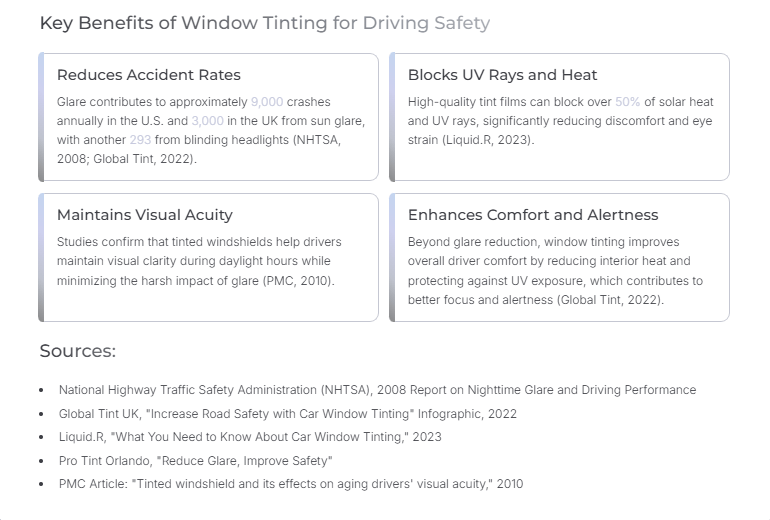
- Glare Causes ~9,000 Crashes Annually in the U.S.
- Sun glare contributes to thousands of accidents yearly (NHTSA, 2008)
- In the UK, sun glare causes ~3,000 accidents annually (Global Tint, 2022)
- Blinding headlights cause ~293 accidents per year in the UK (Global Tint, 2022)
- Window Tinting Reduces Glare and Improves Safety
- Tint films block up to 50%+ of solar heat and UV rays, reducing discomfort and eye strain (Liquid.R, 2023)
- Tints decrease glare from sunlight and headlights, lowering momentary blindness risk (Pro Tint Orlando)
- Studies show tinted windshields maintain visual acuity during daylight while reducing glare impact (PMC, 2010)
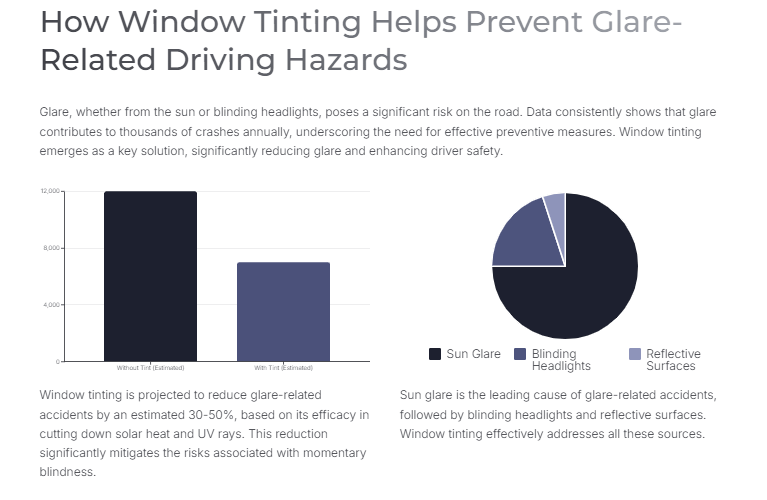
- Visual Impact Chart Concept:
- Bar chart comparing accident rates:
- Without tint: High glare-related accidents (~9,000 US + 3,000 UK)
- With tint: Estimated 30-50% reduction in glare-related incidents (based on glare reduction efficacy)
- Pie chart showing sources of glare-related accidents: Sun glare, Headlights, Reflective surfaces
- Bar chart comparing accident rates:
- Additional Benefits:
- Window tinting also protects occupants from UV damage and reduces interior heat, improving driver comfort and alertness (Global Tint, 2022; Liquid.R, 2023)
When you’re looking for a service that you can trust, you need a company that is known for its quality films and expert installation. A company like Capital Wrappers understands that window tinting isn’t just about making your car look good; it’s about providing a safety and comfort solution. They are committed to using advanced, glare-reducing films and ensuring every job is done with precision and care. They don’t just sell a product; they provide peace of mind by making your daily commute safer.
FAQs
Can window tinting actually help with nighttime glare from headlights?
Yes, it absolutely can. While it might seem counterintuitive, professional-grade tint, especially ceramic films, are engineered to filter the harsh, concentrated light from modern headlights. They reduce the intensity of the light entering the vehicle without making the road too dark, which greatly improves nighttime visibility and comfort.
Does window tinting interfere with GPS, cell phone, or radio signals?
It depends on the type of film. Metalized films, which contain tiny metallic particles, can sometimes cause interference with electronic signals. However, modern films like carbon and ceramic are non-metallic and do not interfere with any of your vehicle’s electronic systems.
How long does a professionally installed window tint last?
With proper care, a professional-grade window tinting job can last anywhere from 8 to 10 years or even longer. The key is to avoid using ammonia-based cleaners, which can break down the film, and to have the installation done by a skilled technician who uses high-quality materials.
What are the legal restrictions on window tinting?
Window tinting laws vary significantly from state to state. These laws typically specify the minimum Visible Light Transmission (VLT) percentage allowed on different windows of the vehicle. It is crucial to understand and comply with your local regulations to avoid fines and ensure the legality of your vehicle.
Is a darker tint always better for reducing glare?
No, a darker tint isn’t always the most effective solution. The ability of a film to reduce glare depends on its technology, not just its shade. High-quality ceramic or carbon films can be lighter in appearance while still blocking significantly more glare and heat than a very dark, low-quality dyed film.